


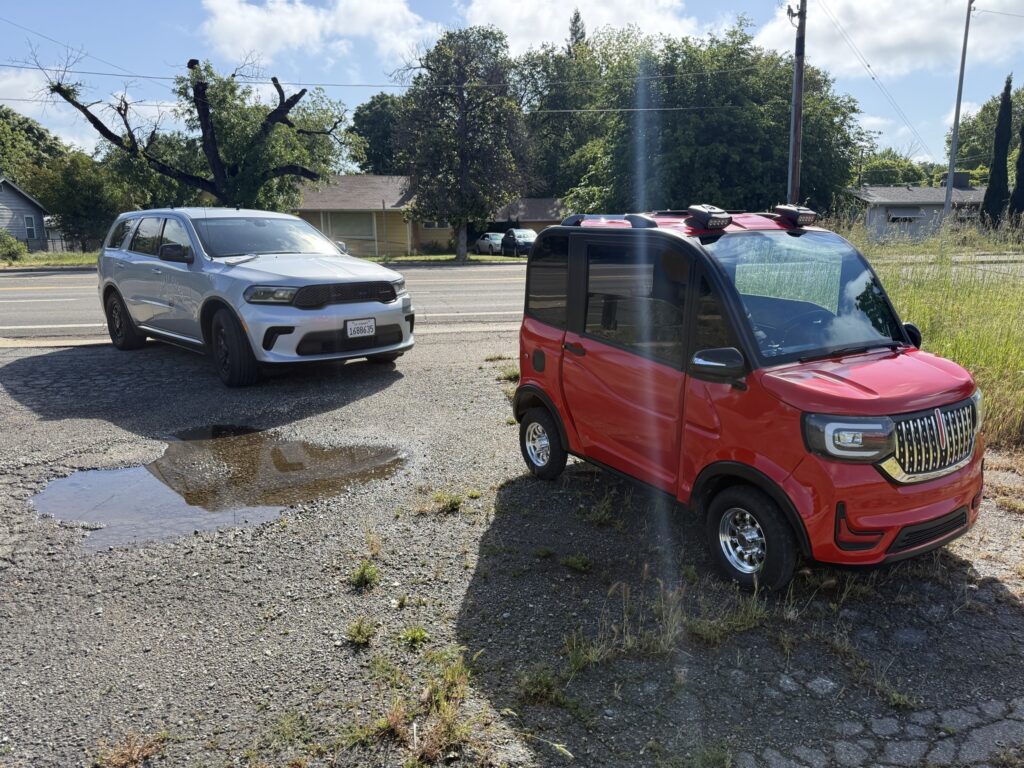
A small Chinese electric car received an unexpected “greeting” from the California Highway Patrol (CHP) in Redding. The reason for the stop was that the miniature vehicle was causing a traffic jam by moving too slowly.
What Happened on the Road?
According to CHP Redding, the stop occurred because the tiny car was driving too slowly and holding up traffic. This is not surprising, as most low-speed vehicles (LSVs) have a maximum speed of about 25 mph (40 km/h). However, the police did not expect to find that the driver did not have a legal right to operate the vehicle. During the check, it turned out that the driver was operating the vehicle with a suspended license.
Legal Status of Mini Electric Cars
This incident turned a routine roadside encounter into a reminder that even the quirkiest legal vehicles in California are subject to ordinary rules. In California, low-speed vehicles are classified as four-wheeled vehicles capable of traveling at speeds between 20 and 25 mph (32-40 km/h) and having a gross vehicle weight rating of less than 3,000 lbs (1,361 kg).
Read also: Tiny Daewoo Matiz with a V6 engine proves that power can make any car ridiculous
Despite their cartoonish proportions and appearance, such vehicles are completely legal for use on certain public roads if they meet state and federal equipment standards.
Equipment and Driving Requirements
Of course, this means having things like headlights, taillights, brake lights, mirrors, turn signals, seat belts, windshield wipers, a parking brake, and even a rearview camera. Drivers must also have a valid license, registration, and insurance, just as with a regular passenger car.
Usage Restrictions
Even if the driver of this LSV had a valid license, there is another nuance in the law. Such vehicles cannot be legally used on roads with a speed limit exceeding 35 mph (56 km/h). Essentially, they are intended for densely populated urban areas, retirement communities, beach towns, or short neighborhood trips. If you put such a car on a road where regular cars drive at 40 mph or faster, it quickly becomes a traffic hazard and a source of danger.
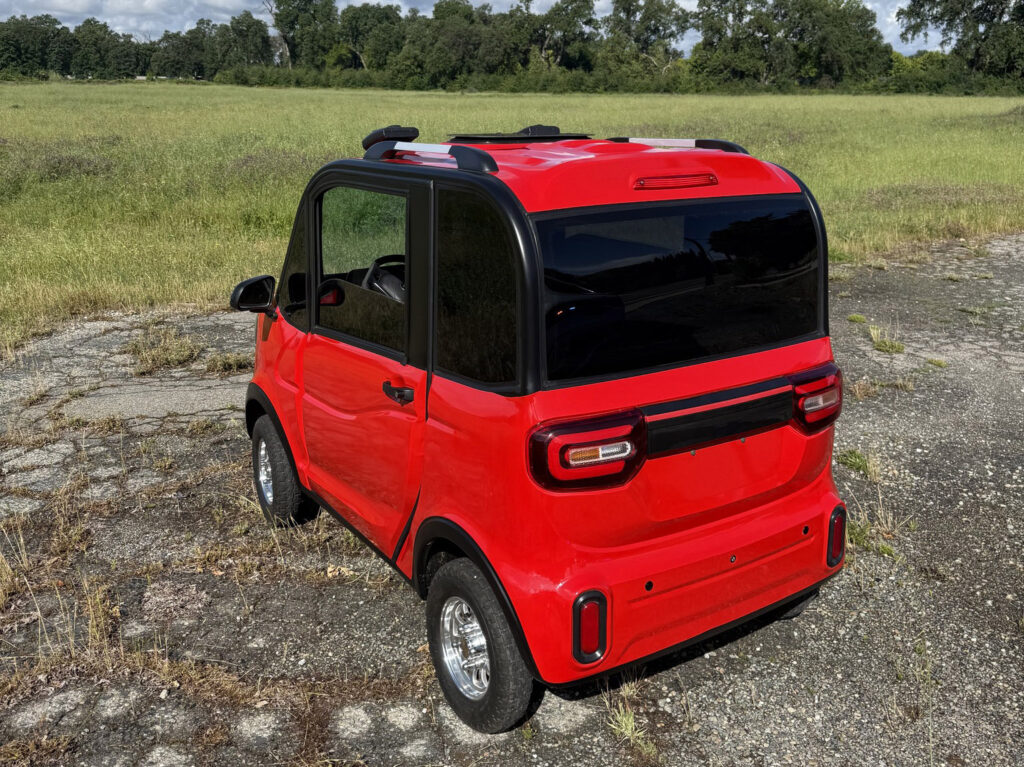

Credit: CHP
This situation highlights that the growing popularity of small Chinese electric cars in the U.S. is creating new challenges for traffic authorities. While such vehicles are environmentally friendly and convenient for urban conditions, their use on roads with higher speed limits can lead to dangerous situations. Drivers should carefully study local laws and restrictions before taking such cars outside of specially designated zones, as even the smallest violation can have serious consequences, such as a police stop and fines.