
 by
by California Intensifies Crackdown on License Plate Hiding Devices
California has started the new year with a series of new laws, including a strengthened crackdown on illegal devices for hiding license plates on vehicles. The state already had legislation for those who unintentionally or slightly damage license plates, but now law enforcement has received new powers to combat those who intentionally obscure them with dark films or use special mechanisms for complete concealment.
Until now, individuals who concealed their license plates faced fines of up to $250 per violation, and enforcement focused primarily on the drivers themselves. However, as of January 1st, Assembly Bill 1085 has come into effect, significantly expanding the scope of the legislation.
What Is Now Considered Illegal?
From now on, the direct prohibited actions include using tinted or shaded license plate covers, as well as devices that interfere with the operation of automatic license plate readers, even if the plate is still readable by the human eye. A similar wording is used, for example, by Florida to stop those trying to fool automatic recognition cameras.
The bill also targets the supply chain itself, making it illegal to manufacture such products in California and increasing fines for sellers.
Devices such as license plate ‘flippers’ have been illegal in the state since 2008, but until now they remained widely available. Legislators argue this created an enforcement gap that people regularly exploited.
Fines That Are Felt
Under the updated rules, drivers caught using devices to flip or hide license plates can still receive a fine of up to $250. However, now anyone who sells or manufactures such devices can be fined up to $1000 per item.
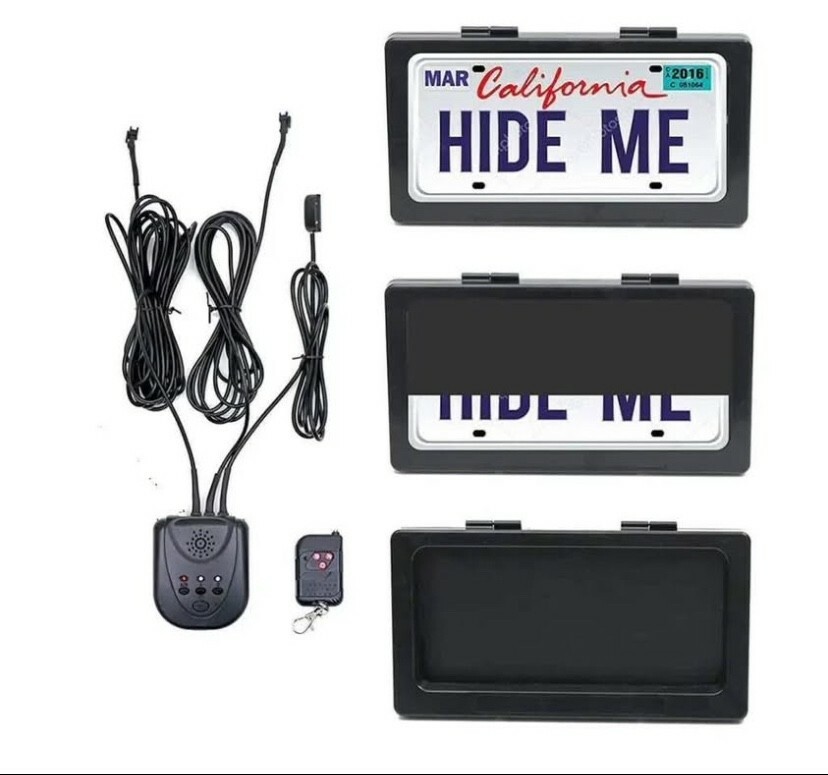
This means that the very production or sale of these devices can incur a four-figure fine for each unit in the possession of an individual or business. Legislators argue that higher fines are necessary to deter companies from continuing to market these devices as “cosmetic” or “privacy” accessories.
Such devices are also linked to toll evasion, robberies, vehicle thefts, and other illegal activities. When Governor Gavin Newsom signed the law on October 1, 2025, he did not specify any grace period, so police can stop and fine drivers with such devices right now.
These changes reflect a broader trend of increased traffic control and automated violation enforcement. The implementation of automatic license plate recognition cameras has become a key tool for law enforcement, and devices that interfere with their operation are seen as a serious obstacle. Increasing fines for manufacturers and sellers aims to address the problem “at the source,” not just punish the end user. The effectiveness of such measures often depends on consistent enforcement and the willingness of the judicial system to handle cases related to manufacturing, not just use.