


Canada prepares for first batch of Chinese electric vehicles
Canada will soon receive the first of 49,000 Chinese electric vehicles expected to arrive in the country this year. This became possible thanks to a new trade agreement between the two countries.
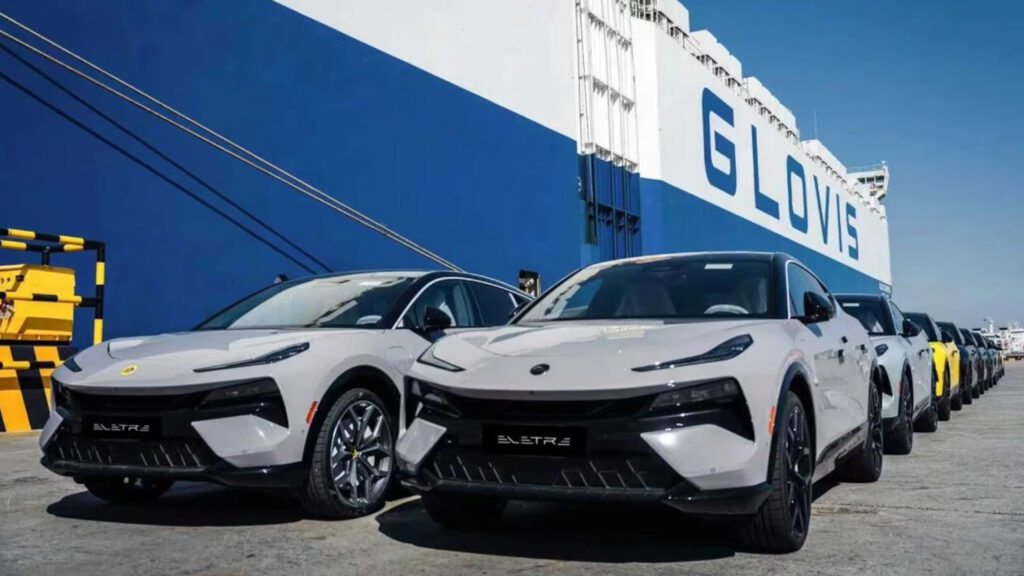
First shipment of Lotus Eletre
Geely is officially entering the Canadian market, though looking for the brand in dealerships is not yet worthwhile. The Chinese brand’s access to the Canadian market is facilitated by its subsidiary Lotus, which shipped 18 Eletre SUVs to North America on May 7.
This is not the first time Lotus vehicles assembled in China, or Chinese vehicles of any brand, have been offered in Canada. Polestar, Lotus, and others have previously sold vehicles manufactured in the Asian country. However, these 18 Eletre will be the first on Canadian roads following the trade agreement between the two countries earlier this year.
More: Chinese EV brands actively hiring staff in Canada, preparing for market entry
Background of the trade agreement
Imports from China effectively ceased after 2024, when then-Prime Minister Justin Trudeau followed the example of U.S. President Joe Biden by imposing a 100% tariff on Chinese electric vehicles, which was added to the previous 6.1% duty.
In response, China imposed tariffs on Canadian canola seed, bringing Canada’s agricultural industry to its knees. Canola brings billions of dollars to the Canadian economy annually, so it is no surprise that new Prime Minister Mark Carney was motivated to reach a deal, even despite requests from North American automakers, which are also a significant part of Canada’s economy, not to do so.
Small import volumes for now
Under the terms of the new trade agreement, Canada will allow imports of only 49,000 electric vehicles from China at a tariff rate of 6.1% in the first year, increasing to 70,000 by the fifth year. In exchange, in addition to easing tariffs on canola, China agreed to reduce duties on Canadian steel and aluminum. The trade truce also opens the door for Chinese brands planning to build vehicles in Canada.
Lotus has not disclosed the exact specifications of the Eletre currently crossing the Pacific, but the brand’s Canadian website currently lists only three trims based on a single 603 hp (611 PS / 450 kW) powertrain, priced from 119,900 CAD (87,600 USD) to 139,900 CAD (102,200 USD). Other countries also receive a 905 hp (918 PS / 675 kW) version.
Hybrid as a recent addition
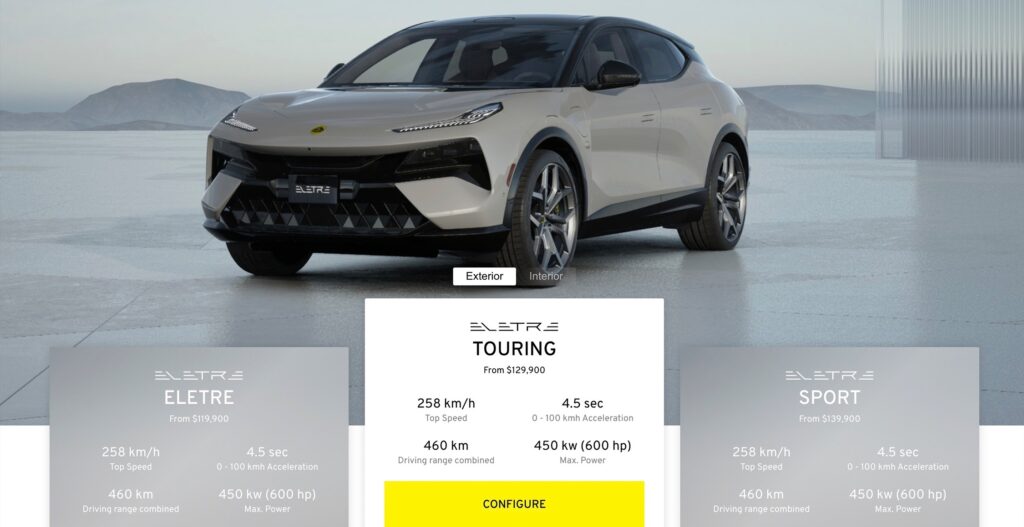

Both versions are fully electric, although Lotus responded to the sluggish luxury EV market (and the truly dreadful North American one) by releasing a new Eletre hybrid. Equipped with a 2.0-liter gasoline engine and two electric motors with a total output of 933 hp (946 PS / 696 kW), it was introduced in China in early 2026 and is expected to appear in Western markets later this year.
Lotus is not the only company rushing to take advantage of the new trade terms, which the Canadian government initially touted as a way to bring more affordable EVs into the country and help the nation meet its climate goals. Geely has stated its intentions to bring its own brand to Canada, as well as others like Zeekr. BYD and Chery vehicles have been spotted on North American roads, and Tesla is preparing the first batch of Chinese-made Model 3s for Canadian drivers, reports Drive Tesla Canada.
Thus, the first swallows of the Chinese auto industry in Canada are by no means budget models, but premium Lotus crossovers. This raises questions about whether the new agreement can truly provide Canadians with affordable electric vehicles as promised, or if it primarily opens the market to expensive niche products. At the same time, the activity of other Chinese brands such as BYD and Geely suggests that the battle for the Canadian buyer is just beginning, and the range could expand significantly in the future.