


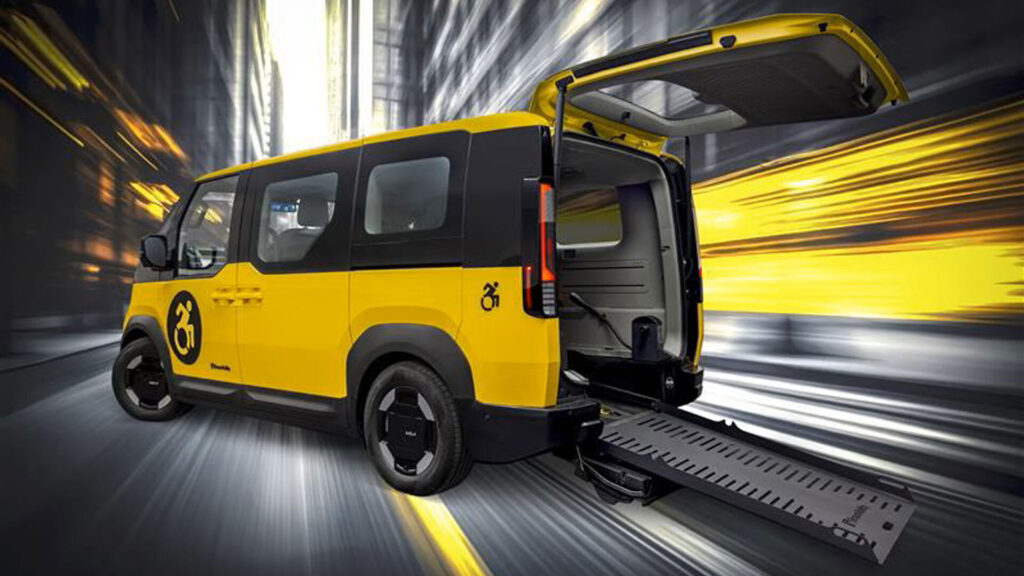
Electric Taxi Concept for New York City
At the New York Auto Show, Kia unveiled the PV5 WAV concept electric van, specifically designed for taxi and car-sharing services. This project was developed in collaboration with BraunAbility, a company specializing in vehicles for people with disabilities. The concept fully complies with the requirements of the American Disability Act.
Accessibility Features
The main engineering feature of the concept is a special wheelchair ramp that extends from the rear of the vehicle. This distinguishes it from the Korean version of the taxi, where the ramp is located on the side. Furthermore, the model is equipped with integrated wheelchair securement systems and passenger seat belts, and the low step-in height facilitates convenient daily use for both taxi drivers and passengers.
The model has “integrated securements and passenger restraints,” as well as a low step-in height that “is well-suited for daily taxi operation and wheelchair user boarding.”
Technical Specifications and Plans
The companies stated that the concept was created with the real possibility of mass production in mind. It is planned to be tested in New York City, one of the world’s largest taxi and car-sharing markets. The evaluation process will involve government agencies, fleet operators, disability rights organizations, and other stakeholders to gather feedback and improve the vehicle.
While details about the concept version itself are limited, the base PV5 model offers several configurations: Passenger, Cargo, and Chassis Cab. Available battery capacities are 43.3, 51.5, and 71.2 kWh. The vehicle is built on the fleet-oriented E-GMP.S platform and features a front electric motor with 161 horsepower.
Version for the Korean Market
For comparison, in Korea itself, Kia already sells the PV5 WAV Taxi. Its starting price is approximately $33,768, and the claimed range is up to 214 miles. However, the Korean version is equipped with a wheelchair ramp installed on the side, not at the rear as in the New York concept.
The emergence of such a specialized electric concept in one of the world’s largest cities indicates the growing attention of automakers to the needs of urban society, where environmental friendliness is combined with social inclusion. The success of such initiatives could significantly change the urban transport landscape, making it not only cleaner but also more accessible for all residents. The focus on real-world testing and feedback from stakeholders demonstrates a pragmatic approach to implementing innovations.