


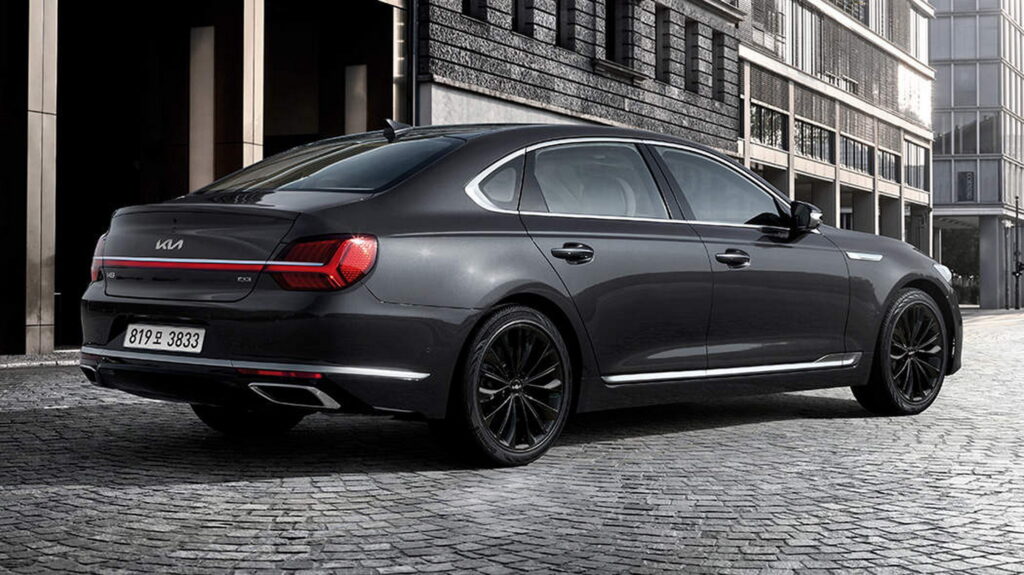
Kia ends production of flagship sedan K9
Remember the Kia K900? It was a luxury rear-wheel-drive sedan that tried to convince American buyers that Kia could compete with BMW and Mercedes. The model disappeared from the US market in 2021 but continued to be produced in South Korea under the name K9. Now, Kia has decided to completely cease its production, ceding the executive sedan segment to the Genesis brand and ending its most ambitious experiment in this class.
Model history and reasons for the decline
The Kia K9 appeared in 2012 as a replacement for the outdated Opirus, sharing a platform with the Hyundai Equus and Genesis sedans. The second generation K9 debuted in 2018 based on the Genesis G80, receiving a mid-lifecycle update in 2021 and a facelift in 2024. Each round of updates gave the car a little more time but did not provide the sales necessary to justify its existence.
The flagship sedan never became a sales hit, and this failure forced Kia to reconsider the model’s future and abandon plans for a successor.
Sales dynamics
In 2012, the K9 sold 13,931 units in South Korea, its best year. Interest revived in 2018 when the updated model found 11,843 buyers. After that, a sharp decline began: to 1,581 units in 2025 and only 734 sales in the first half of 2026.
For comparison, the related Genesis G80 sold 41,291 units in 2025, despite its more premium positioning. The front-wheel-drive Hyundai Grandeur, which is a ‘relative’ of the Kia K8, sold an impressive 71,775 units over the same period.
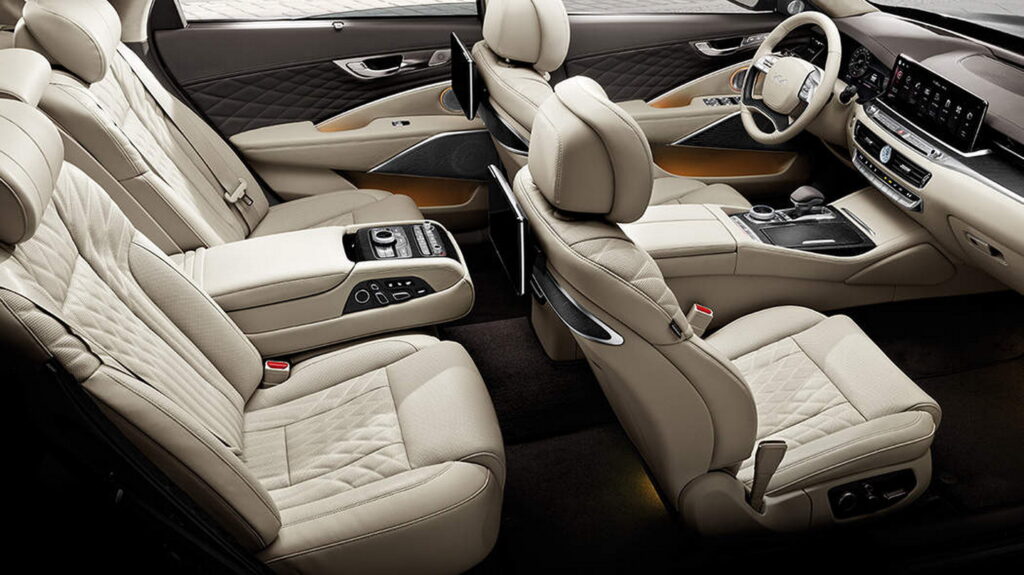

End of production and the future
According to the Korean publication Hankyung, citing industry sources and labor unions, the last K9 will likely roll off the assembly line by the end of 2026. This will end a 14-year production cycle and leave the slightly smaller front-wheel-drive K8 as the largest sedan in Kia’s lineup.
By ending production of the slow-selling K9, the automaker will free up resources for more profitable projects. Additionally, the production lines currently occupied by the sedan will be converted for future electric vehicles and purpose-built vehicles (PBVs).
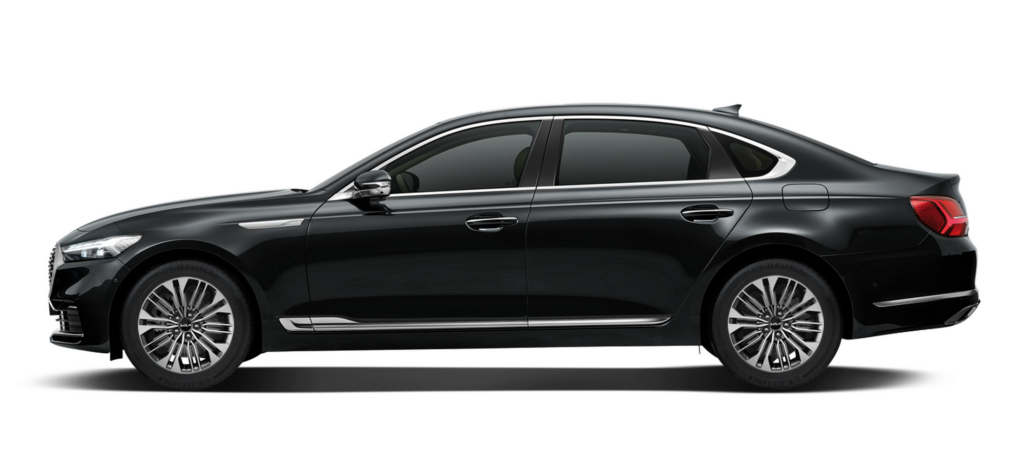

Technical specifications and price
The Kia K9 never had a hybrid version, relying on V6 engines after the naturally aspirated V8 disappeared in 2021. The current model starts at a price of 60,340,000 won (about $40,000 at the current exchange rate) in South Korea and reaches 79,940,000 won ($53,000) for the top-end Masters trim with a twin-turbo 3.3-liter V6 and all-wheel drive.
Kia’s decision to discontinue the K9 is a logical step in an environment where the sedan market is rapidly shrinking and buyers increasingly prefer crossovers and electric vehicles. Despite the K9 being a technically accomplished car, it failed to create enough appeal for the mass buyer, especially against the stronger Genesis brand. The freed-up resources will allow Kia to focus on developing electric vehicles and innovative transport solutions, which is a more promising direction for the company in the long term. Thus, the story of the K9 becomes an example of how even ambitious projects can give way to new strategic priorities.