


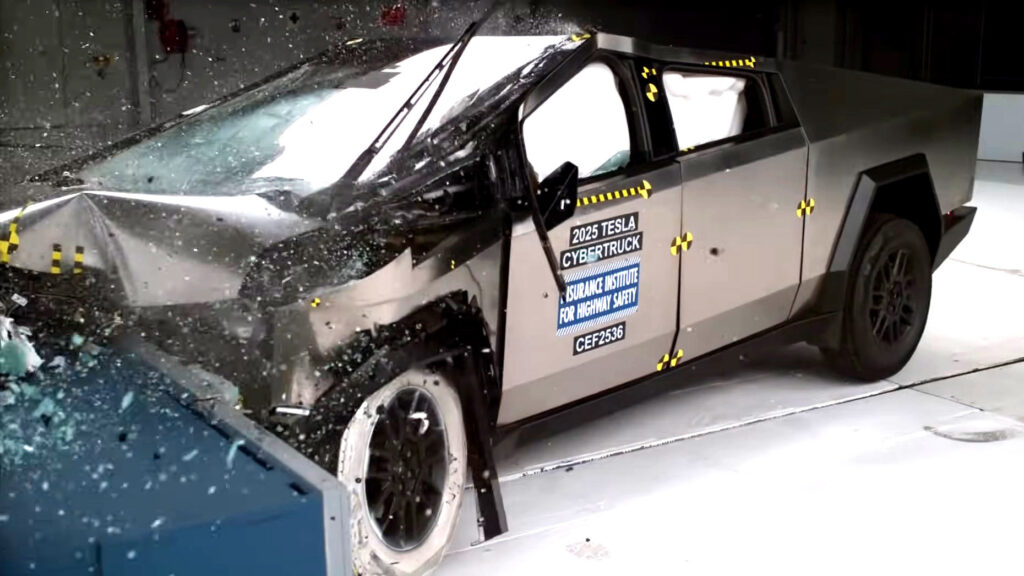
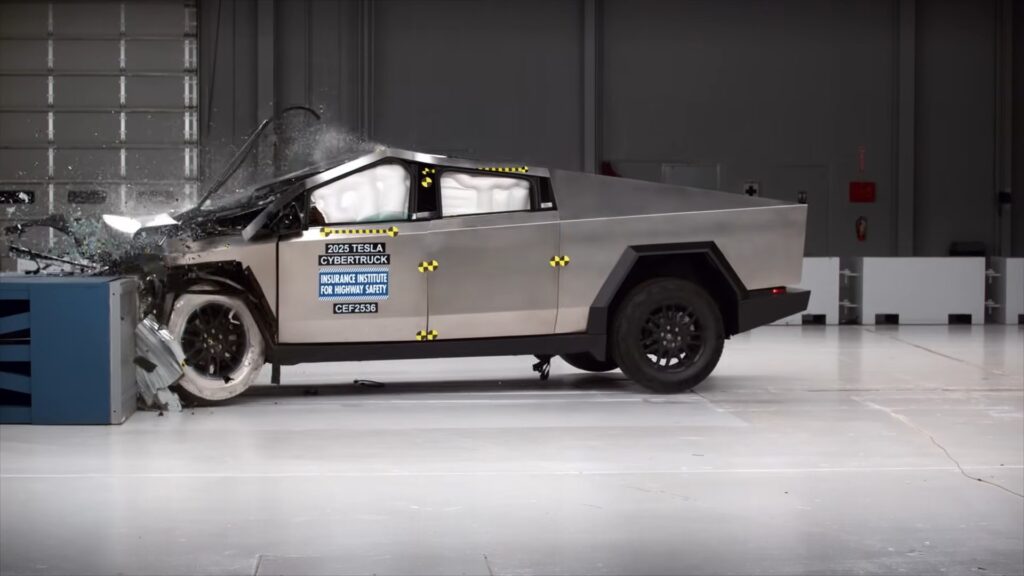
The Tesla Cybertruck electric pickup, whose design evokes the most controversial reactions, has reached an important milestone in the field of safety. The American Insurance Institute for Highway Safety (IIHS) has awarded it the highest “Top Safety Pick+” rating.
What Does This Award Mean?
Receiving the Top Safety Pick+ rating from the IIHS is a serious achievement for any car, as the institute constantly tightens the requirements for its crash tests. It is important to note that the award applies only to those Cybertrucks manufactured after April of this year.
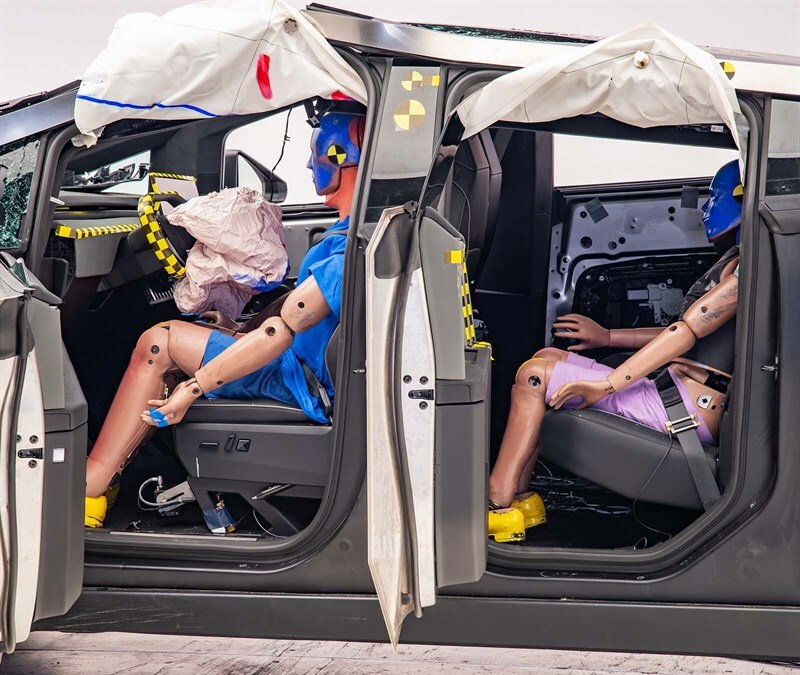

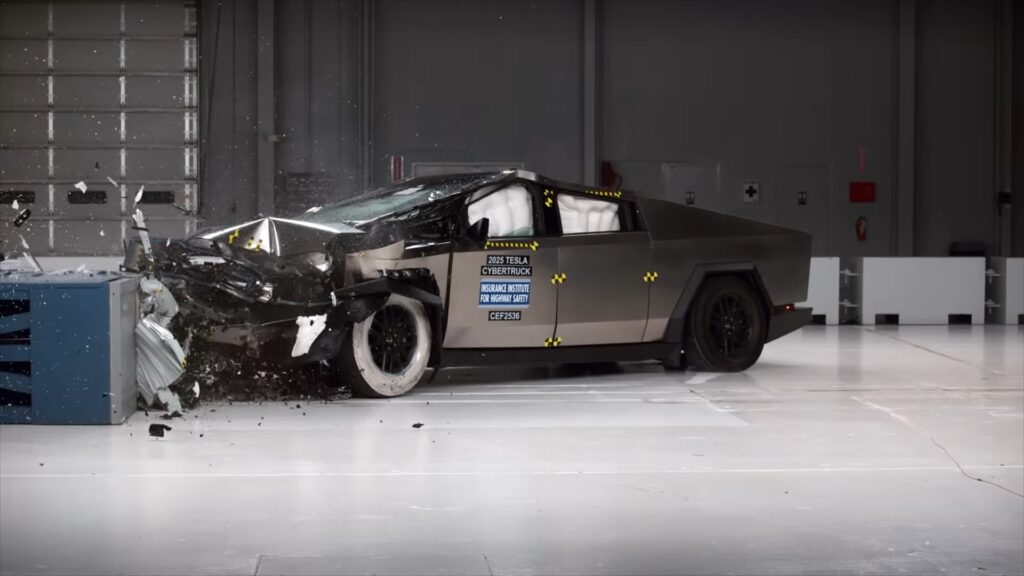
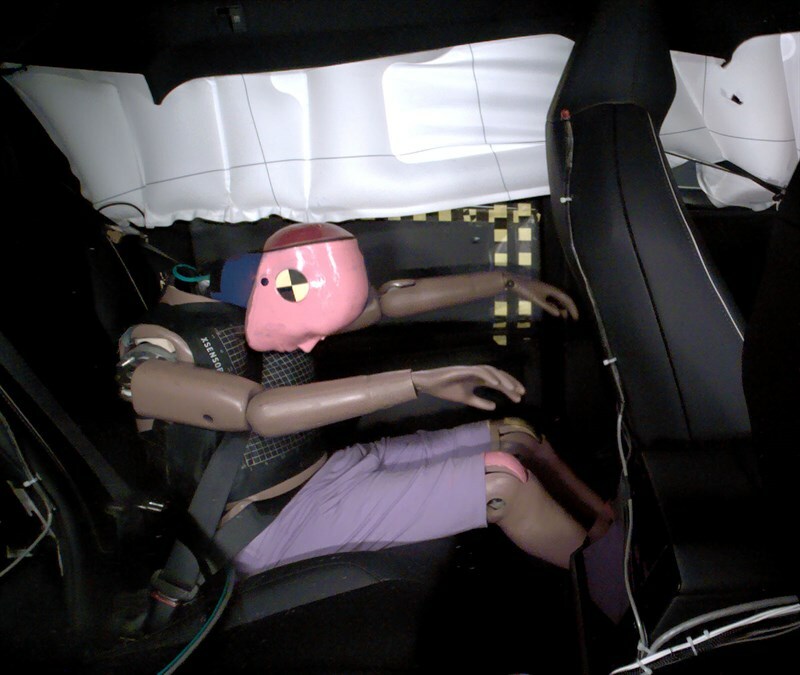
Models released after this date received structural updates, including a redesigned underbody and pedal assembly area. These changes allowed the vehicle to receive a “Good” rating in the small overlap frontal crash tests on both the driver and passenger sides. The moderate overlap frontal crash test also received a “Good” rating, with the only acceptable score being for rear passenger chest protection.
Furthermore, the Cybertruck showed excellent results in the updated side impact test, receiving a “Good” rating. Its list of advantages also includes good LED headlights, an effective pedestrian collision prevention system, and a reliable child seat attachment system.
Why Is This Important for Tesla?
This success allows Tesla to counter critics who doubted the ability of a car with such sharp body geometry to effectively absorb crash energy. The company has already taken the opportunity to celebrate this victory on social media.
Cybertruck earns IIHS Top Safety Pick+
European Tests — A Different Bar
However, American safety standards are primarily focused on protecting passengers inside the vehicle. European regulations, governed by UNECE and Euro NCAP tests, place a much greater emphasis on the safety of vulnerable road users — pedestrians and cyclists.

This is precisely where the Cybertruck faces fundamental difficulties. Its sharp corners, rigid stainless steel body panels, and overall architecture contradict European pedestrian protection requirements, which demand deformable front sections and energy-absorbing surfaces.
According to the German publication Handelsblatt, the head of the Tesla factory in Grünheide, André Thierig, has virtually ruled out the launch of the Cybertruck in Europe, stating that he does not see this car “on European roads in significant numbers.” Despite one specimen in Germany receiving a special permit, which required modifications, the company does not plan mass deliveries.
Different Approaches, Different Priorities
European and American safety standards are not so much better than each other, but rather different. American tests better account for the dynamics of collisions involving large vehicles, which is logical for a market dominated by pickups and SUVs. European regulations, in turn, are more focused on protecting people outside the car, which is critical for dense urban conditions.
The Cybertruck has proven that it can reliably protect its passengers. However, in its current form, it is unlikely to meet the strict European requirements for external safety without fundamental changes to its design. Thus, its success in the field of safety remains primarily an American story, limiting Tesla’s global ambitions for sales of this model.
The Cybertruck’s certification in America highlights the technical possibility of creating a safe car with a radical design, but at the same time vividly illustrates the gap in regulatory approaches between continents. This creates a dilemma for manufacturers, especially those aiming for the global market: whether to adapt the car to different standards, which could negate its uniqueness, or to limit themselves to a local market. The situation with the Cybertruck may set a precedent that will influence discussions on harmonizing global safety standards, especially for next-generation electric vehicles.