


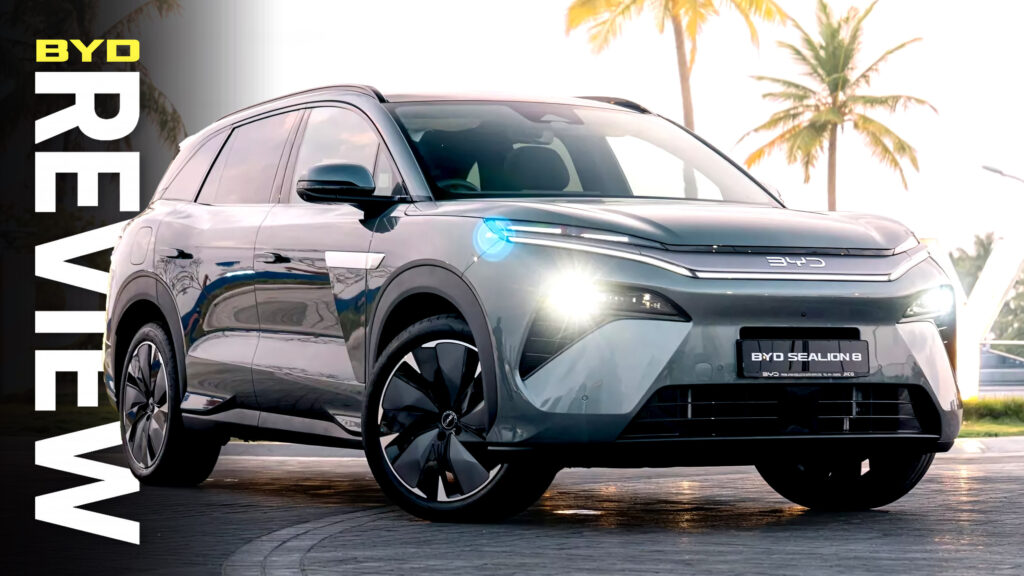
Pros: Ride quality, interior finish, value for money.
Cons: Steering feel, climate control interface, third-row space.
From an Awkward Start to a Serious Player
A few years ago, the first experience driving a BYD electric car, the E6 model, left a rather mediocre impression. It was a car with many shortcomings, inferior to competitors from Tesla or even the Nissan Leaf. Recalling the now-famous 2011 interview where Elon Musk ridiculed the very idea that BYD could be a serious player in the market, one can understand his skepticism. At that time, the company truly did not look like a competitor.
Quick Facts about the BYD Sealion 8 Premium DM-P
A Leap Forward
However, getting behind the wheel of the new Sealion 8, you realize that the situation has changed dramatically. This is, of course, not a perfect car; it has its flaws and peculiarities that reveal it as a relative newcomer to the global market. But at the same time, the Sealion 8 demonstrates a level of progress that cannot be ignored. Over the past few years, BYD’s lineup and those of other Chinese EV manufacturers have taken a huge step forward.
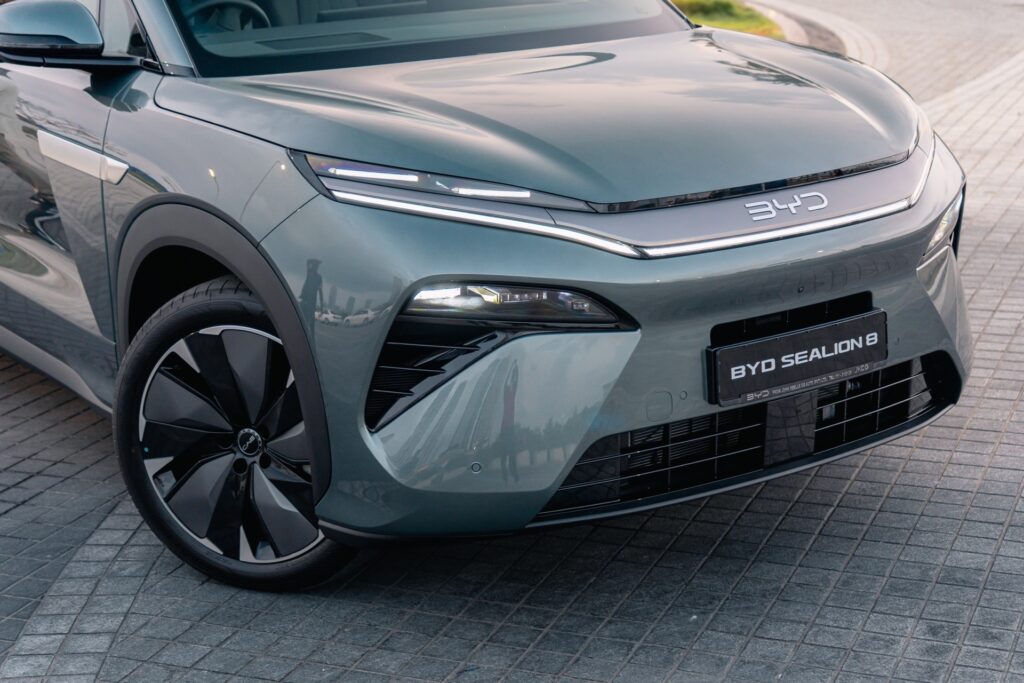

What is This Model and Why So Many Names?
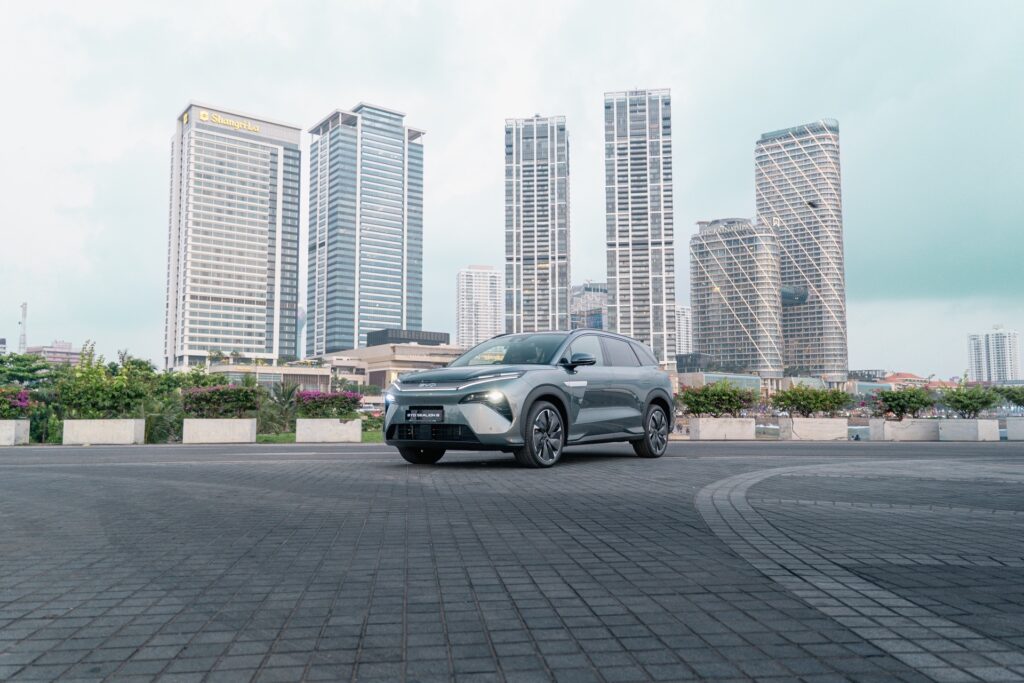
The BYD Sealion 8 is a seven-seat SUV-class crossover, available in various configurations, including plug-in hybrid and fully electric versions. The tested model is the “Premium” with all-wheel drive and the DM-P hybrid setup. There is also a front-wheel-drive Dynamic DM-I version.
A separate topic is the naming confusion. On the domestic Chinese market, this model is known as the Dynasty Tang L. For export, it was renamed Sealion 8, and in some countries, it is called Atto 8. This variety of names reflects the company’s marketing strategy for different regions but can confuse the buyer.
Competitive Edge in the Home Market
Today, Chinese automakers offer such compelling products in their home market that traditional auto giants are losing market share. Local brands better understand consumers, offer cutting-edge technologies, particularly in electrification and autonomous driving systems, making Western brands less attractive. However, for export markets, other factors remain important: on-road behavior, comfort, and build quality.
Impressions of the Interior and Comfort
The Sealion 8 Premium is positioned as a more premium model. The interior is trimmed in leather; the front seats and outer second-row seats have heating, ventilation, and massage functions. There is also a heated steering wheel, a panoramic roof, and a 21-speaker audio system.
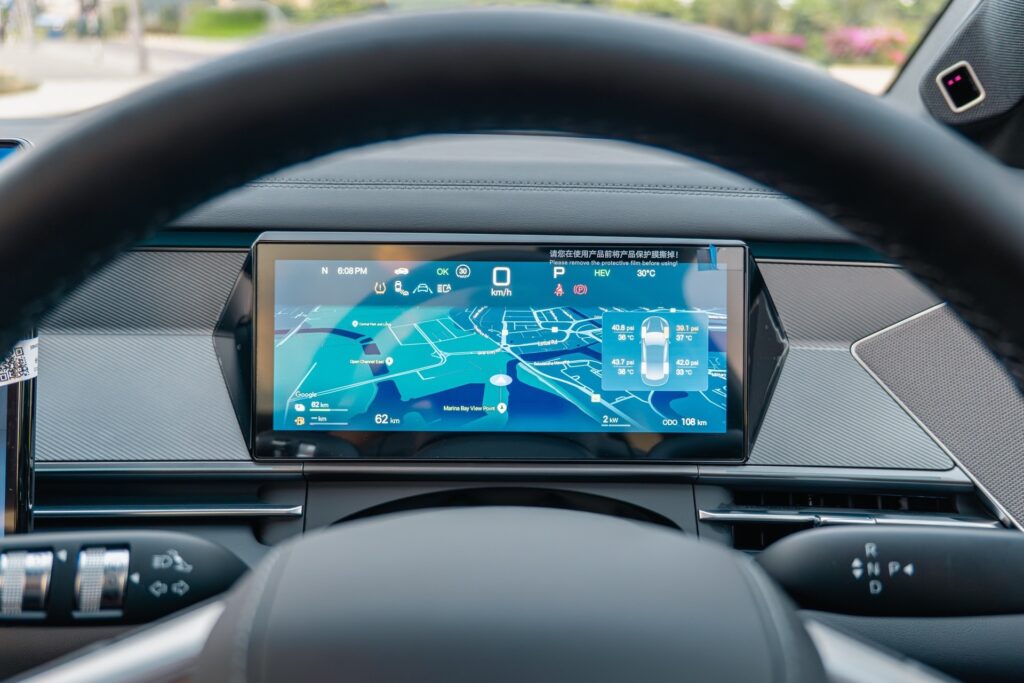
The interior build quality is high, with soft-touch materials and pleasant surfaces. The centerpiece is a 15.6-inch touchscreen, through which, unfortunately, climate control is also managed—a not very convenient solution. In front of the driver is a 12.3-inch digital instrument cluster that is easy to read in sunlight and supports map integration from Android Auto/Apple CarPlay.
The second-row seats are also comfortable, with separate climate control and USB-C ports. The third row, as in most SUVs of this class, is mainly intended for temporary use. It can be folded manually, which on one hand is more reliable than an electric mechanism, but on the other requires additional movements to adjust the second row.
On-Road Behavior
The tested Premium version is equipped with the semi-active DiSus-C suspension. This technology has significantly improved the car’s behavior compared to previous BYD models on conventional springs. The adaptive dampers handle road imperfections well, absorbing large bumps and keeping the body stable. On high-speed corners, the car demonstrates good handling with minimal body roll.
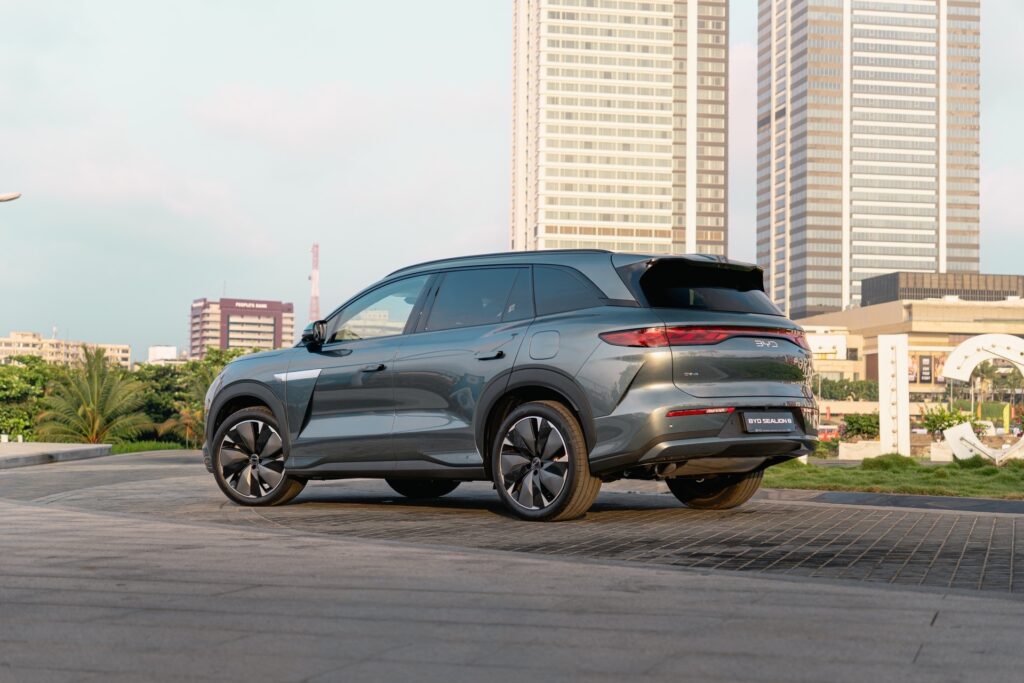
However, there are also drawbacks. The 21-inch wheels are prone to following road imperfections (tramlining), and rear-seat passengers may feel impacts when hitting potholes. The steering, despite its accuracy, provides almost no feedback and feels overly light at high speeds.
The performance figures are impressive on paper: 0-100 km/h in 4.9 seconds thanks to 359 kW of power. But in practice, this heavy SUV does not feel overly fast or sporty. In everyday use, the hybrid system works efficiently, offering various modes to maximize efficiency or pure electric city driving. The claimed combined range of over 1100 km makes it practical for long trips.
Conclusions and Competition
The BYD Sealion 8 is another step forward for the company. As a plug-in hybrid, it could be the option that convinces skeptical buyers to switch to new energy vehicles. It is not without flaws, but they become less noticeable compared to previous generations.
The model’s price varies depending on the market. For example, in Australia, it costs significantly less than in Sri Lanka and competes with the fully electric seven-seat Tesla Model Y. The Sealion 8 offers a lower price and the presence of an internal combustion engine as an additional energy source.
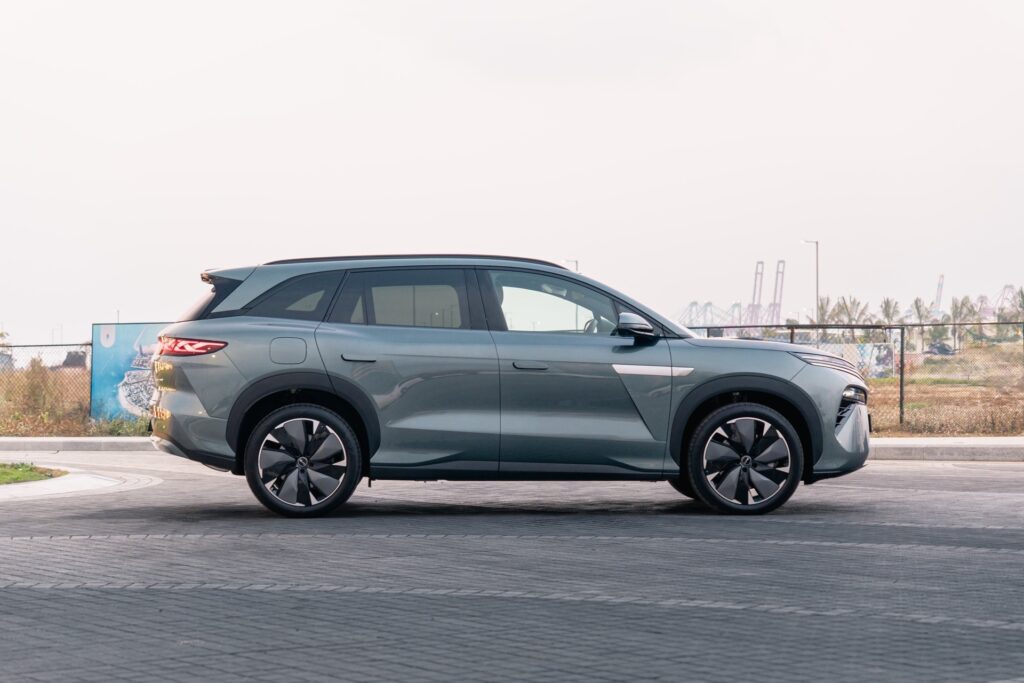
This model is the best proof to date of the serious intentions of the Chinese manufacturer. The progress in quality, technology, and driving dynamics is impressive. The question of long-term durability and reliability, as always, remains open, but current results indicate that BYD and other Chinese brands have become a force that all players in the auto market will have to reckon with.
BYD’s development from an awkward start with the E6 model to the modern and competitive Sealion 8 illustrates the dynamics of the entire auto industry. The speed at which the company improves its products forces a re-evaluation of established views on industry leadership. The technological race is no longer confined to traditional centers, and market success increasingly depends on the ability to quickly implement innovations and offer compelling value, which BYD seems to be doing quite effectively.