 by
by Ford’s 2025 financial results turned out to be catastrophic. The automaker published reports for the fourth quarter and the full year, which showed record losses. Despite management’s attempts to present the situation in a better light, the numbers speak for themselves.
Key Problems of the Year
Electric Failure
A significant part of the problem is the company’s bet on electric vehicles, which did not pay off. The Model e division incurred operating losses (EBIT) of $4.8 billion for the year. Although this is an improvement compared to 2024, the overall picture remains bleak.
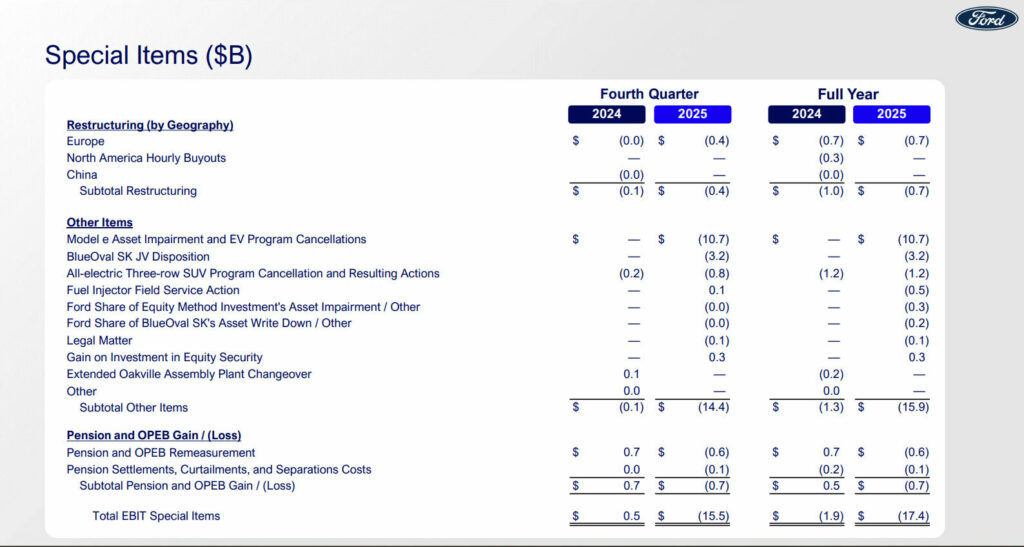
The company was forced to write off $10.7 billion as a special charge for “Model e asset impairment and cancellation of EV programs.” Another $1.2 billion was lost on canceled three-row electric models, and $3.2 billion went towards the disposal of the BlueOval SK joint venture. Additionally, about $500 million was spent by the company on recalls due to fuel injector problems.
Ford delivered a strong 2025 in a dynamic and often volatile environment. We improved our core business and execution, made significant progress in the areas of the business we control – lowering material and warranty costs and making real progress on quality – and made difficult but critical strategic decisions that set us up for a stronger future.
This statement by CEO Jim Farley contrasts with the loss figures but indicates the company’s focus on correcting the situation.
Not Just EVs
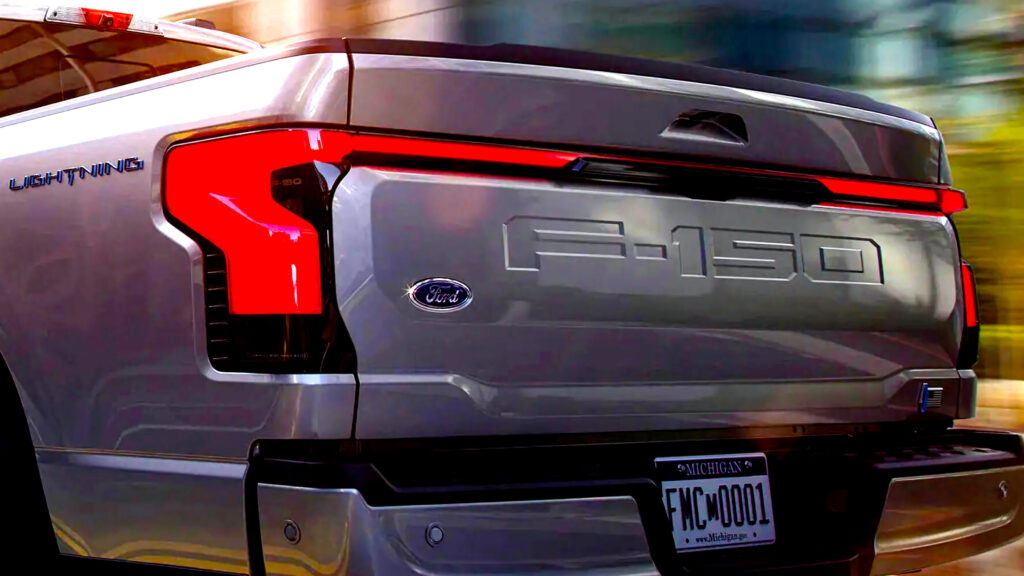
Although the cancellation of the fully electric F-150 Lightning became a symbol of the problems, electric cars were not the only cause of the losses. The automaker also suffered from the impact of tariffs and the consequences of fires at supplier Novelis’ facilities. The latter limited aluminum supplies, hindering production of the conventional F-150.
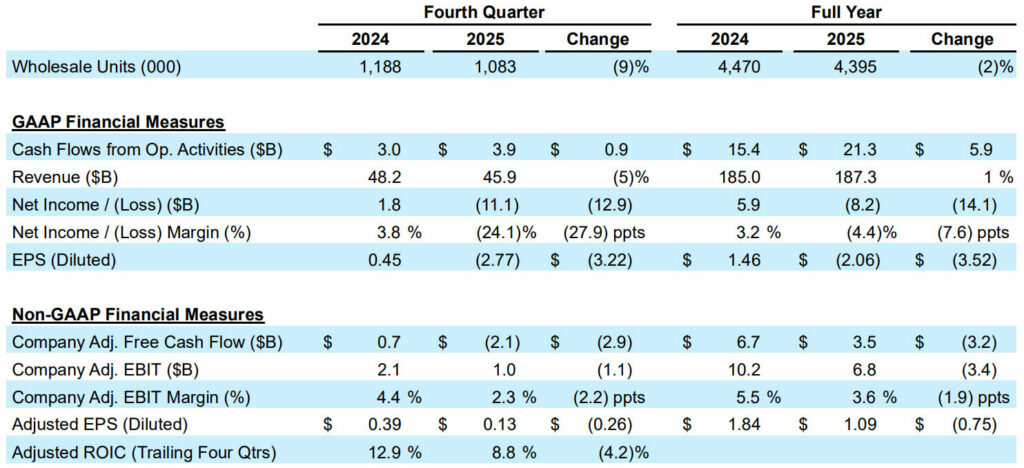
For the year, the company showed adjusted earnings before interest and taxes (EBIT) of $6.8 billion, which is lower than the 2024 figure of $10.2 billion. Adjusted earnings per share also fell from $1.84 to $1.09.
Future Forecasts
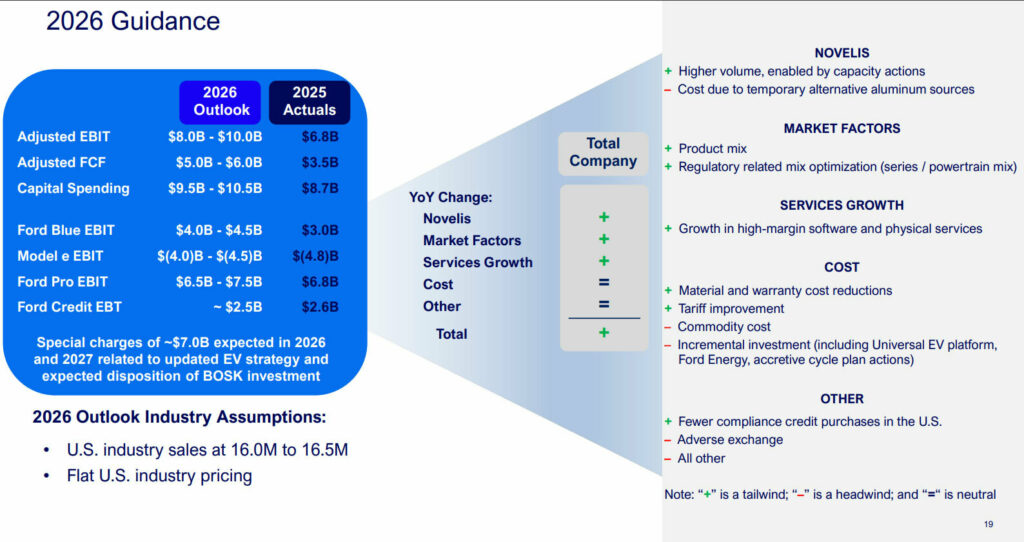
2026 is also expected to be challenging. The company forecasts adjusted EBIT in the range of $8 to $10 billion but expects the Ford e division to incur losses of $4 to $4.5 billion.
Furthermore, in 2026 and 2027, additional special expenses of approximately $7 billion can be expected due to the “updated EV strategy and anticipated disposal of BOSK investments.”
Ford’s 2025 financial results clearly demonstrate how risky a radical change of course can be for a major manufacturer. The pivot towards electric transportation, accompanied by huge investments, collided with market volatility, technological challenges, and external factors such as tariffs. The situation with Ford is a telling example for the entire automotive sector, which is trying to balance between traditional technologies and an electric future. Success in this transition will depend not only on technology but also on management flexibility and the ability to adapt to unforeseen circumstances. The next two years will be crucial for demonstrating whether the company can turn difficult strategic decisions into a stable recovery.