


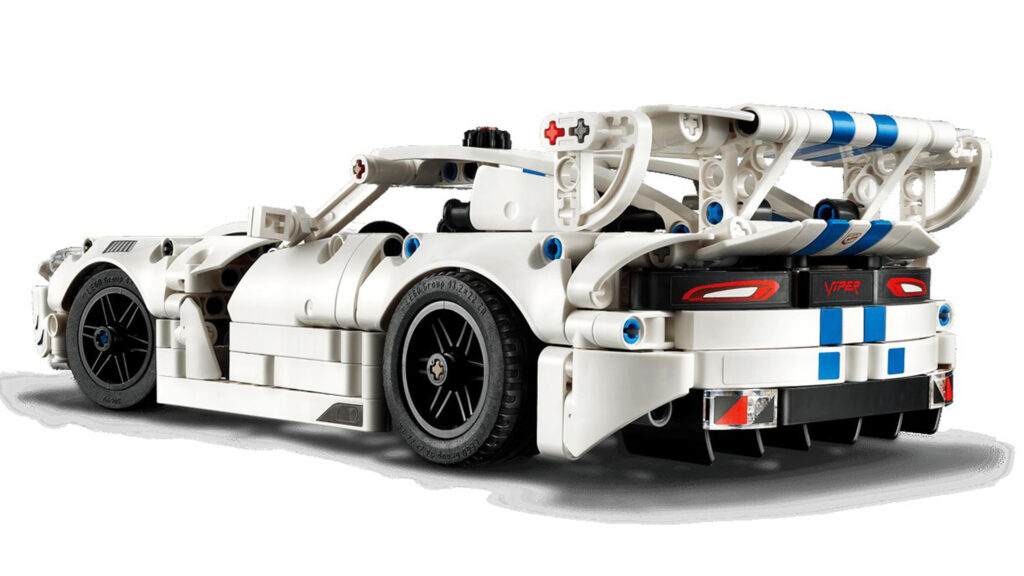
It is unlikely that an American sports car like the Dodge Viper will ever return to the assembly line. Fortunately, thanks to Lego, you can recall this great era of automotive history by building a model of the successful racing Viper GTS-R from 805 pieces. And inside, there is even a partially working V10 engine.
American Racing Legend
The racing version of the Dodge Viper competed for almost ten years in Europe and the United States. It earned several championship titles, as well as overall victories at the 24 Hours of Nürburgring, the Rolex 24 at Daytona, and the 24 Hours of Spa. It is a true American racing icon, so it is no surprise that Lego decided to release a model in the Technic line that will appeal to anyone aged 10 and up.
Working Pistons and Details
The Viper GTS-R model is finished in white with bright blue racing stripes. This is a special paint scheme that owners of the set can unlock in the game Forza Horizon 6. Without a doubt, the main highlight of the front of the mini Viper is the clamshell hood that opens. Hidden underneath is a miniature replica of Dodge’s massive V10. See those tiny plastic pistons? They really move — you don’t often see that in Lego models.
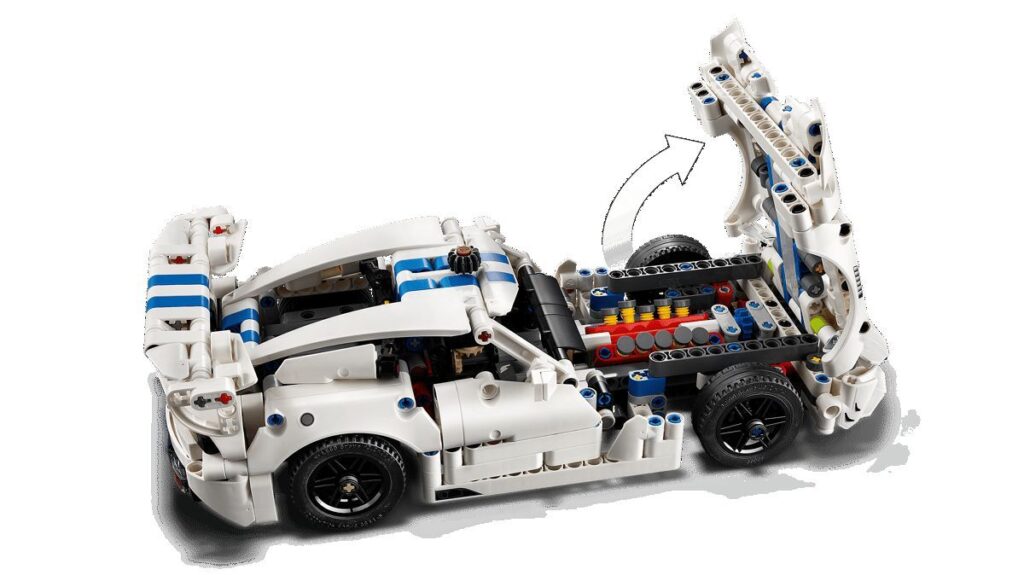

In addition to the moving pistons, the Viper GTS-R has working front wheels that turn. Like a real race car, the rear of the model features a high rear wing and a diffuser. Both elements are surprisingly well recreated in Lego form.
Assembly and Price
Like any detailed Lego Technic model, this one requires a lot of patience. The building instructions run to more than 170 pages. But this is definitely a better way to spend your free time than endlessly scrolling through social media. What’s more, the set is quite affordable: it can be purchased directly from Lego for $64.99.
Such building sets become not just entertainment, but also a kind of engineering lesson. The moving pistons and turning wheels let you feel how a real car works, even on a smaller scale. For Dodge Viper fans, this set is also a way to pay tribute to the era of great naturally aspirated engines, which seems to have ended forever.