


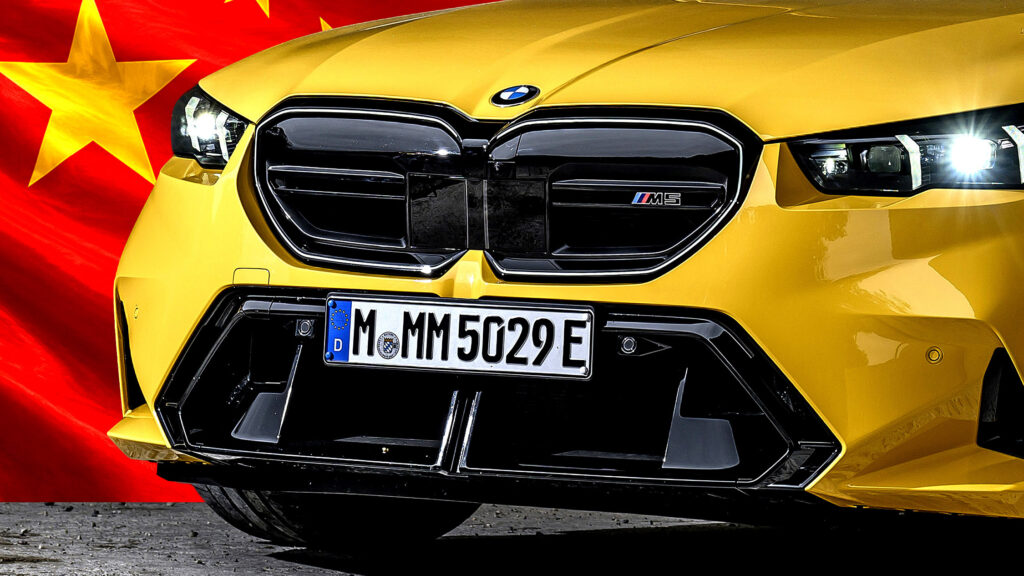
China changes the rules of the game for hybrids
For many years, plug-in hybrids have been positioned as the ideal compromise, with an emphasis on the word “compromise.” A little electric range for daily commutes, a gasoline engine for long journeys, and tax incentives in many countries. However, in China, this formula is rapidly becoming obsolete, and some of the largest European luxury brands are being forced to retreat.
New tax requirements
Updated Chinese tax regulations have raised the requirements for plug-in hybrids, granting advantages to models capable of traveling significantly greater distances on electric power alone. Previously, hybrids only needed to cover 43 km on electricity to qualify for discounts. Since January of this year, the threshold has increased to 100 km. This is why many Chinese PHEVs now have better electric range than electric cars from just a few years ago.
Western hybrids lose out
Western plug-in hybrids have traditionally been designed with small batteries and modest range. Even the best modern models, like the Range Rover, barely achieve 121 km under the WLTP cycle. In contrast, many Chinese hybrids can travel over 160 km before the internal combustion engine needs to start.
Some models are capable of significantly more. The new Lotus Eletre hybrid promises an incredible 420 km of range thanks to a massive 70 kWh battery. Under the optimistic Chinese CLTC cycle, this looks impressive, but even under the European WLTP, Lotus claims 350 km. The Eletre is an electric car converted into a hybrid, a popular Chinese strategy, whereas European brands prefer to build hybrids based on internal combustion engines.
It’s not just about range
The rule changes are not just about electric range. Regulators have also tightened requirements for the efficiency of cars running on gasoline, which is a problem for hybrids whose internal combustion engines are large V8s. Taken together, these changes have created an environment where many old plug-in hybrids, which still have demand and tax advantages in Europe, suddenly look outdated.
The market is changing
This shift has had a dramatic impact on the market. Audi, BMW, Mercedes-Benz, Jaguar Land Rover, and other brands have either drastically reduced or effectively ceased offering plug-in hybrids in China. Models that previously qualified for incentives no longer meet the new standards, making them significantly less attractive to buyers.
Soon, these changes could affect the West as well. Chinese brands like Lynk & Co are already exporting their 08 hybrid crossover with a large range to Europe. And the new Volvo XC70 from Geely, with a range of 180 km, will join them.
Volvo, Lotus
Chinese regulators have effectively rewritten the rules for plug-in hybrids, betting on technologies with large batteries that can be charged once a week. This creates a challenge for European luxury brands accustomed to a different philosophy. Local manufacturers like BYD or Geely already dominate the market, offering hybrids whose performance approaches that of electric vehicles. For Western companies, this is a signal: either adapt to the new requirements by investing in the development of hybrids with significantly greater range, or lose the Chinese market, which is one of the largest in the world. At the same time, this trend could accelerate the emergence of similar rules in other countries, changing the global landscape of hybrid vehicles.