 by
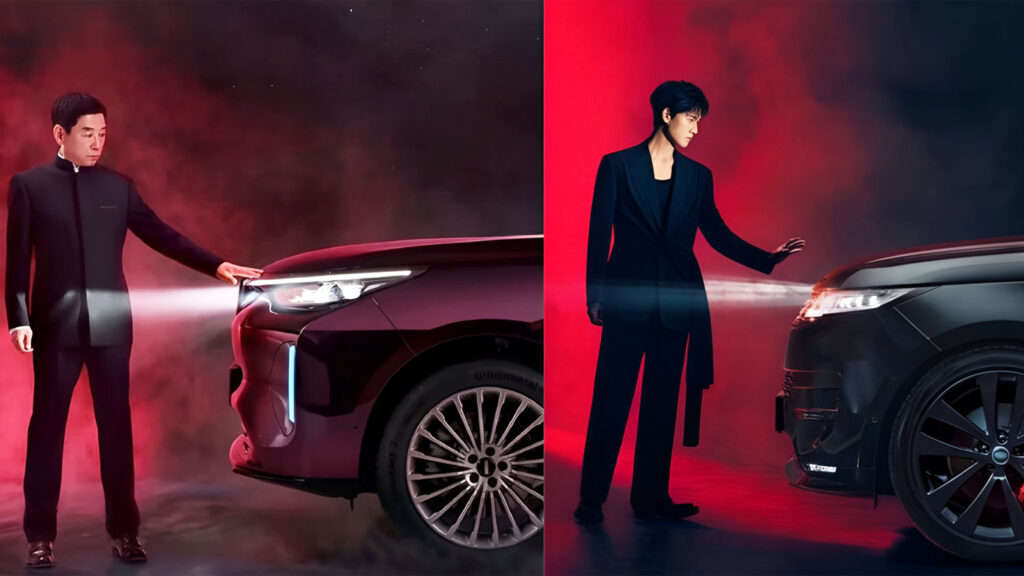
by Chinese automaker Great Wall Motor (GWM) has found itself at the center of a scandal over an advertising poster for its new Wey V9X SUV. The image turned out to be almost identical to the official promotional material for the Land Rover Range Rover Sport, shot a year earlier.
History of Plagiarism in the Auto Industry
Some Chinese automakers have a long history of borrowing design solutions from Western models, sometimes resorting to direct plagiarism and copyright infringement. Although many brands have begun to shed this reputation in recent years, the GWM incident shows that companies still have work to do.
Unusual Similarity of Images
In the original Land Rover photo, a well-dressed man of Asian appearance poses next to a black Range Rover Sport, extending his hand towards the hood. Smoke and bright red light are visible in the background. The image published by GWM is practically identical: instead of the Land Rover, the new Wey V9X is positioned, shot from the same angle, with a man in black standing next to it, also looking at the hood with an outstretched hand. Smoke and red light are in the background. The similarity is so striking that even the reflections of the Wey’s headlights on the man replicate the original.

Official Admission of Mistake
After the comparison of the two images sparked a wave of discussion, GWM’s management was forced to respond. The company’s chairman, Wei Jianjun, acknowledged the fact of plagiarism and offered a public apology via Chinese social networks.
After verification, it was confirmed that the poster was indeed borrowed. There can be no excuses. Here, I offer my apologies to Land Rover, the designer of the original poster, and my friends online who trusted me. Great Wall Motors and I are also prepared to fully assume the legal and financial responsibility for this.
It is currently unknown whether Land Rover plans to file a lawsuit against GWM; however, after such a statement from the company’s chairman about readiness to bear financial responsibility, such actions from the British brand seem quite logical.

This case has become a vivid example of how, even in the world of high technology and global marketing, elementary mistakes can occur, leading to serious reputational losses. At the same time, the swift and candid reaction of GWM’s management, unlike many other similar stories, may indicate a shift in the approach to corporate responsibility. The further development of events will show whether this incident will remain merely an episode or will prompt the entire industry to adopt a more careful attitude towards intellectual property and creativity.