 by
by Premium Brand Denza Enters the European Market
The Chinese automotive giant BYD is not limiting its competition to just its main brand and is now launching its premium subsidiary Denza in Europe. This is somewhat ironic, as Denza was initially a joint venture between BYD and Daimler, the owner of Mercedes-Benz, combining Chinese electrification expertise with German premium experience. The brand was founded in 2010, before Mercedes-Benz gradually stepped back and fully exited the project in 2024.
The rollout will begin in Germany, France, Italy, Spain, and the United Kingdom, with two key models spearheading the effort. By the end of 2026, Denza is expected to be present in 30 countries across the continent.
BYD Says Five-Minute Charging Adds 310 Miles, BMW Says Read The Fine Print
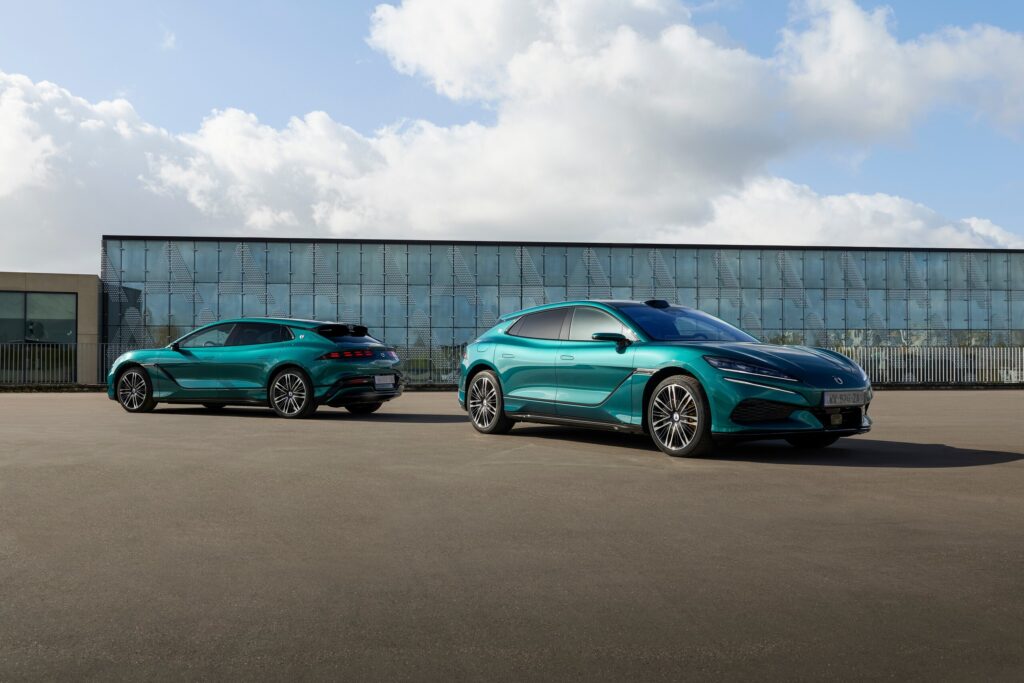
These first models will be the D9 DM-i minivan and the Z9GT Shooting Brake. The D9 relies on a plug-in hybrid powertrain, while the Z9GT gives buyers a choice between a full-electric or a plug-in hybrid powertrain. Their launch is also synchronized with BYD’s broader push of its international Flash Charging system. Over the next 12 months, the company intends to install 3,000 charging stations across Europe, with another 3,000 planned for markets outside China.
Specifications of the Electric Z9GT
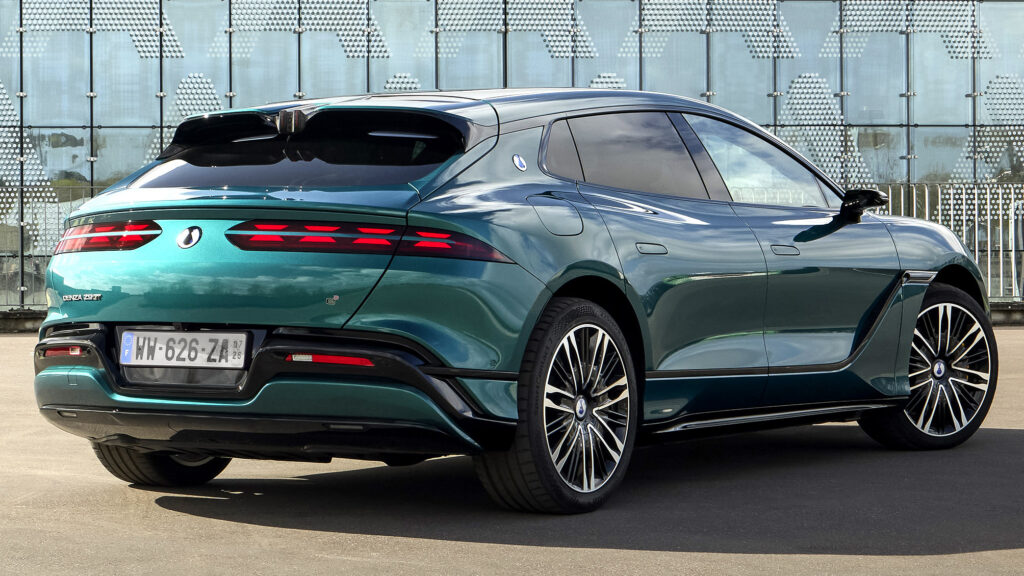
Denza has long been selling the Z9GT Shooting Brake in China, and it is one of the country’s most intriguing family models. Built on the e³ platform, the fully electric model uses a 122.49 kWh battery, a front motor with 308 hp (230 kW) and 410 Nm of torque, plus two rear motors each with 416 hp (310 kW) and 400 Nm of torque. The combined output is 1139 hp (850 kW) and 1210 Nm of torque.
BYD’s Premium Z Sports Car Is Gunning Straight For Porsche’s Pride
Acceleration from 0 to 100 km/h takes just 2.7 seconds, and the top speed is 269 km/h, which is more than sufficient for high-speed travel on German autobahns. The claimed WLTP range is 599 km. Thanks to BYD’s 1500 kW fast-charging system, the battery charges from 10% to 70% in five minutes and from 10% to 97% in nine minutes.
The Powerful Plug-in Hybrid Variant
The plug-in hybrid version uses a 2.0-liter turbocharged four-cylinder engine with 170 hp (127 kW) and 320 Nm of torque, paired with a front motor producing 268 hp (200 kW) and two rear motors each with 248 hp (185 kW) and 360 Nm of torque. The total system output is 765 hp (570 kW) and 1035 Nm of torque.
BYD Boss Brags Z9 GT Is ‘Ten Times Better’ Than Premium Euro Rivals
It is also equipped with a 63.82 kWh battery and can travel 203 km on electric power alone, or 805 km in combined mode with the engine. It accelerates from 0 to 100 km/h in 3.6 seconds, with a top speed of 259 km/h.
Both versions come standard with carbon-ceramic brakes and feature rear-wheel steering. They also include the advanced dual-chamber air suspension DiSUS-A and can tow up to 2000 kg. A rear-wheel-drive version of the electric Z9 GT will be introduced later this year, promising greater range.
The D9 DM-i Minivan and the Brand’s Future
The D9 DM-i minivan is equipped with all-wheel drive and a plug-in hybrid powertrain, providing up to 209 km of electric-only range and a combined range of 950 km. It also supports BYD’s fast-charging technology.
Market-specific pricing for the new Denza models has not yet been announced, although details are expected soon.
Denza’s entry into the European market comes at a time when competition in the premium electric vehicle segment is intensifying. The specifications of the Z9GT, particularly its power and charging time figures, undoubtedly make it a serious contender. Success will depend not only on the product but also on the speed of infrastructure deployment, such as the planned thousands of charging stations, and on how willing European buyers are to embrace a Chinese premium brand that once had German roots. Market dynamics show that traditional leaders are already feeling the pressure, and the emergence of players like Denza is only accelerating the industry’s transformation.