


Transforming the Suzuki Jimny into an Italian Off-Roader
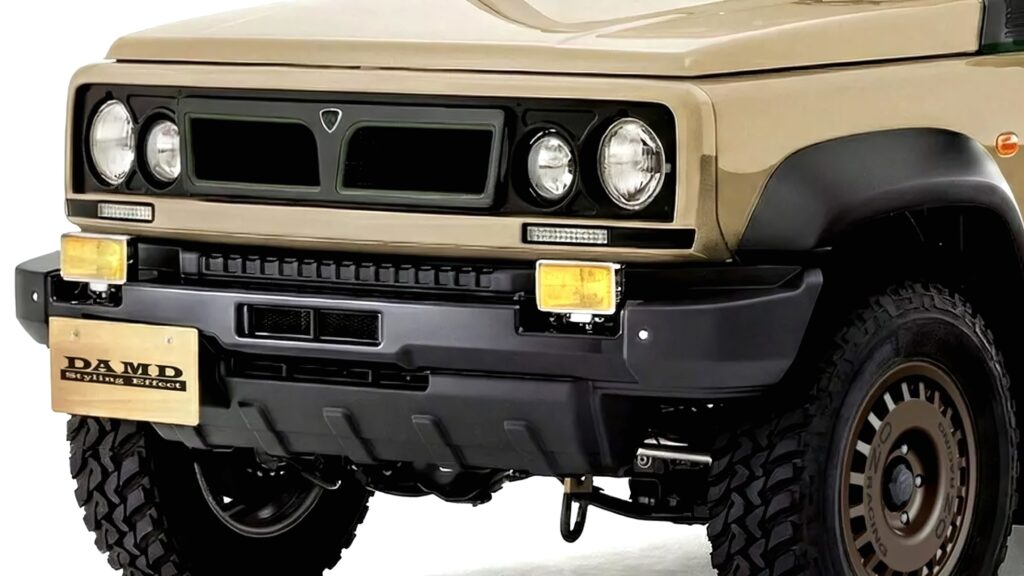
The Damd atelier has presented its new interpretation of the five-door Suzuki Jimny, inspired by Italian automotive design. This project, named Armata, reimagines the iconic Japanese off-roader in a retro style reminiscent of classic Lancia models.
The main visual changes are:
Design Details and Technical Features
The overall body shape of the Jimny remains untouched, but the new look emphasizes ruggedness and off-road capability. The yellow fog lights are moved higher, and an additional roof bar with four orange LEDs, similar to marker lights, has appeared. The side mirrors resemble those installed on trucks.
Italy is not famous for its SUVs. Beyond the Fiat Panda 4×4 and the Fiat Oltre concept, the list is very short. Damd seems eager to fill this niche.
The car is fitted with OZ Racing alloy wheels in a camouflage finish, paired with robust off-road tires. The chassis has likely received a suspension lift to improve obstacle clearance geometry, although full technical details have not yet been disclosed.


Technical Specifications and Future Plans
Under the hood remains the standard naturally aspirated 1.5-liter four-cylinder engine producing 103 hp (77 kW). It continues to power all four wheels via a five-speed manual or four-speed automatic transmission. The drivetrain remains a part-time, selectable four-wheel drive.
Damd plans to make the Armata kit available for Suzuki Jimny Nomad buyers by 2026. Some elements, such as the roof light bar and truck-style mirrors, will be available for order at the Tokyo Auto Salon.
The company already offers a range of visual kits for the five-door Jimny, inspired by vehicles like the Land Rover Defender and Mercedes-Benz G-Class. However, the Little D kit, reminiscent of the Lancia Delta Integrale, remains exclusive to the three-door Jimny Sierra version.
This project once again demonstrates the versatility of the Suzuki Jimny as a platform for creativity. It combines Japanese reliability and construction simplicity with emotional European design, offering an alternative to mass-market SUVs. The demand for personalization of such vehicles continues to grow, stimulating tuning ateliers to create increasingly bold concepts that often precede official models from major manufacturers.