


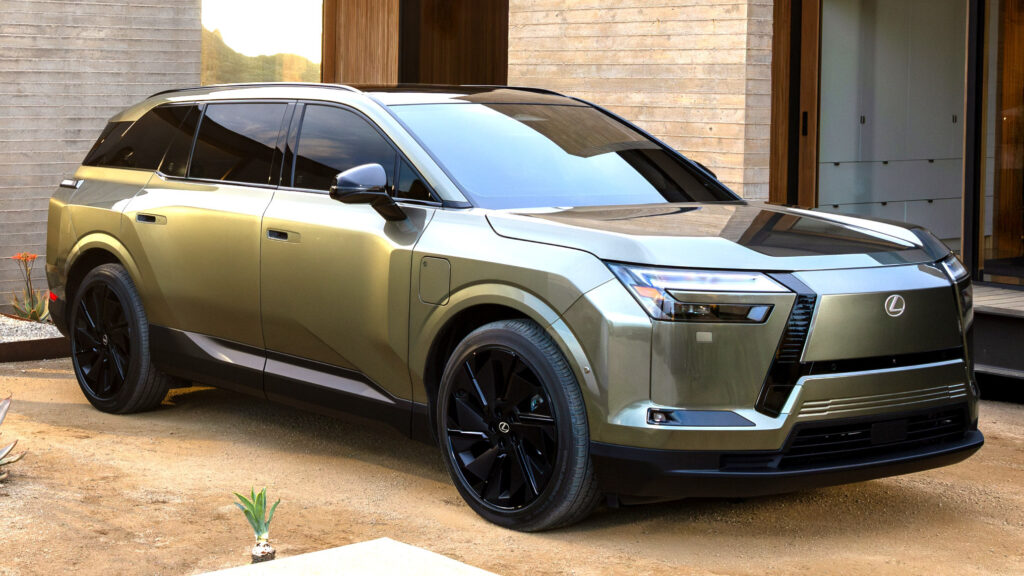
A Flexible Approach to the Future
For many years, automakers, including Lexus, which once promised to go all-electric by 2035, assured us that the future belongs to electricity. However, now that EV sales growth has slowed in several key markets, many of these companies are quietly changing course, often at huge expense. Lexus, on the other hand, believes it has found a smarter and less financially painful way forward.
Related: 2027 Lexus TZ borrows Highlander chassis and V10 sound from the LFA
Instead of going all-in on dedicated EV platforms or sharply pivoting back to traditional gasoline cars, Toyota’s luxury division is developing vehicles that can be built as either hybrids or fully electric models, using largely the same basic architecture. This is a strategy designed to give Lexus maximum flexibility while competitors struggle with costly swings in demand.
One Platform, Two Powertrain Types
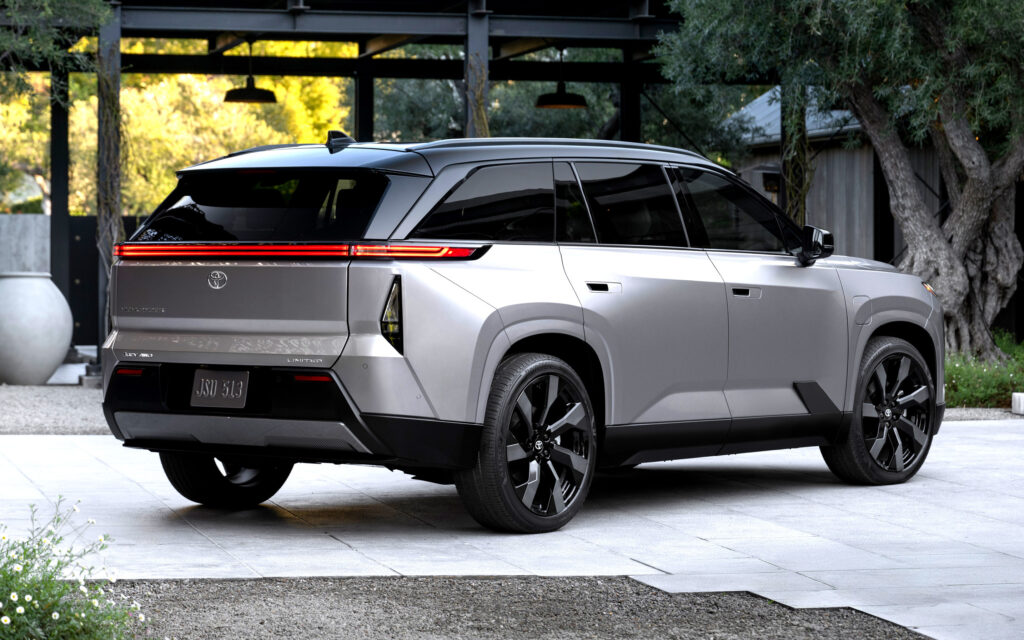

Future products will be designed so that both brands can install either a battery pack or a hybrid powertrain within essentially the same body structure, according to Lexus and Toyota executives who presented the plan to Handelsblatt and other media at the Shimoyama development center in Japan. This means Lexus can react faster if customer demand shifts toward EVs, hybrids, or something in between. Or if the next US president reinstates tax credits for cleaner cars.
Toyota’s Chief Technology Officer Hiroki Nakajima told journalists that the future all-electric Lexus TZ SUV is expected to be profitable from launch in North America. This is a claim many automakers would like to make right now, as some, like Honda/Acura and Porsche, are seriously suffering from writing off billions of dollars in EV development, while EV sales in the US are critically low.
Christopher Richter, an auto analyst at CLSA in Tokyo, explains this advantage by Lexus’ lower cost base. Toyota does not disclose Lexus’ financials, but Richter told the German publication he believes the brand’s margin is in the double digits. For comparison, Mercedes posted a return on sales of 5% last year, and BMW 5.3%. The secret, Richter says, is that Lexus can charge BMW-level money while leveraging the purchasing volumes and development resources of the world’s largest automaker.
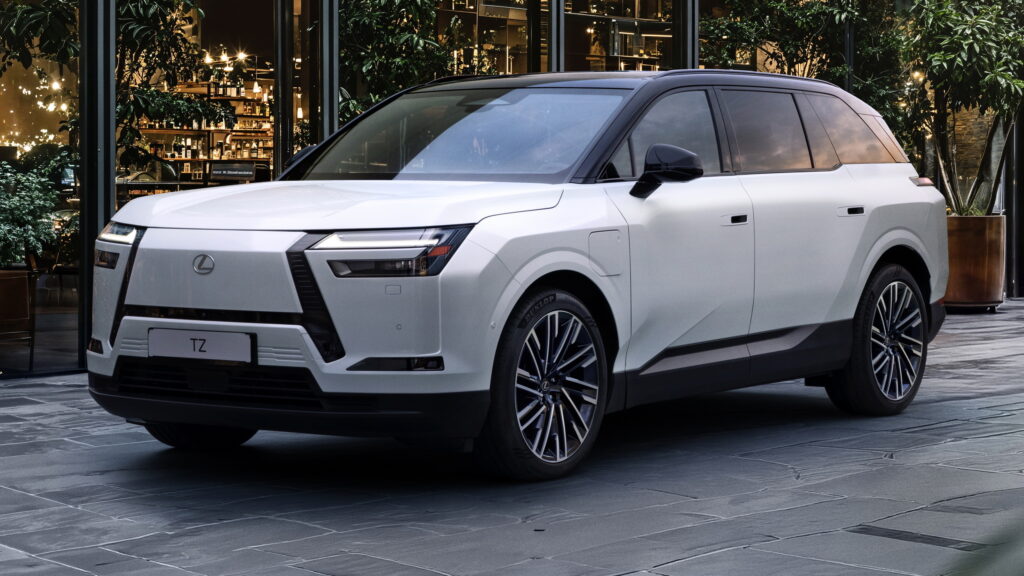

The TZ is neither the first nor the only Lexus to benefit from the shared platform concept. The new ES sedan is already available as a hybrid or an EV, both versions built on the same base architecture. This is not a strategy unique to Lexus. BMW and Mercedes also build some EVs and hybrids on shared platforms, including the X1 and iX1, the 5 Series and i5, and the CLA.
However, both German brands also have platforms dedicated exclusively to EVs. For example, the new combustion-engine BMW 3 Series sedan will look nearly identical to the electric i3, but they will be built on completely different architectures.
Profit Over Volume
BMW and Mercedes sell more than twice as many cars as Lexus, which sold 882,291 vehicles worldwide in 2025, almost half of them in North America. Specifically, Mercedes sold about 1.8 million that year, and BMW nearly 2.2 million under its core brand. But in the luxury game, profit matters, not registrations, and it seems Toyota’s premium division is confident it holds better cards.
Lexus, Rivers/Carscoops
This approach not only allows Lexus to save on development costs but also to adapt more quickly to changing market conditions. While competitors are forced to bear huge costs for the parallel development of different platforms, Lexus gains the ability to flexibly adjust the ratio of hybrids and EVs in its lineup, minimizing financial risks. This is particularly important given the uncertainty surrounding future emissions regulations and consumer preferences, where betting on a single technology could prove too risky. The efficient use of parent company Toyota’s resources gives Lexus a unique competitive advantage, allowing it to offer technologically sophisticated products with high margins, which is the key to stable growth even in turbulent times.