


During an investor presentation, the American electric vehicle manufacturer Lucid Motors announced two important strategic steps aimed at the future of autonomous transportation.
Lunar Autonomous Taxi Concept
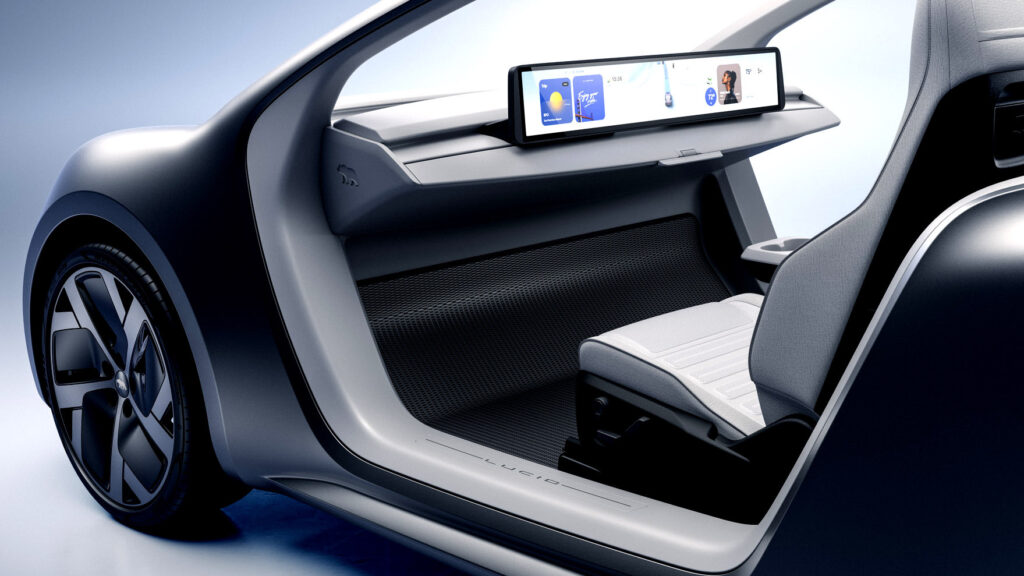
The Lunar concept robotaxi is a specially designed vehicle that completely lacks pedals and a steering wheel. This is a clear signal of Lucid’s intentions to seriously enter the field of fully autonomous transportation, not just driver-assistance technologies. Thus, the company is following a path similar to Tesla’s Cybercab program and other EV manufacturers who view autonomy as a long-term revenue source.
Detailed technical specifications for the Lunar are still scarce. The company emphasized energy efficiency, aiming for a figure of 5.5 to 6 miles per kilowatt-hour. According to theoretical calculations, this could provide a range of about 400 miles. Achieving such numbers will depend on low-drag aerodynamics and an optimized body. Fast charging is also claimed: the robotaxi will be able to regain over 200 miles of range in approximately 15 minutes.
The question of whether the concept will ever become a production product remains open for now. Currently, the company is focused on preparing for the launch of its future line of mid-size electric vehicles, which is of much greater importance for its finances in the near term.
Autonomy Subscription as a Business Model
Lucid calls subscriptions for autonomous features the biggest opportunity for software monetization. Starting in the first half of 2027, car owners will have to pay a monthly subscription fee to use the DreamDrive Pro suite. The cost of the service will depend on the level of autonomy.
Starting in the first half of 2027, owners will have to pay from $69 to $199 per month, depending on the level of autonomy they desire.
The company states that it has a “Level 4 autonomy-ready platform, available straight from the factory.” This platform is part of the new mid-size architecture on which several future products will be built. The Lunar concept, designed for only two passengers, is said to leave plenty of room for cargo. One of Lucid’s partners, Uber, is already in talks to use this platform as part of its robotaxi program.

Autonomy Roadmap
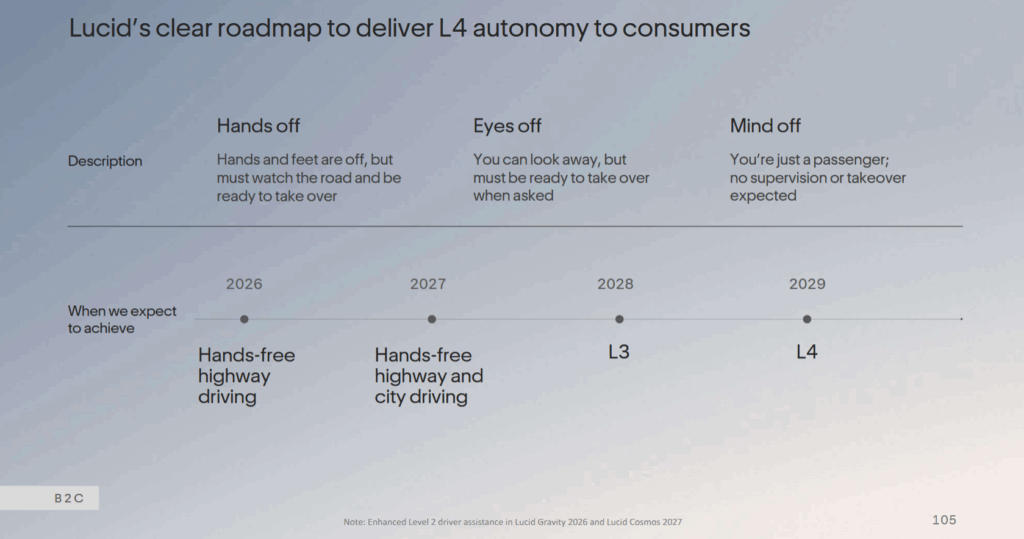
Lucid also openly published its roadmap for the development of autonomous technologies. According to the plans, this year the company is to offer customers hands-free highway driving. Next year, the goal is hands-free driving on both highways and in cities. By 2028, Lucid aims to achieve Level 3 autonomy, where the driver must be ready to take control, but the car can mostly drive itself.
Level 4 autonomy, which the company is targeting by 2029, will allow drivers to divert their attention from the road. Whether all these plans can be realized remains an open question, but the company’s strategy is now clearer.
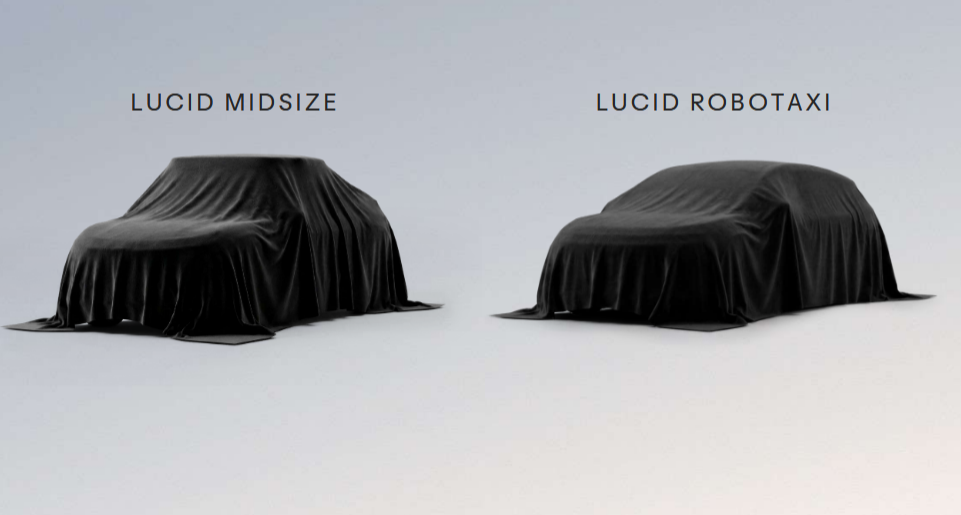

Lucid’s announcement clearly shows how the business model of automakers is changing in the era of electric vehicles and digital technology. The emphasis is shifting from a one-time car sale to a constant service revenue from software. The success of this strategy will depend not only on the technical perfection of the autonomous systems but also on consumers’ willingness to accept monthly payments for features that were often previously included as standard equipment in premium cars. The parallel development of its own robotaxi indicates the company’s desire to create a full cycle of mobility services, competing with players like Waymo or the aforementioned Tesla in a market that is predicted to grow rapidly in the next decade.