 by
by New Lucid Gravity Recall Due to Seat Belt Safety Issues
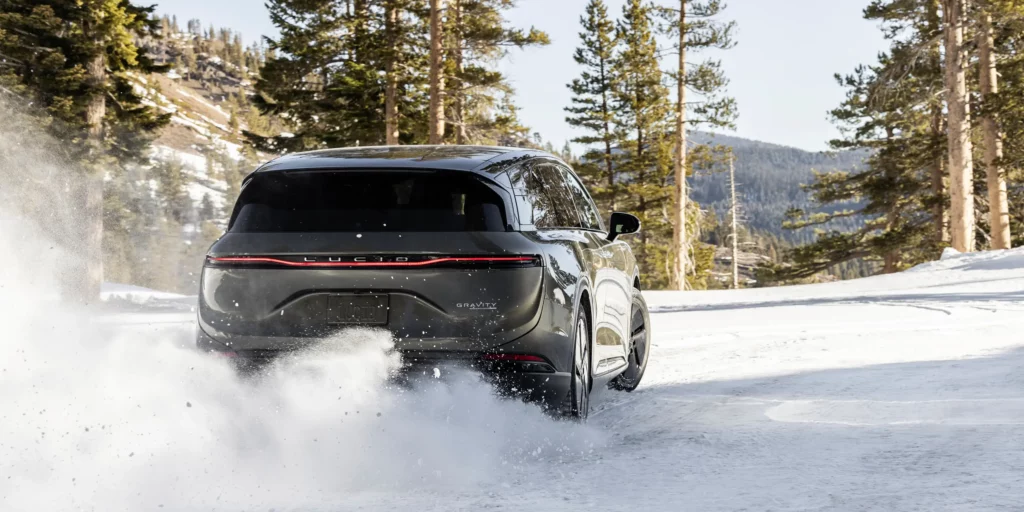
Just a few months after the first recall due to airbag issues, the luxury electric SUV Lucid Gravity is again in the spotlight due to a potential defect. This time, the problem concerns the seat belt anchorages for second-row passengers.
Cause of the Defect and Scale of the Problem
The electric vehicle manufacturer reports that during internal testing, it was discovered that the weld on the bracket for the second-row outer seat belt anchor is shorter than required and improperly positioned. Lucid states that the cause lies in the fact that the seat manufacturer, Camaco, made changes to the production process without notifying the company or obtaining its approval.
Vehicles with an insufficiently welded seat belt anchorage do not comply with federal motor vehicle safety standards, which could increase the risk of injury in a collision. Unlike the previous recall in December, which affected only 66 vehicles, this one has a much broader scope.
The recall concerns 4,476 Lucid Gravity models manufactured from December 2, 2024, to February 3, 2026, and designated as 2025-2026 model year vehicles. It is estimated that 97 percent of them have this issue.
Chronology of Events and Further Actions
This recall follows shortly after Lucid briefly suspended sales of the Gravity earlier this year, conducting tests to determine whether the seat belts could meet safety standards with or without a reinforcing bracket. Even with the bracket, they did not meet the load requirements, forcing Lucid to take measures to ensure components from Camaco comply with its standards.
Lucid will begin notifying owners of the recall starting May 22. Dealerships will inspect the affected vehicles, and if an improper weld is found, it will be repaired using a reinforcing bracket and adhesive or, if necessary, the entire seat will be replaced free of charge.
This situation with the second recall in four months highlights the complexity of supply chains and quality control in modern automotive manufacturing, especially when a manufacturer relies on external suppliers for critical safety components. Lucid’s swift response and large-scale recall campaign demonstrate a priority for customer safety, but also raise questions about change approval processes in production between automakers and their partners. For owners of new electric models, this is a reminder of the importance of responding promptly to recall notices to ensure an adequate level of protection.