 by
by Elon Musk Warns Legacy Automakers of the Risk of Extinction
Despite all the controversies surrounding Elon Musk’s personality, his company Tesla has played a key role in accelerating the automotive industry’s transition to electrification and autonomous technologies. Now, Tesla’s CEO states that any traditional automaker refusing to follow this course risks repeating the fate of the dinosaurs.
A Historical Conversation About the Industry’s Future
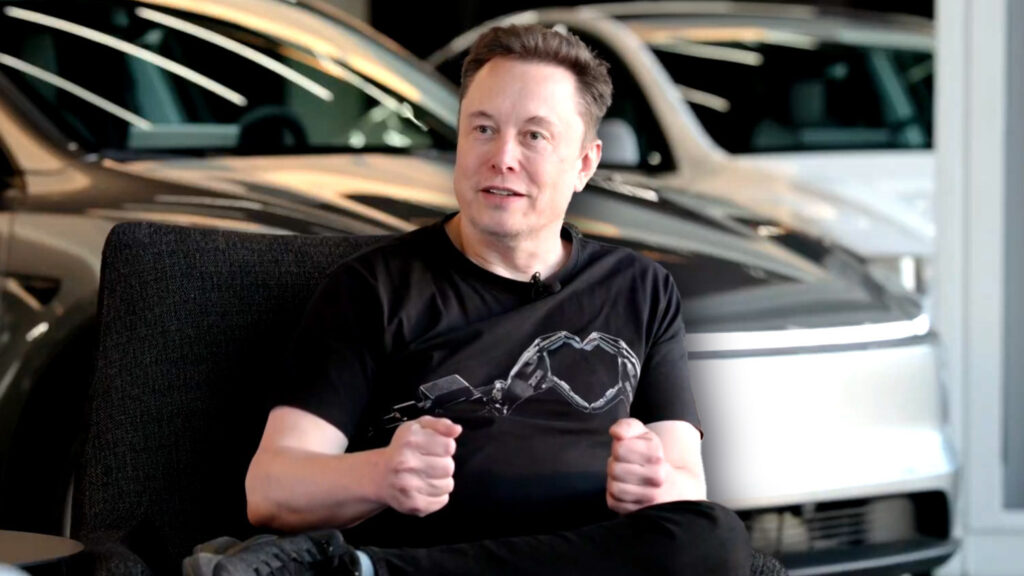
Last week, Musk held an extensive conversation with Andre Thierig, the head of Tesla’s Berlin Gigafactory. They discussed the future of the company and the entire industry. In Musk’s view, it has been obvious for over 20 years that the ultimate goal is fully electric and autonomous transport. He is surprised that some competitors are still not ready to accept this.
Musk stated that the automotive industry actively resisted electrification. He said manufacturers dragged their feet, had to be pushed by governments, and that whenever they had any opportunity to reduce electric vehicle production, they did so. In his opinion, this is a bad strategy that makes no sense.
The automotive industry strongly rejected electrification. They dragged their feet, and they had to be pushed there by the government, and whenever they had any opportunity to reduce electric vehicle production, they did it. This is not a good strategy… it makes no sense.
The Advantages of Electric Transport
Musk continued, arguing that the transition to electrification would have been necessary even without environmental issues. He believes that an electric car, by its very architecture, is fundamentally better than a gasoline or internal combustion engine car. It is much simpler, more efficient, quieter, does not pollute city air, therefore all ground transport should be electric.
He added that the future does not contain cars with internal combustion engines, and there will be very few vehicles that are not autonomous. If the automotive industry does not move in this direction, it will be left behind.
Criticism of Competitors’ Actions
When Thierig asked whether Tesla could learn something from legacy automakers or should just focus on its own path, Musk acknowledged that one can always learn something from competitors. However, he immediately returned to his main thesis, stating that strategically they are moving in the direction of dinosaurs, and that is not a good place because dinosaurs no longer exist.
Regarding the risk of traditional brands copying Tesla’s ideas, Musk dismissed this threat, arguing that it is impossible to simply impose a good idea on companies that are not ready to accept it.
The Evolution of Tesla’s Image
This criticism is nothing new. Musk has long accused automakers of moving too slowly. Since Tesla’s business is closely tied to electric vehicles and autonomous driving systems, it has every reason to emphasize the advantages of both technologies. This also does not hinder maintaining confidence in the company’s long-term prospects.
What is more interesting is how Tesla’s own self-perception is changing. The company no longer positions itself exclusively as an electric car manufacturer. Some observers believe that in a decade it may not build cars at all, focusing on robotics.
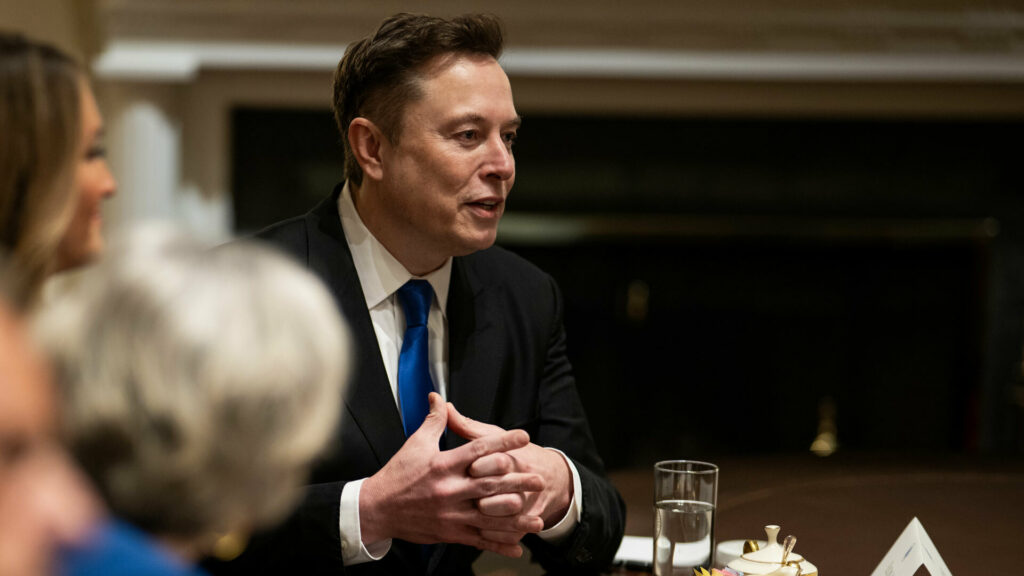
Musk’s position, although categorical, points to a profound transformation already underway in the world. The question is no longer whether transport will become electric and autonomous, but at what pace this will happen and which companies will be able to adapt. The crisis of the traditional auto industry may turn out to be not only technological but also cultural — familiar giants often lose not due to a lack of resources, but due to an inability to radically change their thinking and business models. In this context, the warning about the fate of the dinosaurs sounds not just as a metaphor, but as a concrete scenario for those who perceive the future as a distant threat, not as a reality that is already arriving.