 by
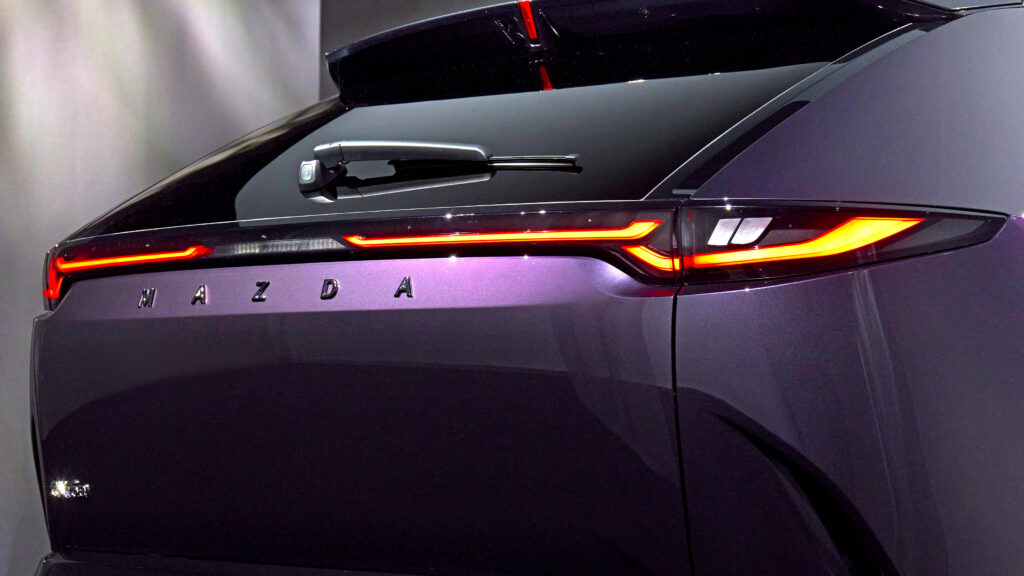
by Mazda unveiled its new CX-6e electric crossover at the Brussels Motor Show. Many consider it the brand’s most beautiful SUV in recent years. However, delving into the technical specifications reveals that this premium electric vehicle significantly lags behind competitors like BMW and Audi.
Joint Development
The CX-6e is not solely a Mazda development. Similar to the mechanically related 6e sedan, this model is the result of a joint project with the Chinese company Changan and is produced in China on the same line as the Deepal S07. Mazda was responsible for the design, tuning, and branding, but the technical foundation is shared.
Mazda Goes All In On Huge Display And No Buttons For Its Latest SUV
Due to its Chinese origin, the model will not reach the US market, but it will appear in European showrooms in 2026. There, it will compete with the Tesla Model Y, BMW iX3, and Audi Q6 e-tron. Its price in Europe is likely to be three times higher than in China, where the starting price is approximately $16,800.
Technical Specifications
On a 2902 mm wheelbase, a 78 kWh LFP battery is installed, powering a single rear electric motor with 258 hp (190 kW) and 290 Nm of torque. The claimed WLTP range is up to 483 km. This figure looks modest compared to competitors’ new offerings. For example, Volvo recently announced that its similarly sized EX60 model will have a range of up to 810 km. Even the base Tesla Model Y Standard offers approximately 505 km on a single charge.
Performance figures are also not impressive. Acceleration from 0 to 100 km/h takes 7.9 seconds. The maximum DC fast charging speed is 195 kW, which is far from leading figures. Charging from 10% to 80% takes about 24 minutes. However, the AC charging speed of up to 11 kW is standard for this class.
Interior and Technology
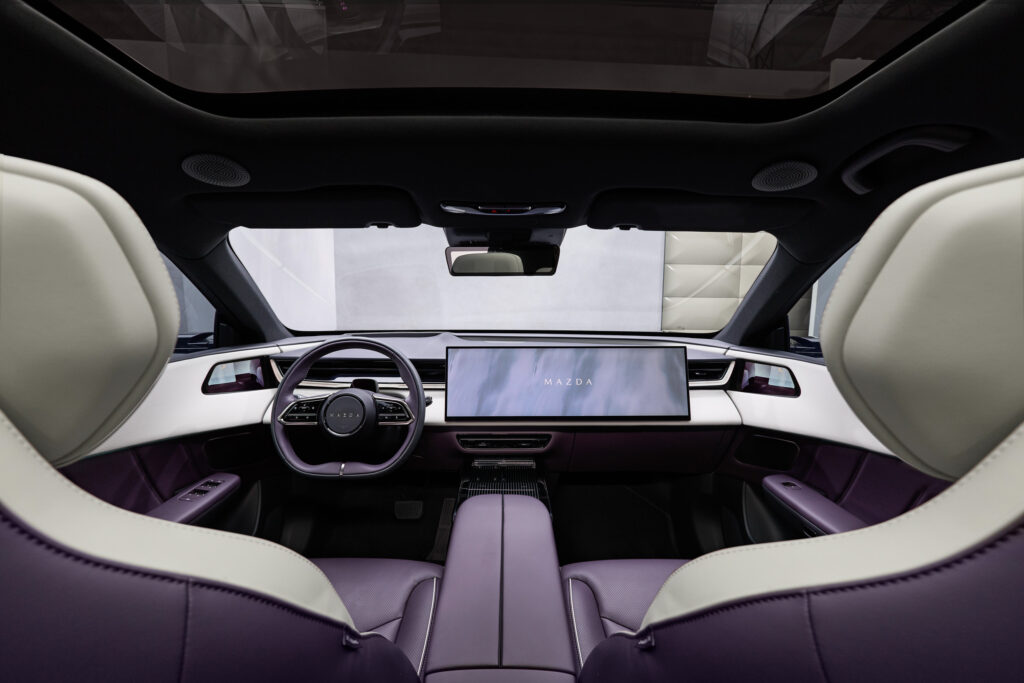
The CX-6e’s cabin offers a glimpse into the future. A massive 26-inch display stretches across the entire dashboard, and a projection display makes a traditional instrument cluster redundant. Technological features include gesture shortcuts, speakers in the seat headrests, and camera screens instead of conventional side mirrors, neatly integrated into the door panels.
Practicality
In terms of dimensions, the CX-6e is longer and wider than the gasoline-powered CX-60, but it loses to it and electric competitors in cargo volume. The electric crossover offers only 468 liters compared to 570 liters in the CX-60. For comparison, the Tesla Model Y exceeds 850 liters. On the other hand, the CX-6e has an 80-liter front trunk (frunk) for charging cables, which the Tesla lacks.
Style and Prospects
Many experts note that the CX-6e looks great both outside and inside. However, this stylish appearance and yet-to-be-announced prices will likely have to compensate for the not-best-in-class range, performance, and practicality figures to attract buyers.
The presentation of the Mazda CX-6e clearly demonstrates the brand’s strategy to enter the competitive electric crossover market through collaboration and a focus on design. However, against the backdrop of rapid progress by key players, the new model’s technical specifications may appear conservative. The model’s success in the European market will largely depend on the final pricing policy and how willing buyers are to forgive technical compromises for the sake of attractive exterior styling and a tech-oriented interior. For Mazda, this is an important step in its electric transformation, but it also highlights the challenges traditional automakers face in trying to catch up with leaders in this field.