


An updated version of the small commercial vehicle Mazda Scrum Truck has been introduced in Japan. This model, which is an important link for local businesses, has undergone a planned mid-life cycle restyling.
Updated Design and Color Palette
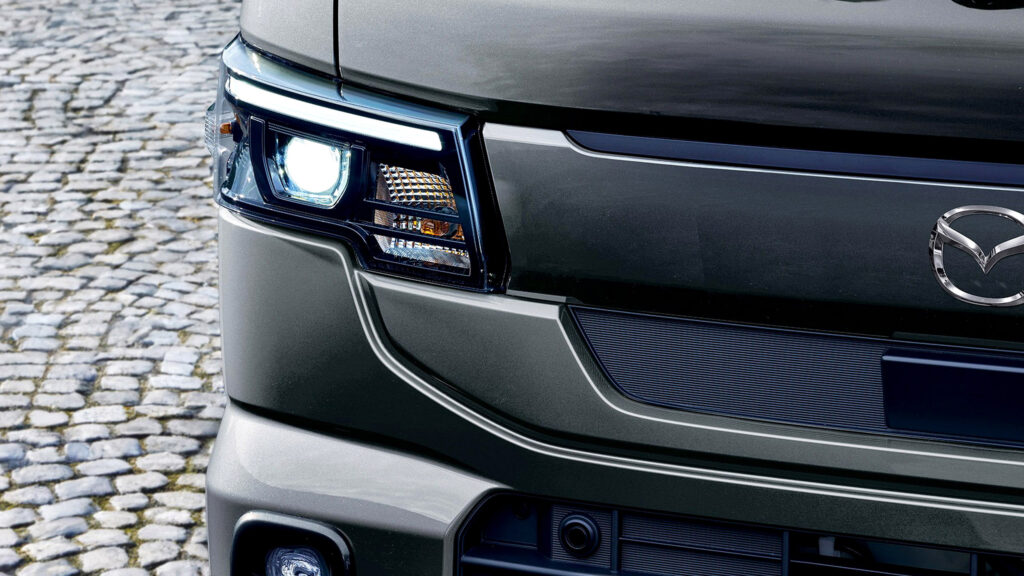
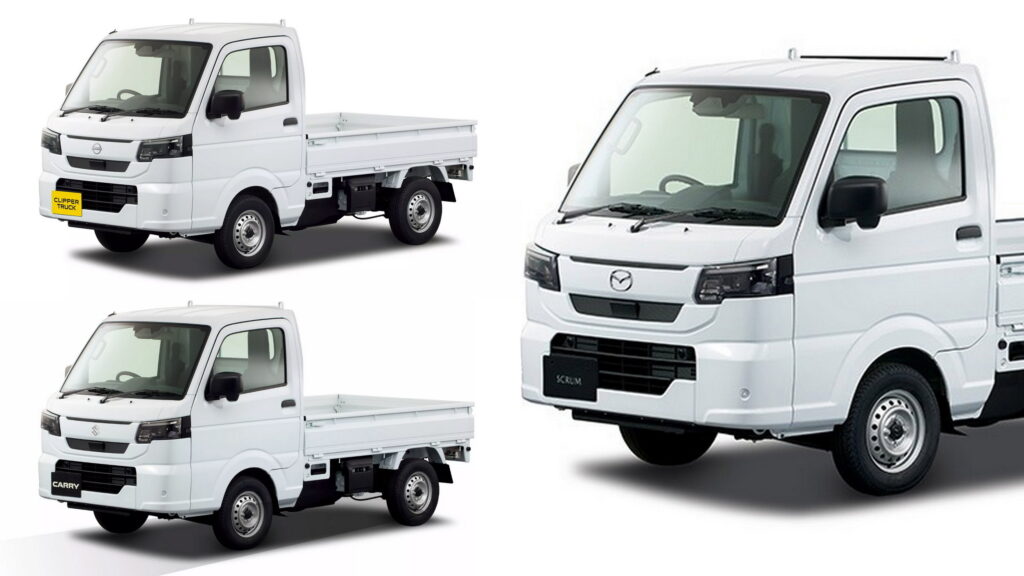
According to the manufacturer, the new front end looks “more rugged.” In practice, the changes include narrower headlights with darkened elements, an updated radiator grille, and a slightly modified bumper. Mazda shares these details with its “brothers” — the Suzuki and Nissan models. The main difference remains only the emblem on the hood.
The overall body contours have hardly changed since the previous generation, which has been in production for over a decade. However, Mazda has expanded the color palette by adding a new Moss Gray Metallic shade, which was already available for the Scrum Van Buster. The Scrum Truck is offered in only one body configuration — a low-profile cab with a single cab.

Interior and Options
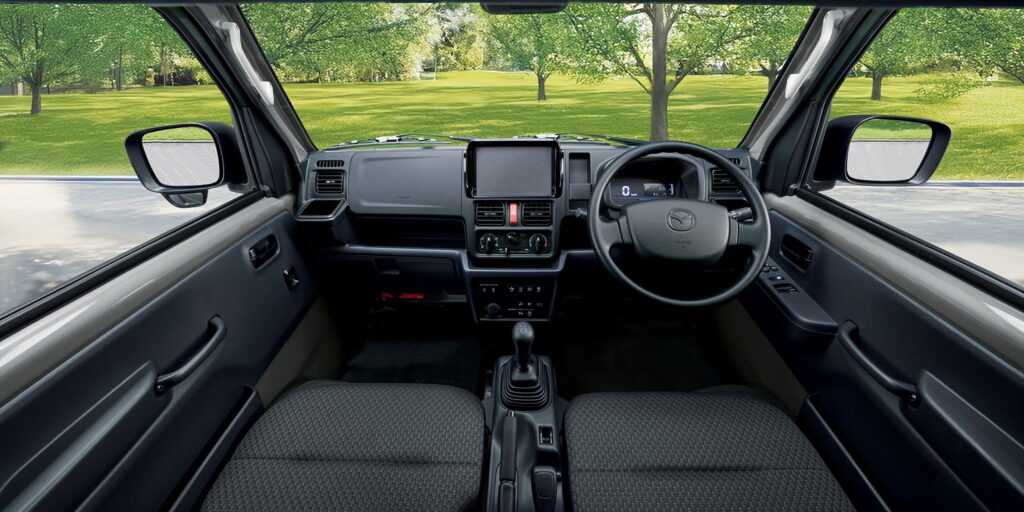
The car’s interior has undergone minimal changes. The dashboard is still made of hard plastics, controls are physical buttons, and a multimedia system is not included in the base configuration. In the Scrum Truck KX version, chrome air conditioning vents and glossy black inserts on the center console appear. Optional multimedia systems with 7- or 8-inch screens are also available for this trim.
Safety and Technology
In accordance with modern requirements, the Scrum now has a basic set of safety systems. The key innovation is the Dual Sensor Brake Support II system, designed to prevent collisions. It better recognizes pedestrians, cyclists, motorcyclists, and other vehicles, which should reduce the number of incidents at low speeds in crowded cities where these trucks most often operate.
In addition, the car received a low-speed braking support system, front and rear parking sensors, and a traffic light change notification function. The lane departure prevention and road sign recognition systems have also been improved to meet current standards.

Technical Specifications
From a technical standpoint, the Scrum remains true to the kei-car concept. It is built on a ladder frame chassis and equipped with a mid-mounted three-cylinder engine with a displacement of 658 cc. This unit develops 50 horsepower (37 kW) and 59 Nm of torque.
Such figures will not allow for rapid acceleration, but that is not the main task of this car. The engine is tuned for stable operation, allowing it to carry up to 350 kg of cargo through narrow alleys and rural roads where a larger pickup simply cannot pass.
Like the Suzuki and Nissan models, Mazda offers a choice between rear-wheel drive and selectable all-wheel drive. Buyers can also choose between a five-speed manual and a four-speed automatic transmission.
Price and Market Positioning
The updated 2026 model year Scrum Truck is already available for order in Japan. The base version with rear-wheel drive and a manual transmission starts from 1,127,600 yen (approximately $8,000). The most expensive KX trim with all-wheel drive and an automatic transmission is priced at 1,634,600 yen (about $10,700).
Interestingly, at the start of sales, Mazda offers a more attractive price than the technically identical Suzuki and Nissan models, making it the most appealing in terms of price-to-quality ratio among this trio. However, in terms of cost, it still exceeds its direct competitor — the Daihatsu Hijet.
Although these small trucks rarely attract the attention of the international automotive press, they remain critically important for the Japanese economy, providing logistics in dense urban environments. Their durability, practicality, and low operating costs make them indispensable for small and medium-sized businesses. Updates focused on safety and modern standards allow these models to remain relevant while preserving their core essence — reliability and functionality. The kei-commercial vehicle market continues to demonstrate resilience, adapting to new requirements without losing its key advantages.