


Growth in Automotive App Usage
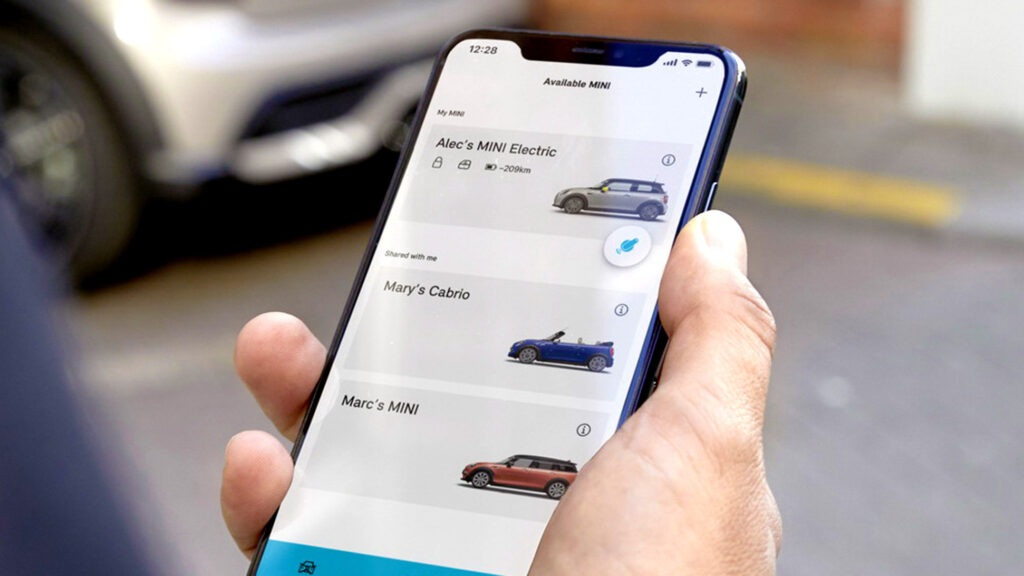
Given the digital integration of modern vehicles, more and more drivers are turning to official mobile apps to manage their vehicles. For owners of cars with internal combustion engines, these programs promise additional conveniences, such as remote functions, timely updates, and an overall more comfortable ownership experience.
At least in theory, as new research shows that while the popularity of apps is growing, reality does not always match the promises.
Survey Results from Owners
The findings are based on a survey of over 2,100 owners of ICE vehicles in the U.S., conducted by JD Power between September and October. Participants were asked about their experience using official mobile apps, shedding light on where these tools meet expectations and where they still fall short.
According to the latest report, nearly 80 percent of gasoline car owners in the States used their vehicle’s branded app. This is a slight increase of two points compared to 2024, indicating stable, albeit slow, growth.
Despite the high level of awareness, only 27 percent of respondents stated that they use the app frequently, meaning every time or more than half the time they are behind the wheel. This leaves a significant majority who use it only occasionally or not at all, highlighting the gap between potential and actual utility.
Most In-Demand Features
Among those who do use the apps, the most in-demand feature is the garage door opener, reported by 61 percent of users. Another 39 percent indicated they value the ability to use a smartphone as a digital key, while 38 percent prioritized control over seat heating and cooling settings.
Remote lock and unlock functions were used by 34 percent of respondents, and 31 percent used trunk control capabilities. These figures suggest that when the app works, drivers do find value in it, just not necessarily to its full extent.
Technical Issues Deter Users
However, this value quickly disappears when things don’t work as expected. Of the 38 percent who stated they completely stopped using their app, the majority cited connection issues as the main reason.
Unclear design and unreliable remote start features were noted by 14 percent of respondents, along with slow response times and unstable feature performance. These pain points appear to be key reasons for abandoning regular use.
The JD Power study also showed that 5 percent of users are concerned about the lack of desired features, 4 percent cited outdated or inaccurate information as a problem, and another 4 percent noted difficulties in managing multiple users.

Leaders and Laggards in Satisfaction
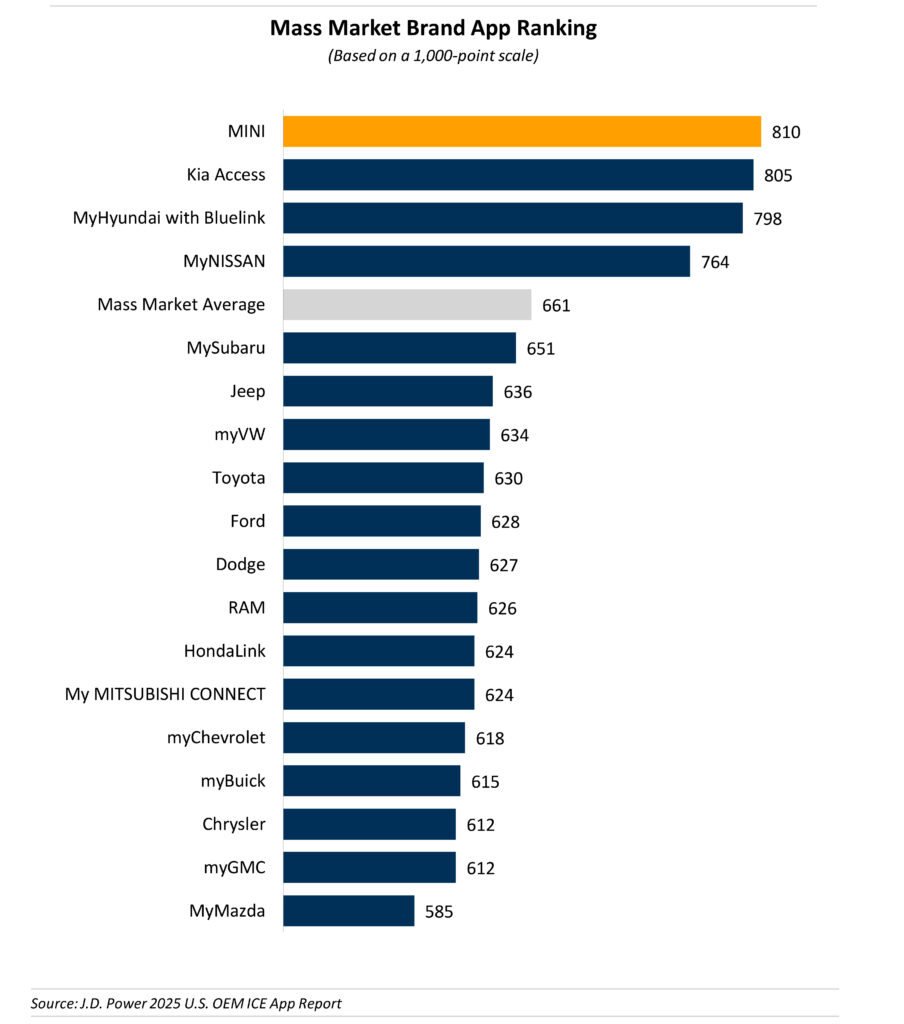
Among mass-market automakers offering mobile apps, Mini received the highest customer satisfaction scores, achieving 810 out of 1000 points. It is followed by Kia with 805 points and Hyundai with 798.
In the premium category, BMW led with a score of 821, making it the absolute leader regardless of segment. It is followed by Genesis with 771 points, while Mercedes-Benz was slightly behind with 768 points.
At the other end of the scale, Mazda found itself at the very bottom among mass-market brands with a score of only 585 points. GMC and Chrysler performed only slightly better, scoring 612 points each. In the premium segment, Alfa Romeo showed the lowest overall score—581 points.
Among those who do use the apps, the most in-demand feature is the garage door opener, reported by 61 percent of users.
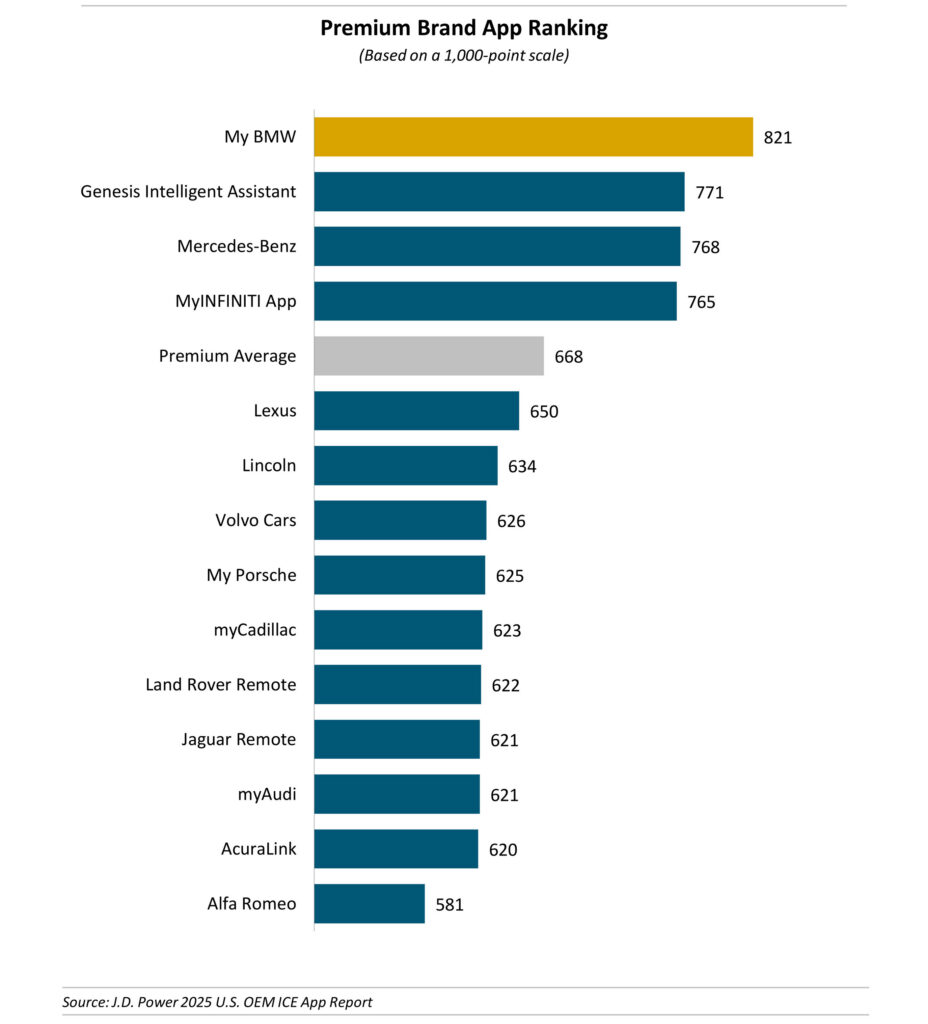

The obtained data clearly demonstrates that the industry is at a formative stage, where basic technical aspects, such as connection stability and speed of operation, often prove more important than the availability of advanced features. The gap between high awareness and low active user share indicates a critical need for software quality improvement. The success of brands like Mini and BMW shows that when an app works flawlessly, it can become a true asset for the brand and significantly enhance the customer experience. The future of these technologies will likely depend on manufacturers’ ability to make them as reliable and intuitive as possible, turning potential benefit into everyday reality for the majority of owners.