


Sharp depreciation in the secondary market
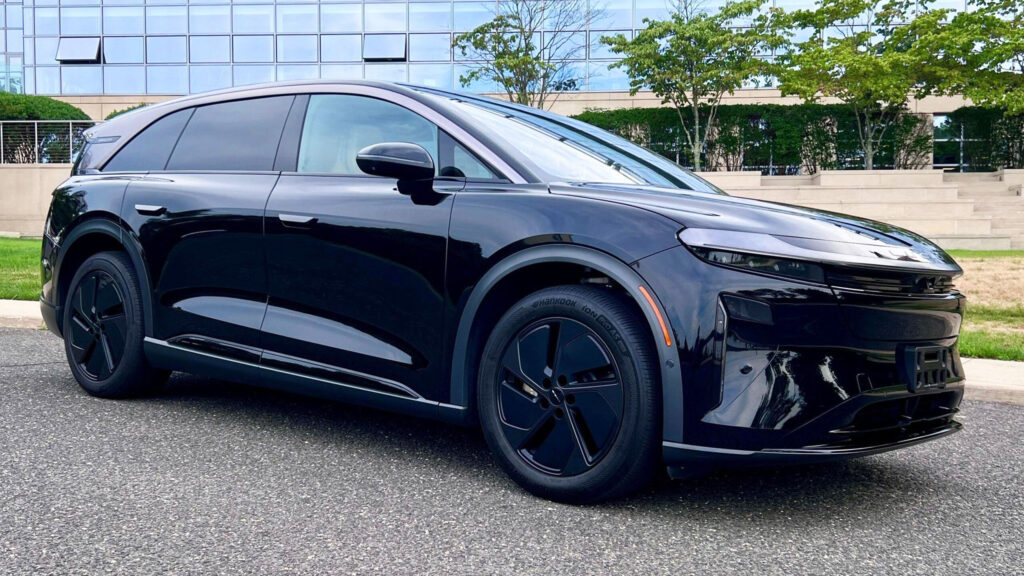
The Lucid Gravity impresses in many aspects, but shares a common weakness with many other premium electric vehicles — rapid depreciation. For some buyers, this becomes a deciding factor; for others, it’s simply the price of access to technology. Either way, the numbers look grim.
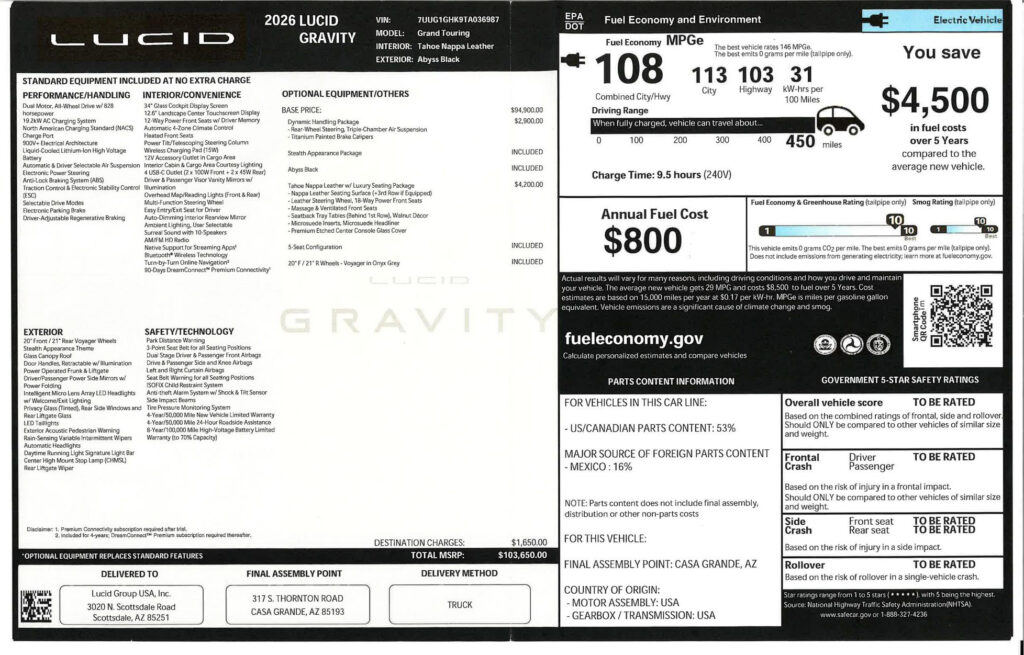
Earlier this month, a 2026 Lucid Gravity Grand Touring was listed on the Cars & Bids auction. The less-than-a-year-old vehicle with a factory price of $103,650 sold for $73,000. That’s less than the price of a new base Gravity, even though this version is the top trim in the lineup.
Options, mileage, and unexpected replacements
According to the window sticker, this Gravity received the Dynamic Handling package for $2,900, which includes titanium brake calipers, rear steering, and a three-chamber air suspension. The car also features the Stealth Appearance package and a Tahoe Nappa leather interior with the Luxury Seating package worth $4,200 — providing soft upholstery, 18-way front seats with massage, ventilation, and folding tables.
Despite being nearly new, the Gravity’s odometer shows 12,100 miles (19,473 km). And curiously, quite a few parts have been replaced in that time: the center console tray, hood struts, front left wheel speed sensor, and wheel bearing. Such a service history does not inspire confidence in a nearly new premium SUV.
Performance and range
Of course, the Gravity has its strengths — primarily dynamics and efficiency. The 123 kWh battery and two electric motors deliver 828 hp and 828 lb-ft (1,122 Nm) of torque. That’s enough to accelerate to 60 mph (96 km/h) in about 3.4 seconds, while the range reaches 450 miles (724 km) on a single charge.

Aggressive manufacturer incentives
Part of the depreciation on used Gravity models may be linked to the attractive offers Lucid recently introduced on new vehicles. This month, the company announced 84-month financing for 2026 models with a monthly payment of $681 and a $20,000 down payment. And leasing offers with a $10,000 discount are valid until July 31, with an additional $3,000 loyalty credit and a $3,000 trade-in bonus for competitive vehicles.
Such support for new sales inevitably pressures the used car market, causing even nearly new examples to depreciate rapidly. For those considering a Gravity on the secondary market, this could be a chance to buy a top-tier version at a base price — but it’s worth factoring in potential repair costs and the overall volatility of electric vehicle values in this segment.