


Future Mercedes models built on the MMA platform will use Samsung batteries. Some existing Mercedes-Benz electric vehicles are already equipped with advanced NMC batteries. The current Mercedes CLA 250+ and CLA 350 models receive battery packs from CATL.
New stage of Mercedes electrification
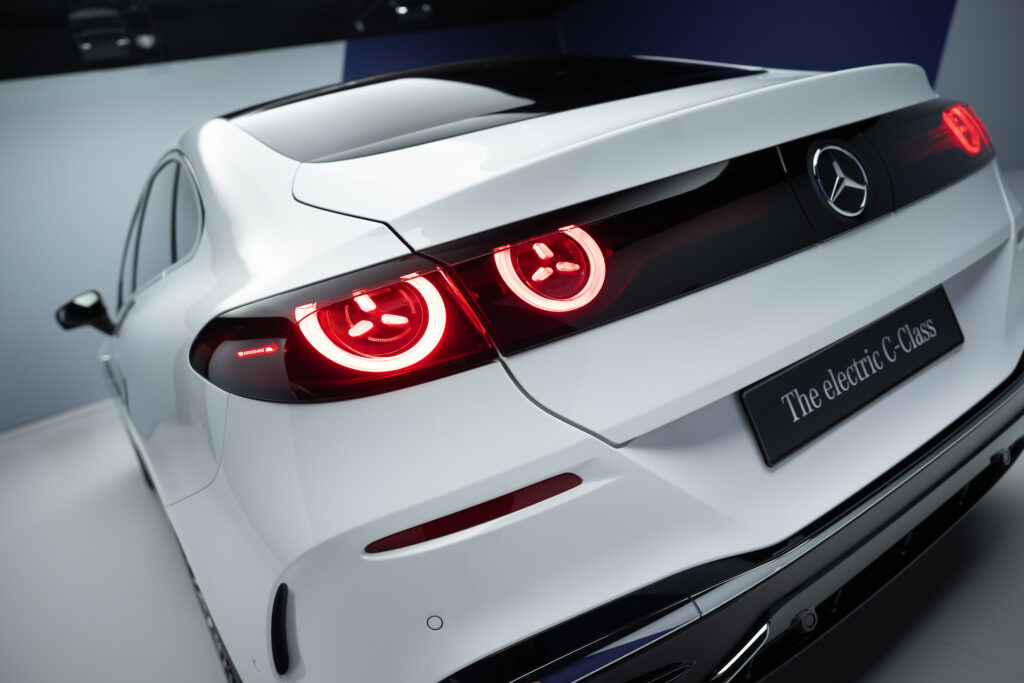
Having recently introduced the fully new electric C-Class, Mercedes-Benz has confirmed a key part of its future electric vehicle strategy. The next generation of its electric models will receive energy from battery cells supplied by the South Korean company Samsung SDI.
The agreement, signed earlier this week, ensures a stable flow of nickel-cobalt-manganese (NMC) battery cells. Samsung claims these packs will provide the high energy density, long service life, and consistent power and range that premium EV buyers expect, at least on paper.
Timeline and platforms
Mercedes has not yet named the exact date when these NMC batteries from Samsung will debut. However, industry insiders point to models built on the future Modular Mercedes Architecture (MMA), starting from 2028. This will cover a wide range of compact and mid-size SUVs, as well as several coupes whose names have not yet been disclosed.
German cars, Asian batteries
The German brand already offers several of its electric vehicles with NMC batteries, including the CLA 250+ and CLA 350 4Matic, which are supplied by the Chinese company CATL. Additionally, the fully electric Mercedes VLE uses an NMC battery pack with a capacity of 115 kWh, and the recently introduced electric C-Class has an NMC battery of 94.5 kWh, promising a range of up to 472 miles (760 km).
“This partnership combines the innovative DNA of both companies,” stated Samsung SDI. “It is significant as SAMSUNG SDI has received a battery order aimed at strengthening its position in the global electric vehicle market.”
Technology comparison
There are trade-offs between nickel-cobalt-manganese (NMC) batteries and lithium-iron-phosphate (LFP) packs — the two chemistries that currently dominate the electric vehicle field. The main advantage of NMC is energy density, meaning greater range from a battery of similar size, which is a priority for premium brands.
LFP, on the other hand, offers a more pragmatic approach. Such packs tend to be more durable over time and can be charged to 100 percent much more frequently without accelerating degradation. This makes them well-suited for daily use, even if they cannot fully match NMC in range potential.
This shift in supplier from CATL to Samsung SDI for future models on the MMA platform indicates Mercedes’ desire to diversify supply chains and reduce dependence on a single manufacturer, especially amid geopolitical tensions. The choice in favor of NMC technology for the new architecture underscores that the German automaker continues to bet on maximum performance and range, despite the growing popularity of more affordable and durable LFP batteries in the mass segment. Thus, Mercedes clearly positions its future electric vehicles as a premium product, where dynamics and driving range without recharging remain key characteristics.