


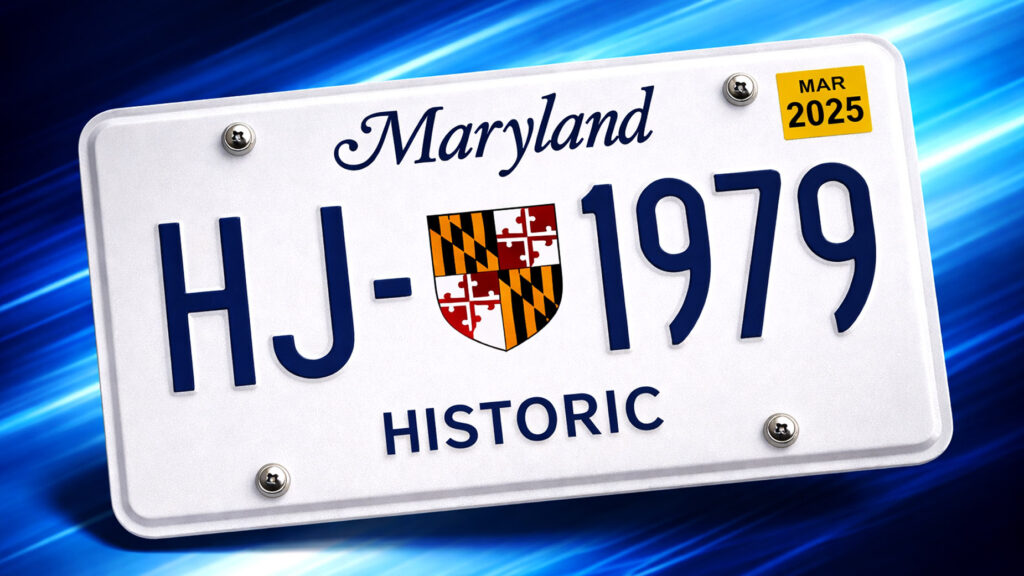
Changes in Rules for Historic Vehicles in Maryland
For many years, the state of Maryland had a program for old cars called “Historic Vehicle.” The conditions were clear: if your car turned 20 years old, it could obtain this status. In return, owners were exempt from mandatory emissions inspections, technical inspections, and received a discount on registration fees. This was a significant benefit both for enthusiasts and for owners of ordinary cars used for daily driving.
Now the situation is changing. A subtle correction to the rules will force thousands of owners of vehicles with “Historic” status to contact the Motor Vehicle Administration (MVA) again, and many will not like it.
New Criteria for Historic Status
The change itself is simple, but the consequences are significant. From now on, only vehicles manufactured in 1999 or earlier will qualify for historic status. This essentially closes the opportunity for a significant portion of early 2000s cars, which until recently fell under this category.
Cars produced between 2000 and 2006 were also approaching eligibility under the old rules, and drivers actively used this program. In 2024, the MVA issued about 60,000 historic license plates. This is 34 percent more than in 2021.
Each of these drivers could avoid high registration fees and instead get a license plate for $50.55. This saving is substantial, and doesn’t even account for the fees avoided due to the lack of emissions and safety inspections.
According to The Wall Street Journal, the real problem is how the system worked in practice, not by design. Vehicles with “Historic” status are intended for “occasional” use, not for daily driving.
This did not stop many people from registering their ordinary, albeit old, cars this way.
“People imagine a ’69 Corvette or something similar, not a 2002 Honda Accord,” said Delegate Marc Korman, a Democrat who chairs the House Transportation Committee.
Consequences for Car Enthusiasts
At the same time, many genuine car enthusiasts also find themselves in a difficult situation due to these changes.
“I understand there are those who abuse the system, but why should the innocent suffer for the guilty?” asked Michael Lechleitner, owner of a 2002 Panoz Esperante.
He hopes the state will move to a floating definition of a “classic” or “historic” car based on 25 years.
Such a possibility is already being discussed due to serious criticism from the car enthusiast community. There is also a possibility that the state will grandfather in all 72,000 affected drivers whose cars already have historic plates. Certain decisions regarding this situation are expected to be made later this year.
These regulatory changes in Maryland point to a broader trend of re-evaluating criteria for antique vehicles in many states. On one hand, governments are trying to close loopholes that allow ordinary old cars to be used with benefits intended for true collector’s items. On the other hand, enthusiast communities argue that rigid chronological boundaries can harm those who genuinely care about preserving cars that already have historical value, regardless of the specific year of manufacture. Future discussions will likely focus on finding a balance between preventing abuse and supporting car culture, possibly through more flexible systems that consider a vehicle’s condition, rarity, and usage pattern.