


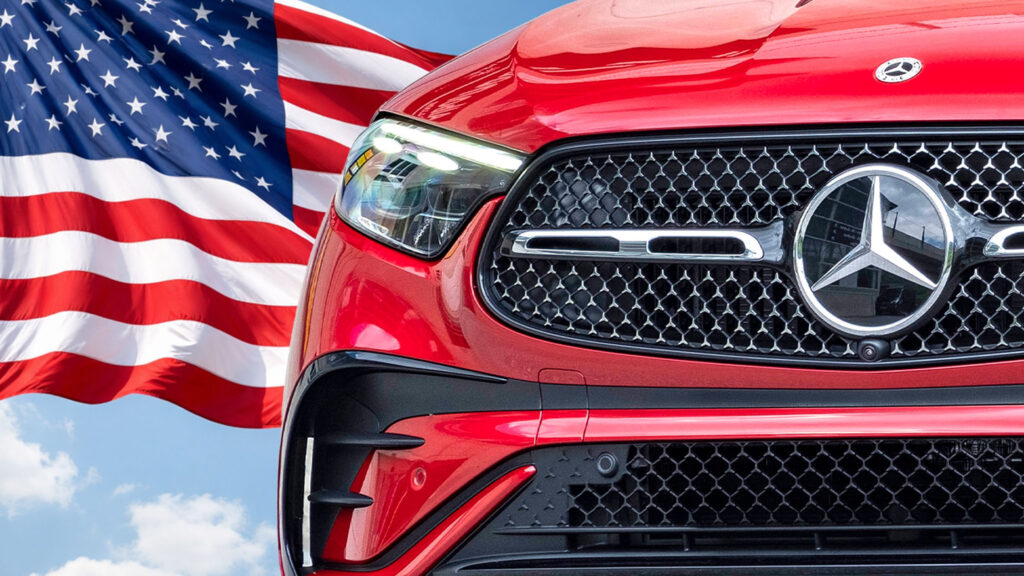
Mercedes relocates GLC production to the USA
The Mercedes-Benz company has decided to relocate the production of its popular compact SUV, the GLC, from Germany to the United States. This step is dictated by the desire to avoid high customs tariffs on importing cars from Europe.
Key points of this decision:
The impact of tariffs on business decisions
Against the backdrop of global economic instability, automakers continue to adapt to the consequences of trade policy. For Mercedes, the primary incentive for change has been import duties, which significantly increase the cost of vehicles imported from Europe. Currently, an additional duty of 15 percent is imposed on these SUVs.
This is particularly noticeable for the GLC model, which, while not the flashiest in the brand’s lineup, is one of its commercial pillars. This model accounts for nearly a quarter of Mercedes’ sales in the USA, so any additional import cost directly impacts profitability.
Indeed, these SUVs arrive from Europe with a hefty 15 percent duty. This additional cost quickly adds up when you sell about 70,000 units across the USA and Canada annually.
Plans for expanding production in Alabama
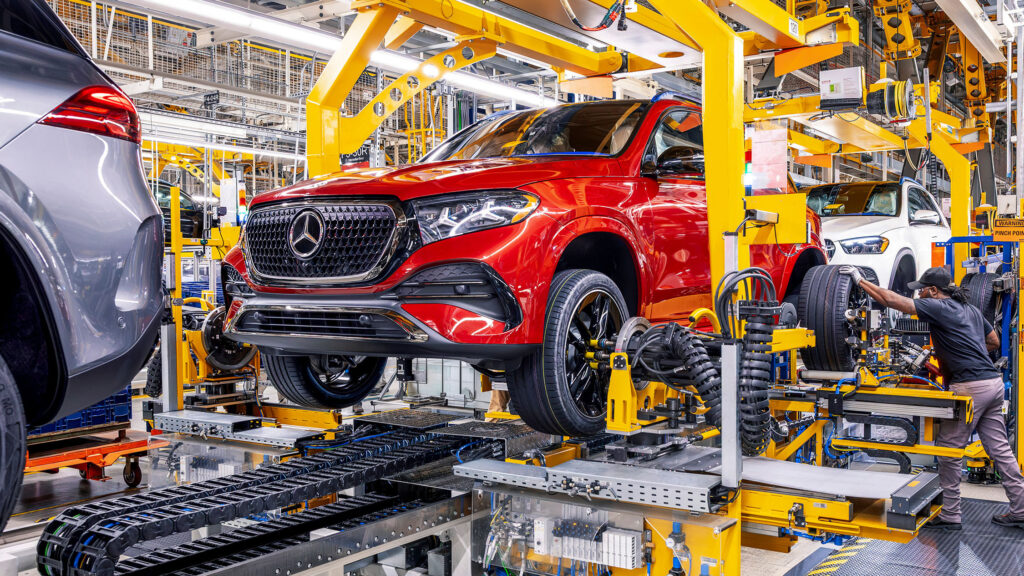
Production for the North American market is planned to be established at the long-standing Mercedes plant in Tuscaloosa, Alabama, where the larger GLE and GLS models are already produced. However, the transition will not be instantaneous. According to company representatives, production will begin within the “next few years.” According to sources, this could happen by the end of 2027, while CEO Ola Källenius notes that full-scale GLC production will only be rolled out by 2029.

Large-scale investments and reorganization
To implement these plans, Mercedes will invest $4 billion in modernizing the Alabama plant. This is part of a total $7 billion investment in the company’s US operations by the end of the decade. This is expected to increase the plant’s production capacity from the current 250-300 thousand to approximately 340 thousand vehicles per year.
Reports indicate that the plant’s capacity has recently been underutilized due to low sales of the electric EQS SUV, which was also produced there. EQS production will be moved to Germany to free up space for the new GLC line.
He says the plant has been underutilized lately due to poor sales of the electric EQS SUV, which is also built there, but it is being sent to Germany to free up space for the GLC.


Geography of future supplies
Most GLC vehicles produced in Alabama will be destined for North American markets. However, it should be noted that the Tuscaloosa plant is already a global production hub, as GLE and GLS models are exported from there worldwide.
This strategic move by Mercedes highlights the ongoing transformation in the automotive industry, where geopolitical factors and trade policy are increasingly defining supply chains and production locations. Relocating production of a key model is not only a reaction to customs barriers but also a long-term bet on the stability and efficiency of local production for one of the company’s most important markets. Such changes could have implications for employment in both regions and influence the strategies of other premium brands, which are also evaluating their production networks in light of trade agreements and tariffs.