 by
by Update for One Market
Mitsubishi has introduced an updated version of the Triton pickup, which received a completely redesigned front end, similar to an early facelift. However, these changes concern only one specific trim—the Street variant for the midsize pickup, available in Thailand alongside other model versions.
Design and Features
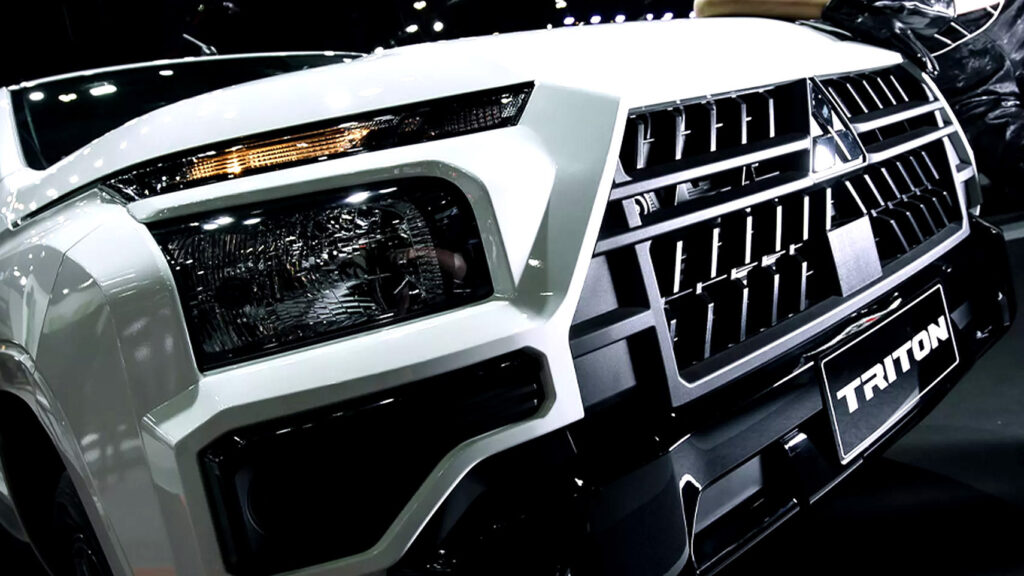
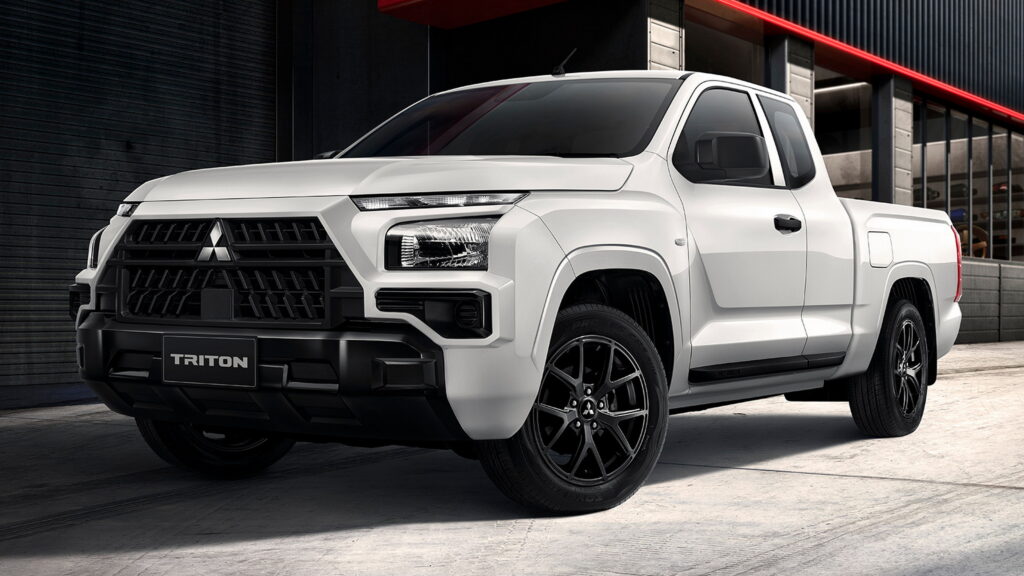
The Triton Street is built on the Mega Cab platform, which in size sits between the Single Cab and Double Cab. The most noticeable change is the new front-end design. The radiator grille has a new shape, moving away from the familiar “Dynamic Shield” design language characteristic of the regular Triton.
An aggressive front end, vaguely reminiscent of a Stormtrooper helmet from “Star Wars,” is complemented by a larger black skid plate and slightly modified air intakes in the bumper.
As an entry-level model, the Street is equipped with halogen headlights and lacks fog lights.
Purpose and Equipment
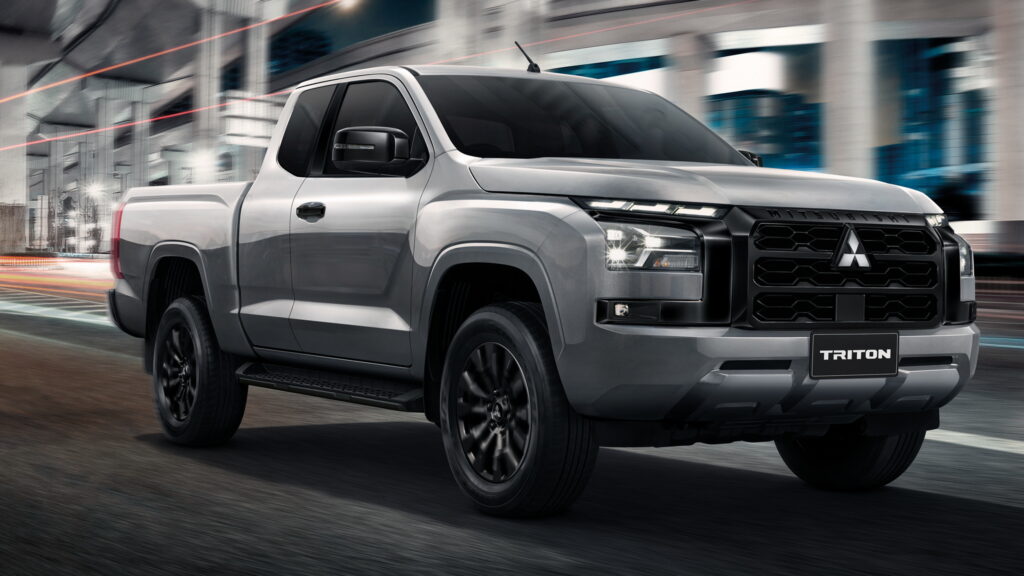
As the name implies, the Street is designed for paved roads. The pickup received a new set of 17-inch black alloy wheels and retained the standard suspension height. The color palette is limited to solid white, silver, and graphite-gray paints, each paired with contrasting black accents.
Technical Specifications
Under the hood of the Triton Street lies the standard Mitsubishi 2.4-liter four-cylinder turbo-diesel, producing 150 horsepower and 330 Nm of torque. Notably, for this base version, this particular engine was chosen, not the more powerful 181-horsepower unit installed in more expensive trims.
The diesel works exclusively in tandem with a six-speed manual transmission, which sends power to the rear wheels. All-wheel drive is not available, but the Street has an active limited-slip differential that brakes the spinning wheel and redirects torque to the wheel with better traction.
Trim and Availability
The Street is the base model in the Mega Cab body lineup. Its equipment list is quite modest: fabric seats, three airbags, an audio system with two speakers, a hill start assist system, a forward collision mitigation system, and a 10-inch multimedia system screen. The model is already on sale in Thailand, with its price starting from 649,000 baht.
Future of the Model
It remains unclear for now whether this new front-end design will be used for other Triton trims in a future facelift or will remain an experiment limited to Thailand.
The Mitsubishi Triton was introduced in 2023, so a mid-lifecycle update can be expected closer to 2027. Minor design and technology updates could help it better compete with other models in the highly competitive midsize pickup segment.
Among the main competitors are the latest Toyota Hilux, the recently updated Ford Ranger, and the new Nissan Navara, which shares a platform with the Triton. The list of rivals also includes the Isuzu D-Max, Mazda BT-50, the new Kia Tasman, and a growing number of Chinese models.
The appearance of a special version for a single market is often a way to test public reaction to design changes before their global implementation. The success of the Triton Street in Thailand could become a decisive factor for Mitsubishi engineers and marketers planning future updates for the global market. On the other hand, retaining the basic technical underpinnings and an accessible pricing policy underscores the brand’s strategy to remain on the market as a choice for those seeking a reliable and functional vehicle without excessive technological frills.