


Expected Debut and Supply
The new generation of the Mitsubishi Pajero, which may be sold under the names Montero or Shogun in different regions, is expected to be ready for production. Current reports indicate a global model presentation in the third quarter of this year, with the first deliveries to customers potentially starting before the end of the year.
According to Australian Mitsubishi dealers, this long-awaited competitor to the Toyota Land Cruiser is set to debut in August or September. Pre-orders are expected to open shortly thereafter, with supplies potentially beginning as early as December.
Mitsubishi management has confirmed plans for a new off-roader in 2026, and all signs point to it being the new Pajero.
In Australia and most other markets, the model will retain the Pajero name, while in the UK market, the Shogun badge may be revived. The question of the model’s return to the US market remains open, although Mitsubishi recently re-registered the Montero name, indicating the possibility of such a move.
Technical Basis and Powertrain


So far, Mitsubishi has revealed very few details about the new model, showing only a blurry teaser image. However, all signs point to the use of the same ladder-frame platform as the Triton (L200) pickup, which is also used by the new Nissan Navara. This platform is expected to include a new all-wheel-drive system with multiple drive modes, such as Normal, Eco, Gravel, Snow, Mud, Sand, and Rock.
The brand is currently not in its best shape, with a 7.5% drop in global sales last year, so it is unlikely to justify the cost of developing an entirely new architecture just for this model. If the chassis is indeed shared with the Triton, it is safe to assume that the Pajero’s engine will be the same. This refers to the 2.4-liter twin-turbo diesel producing 201 horsepower and 470 Nm of torque.
The platform is also believed to support hybrid powertrains, which could broaden the SUV’s appeal in more family-oriented markets.
However, there is a potential issue. It is reported that Mitsubishi may remove one of the diesel engine’s turbochargers to comply with new Australian vehicle efficiency standards. Despite this, the maximum towing capacity is expected to remain unchanged and match the Triton’s figure of 3500 kg.
New Design and Exterior
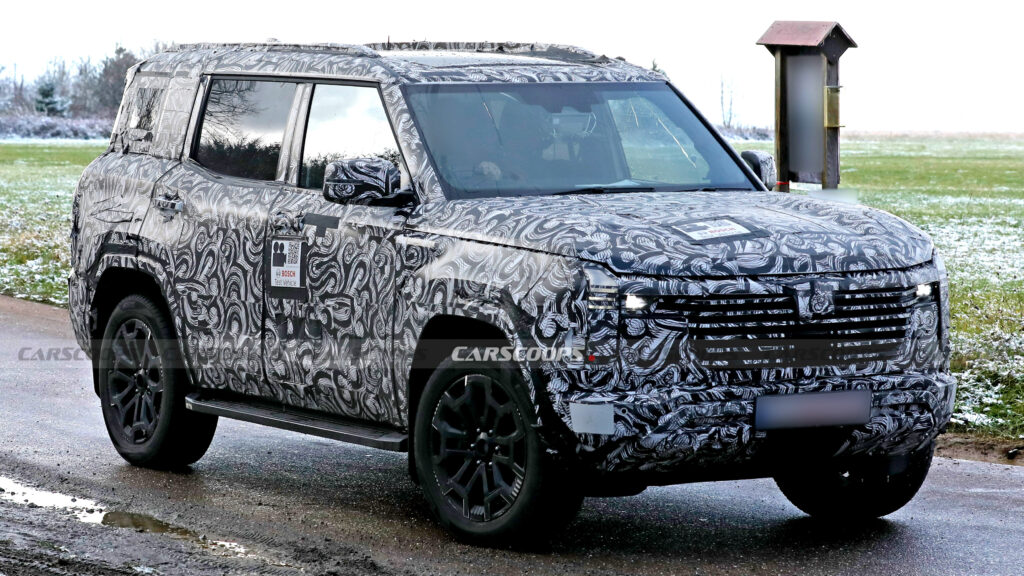
In terms of design, the new Pajero will mark a clear break from its predecessor. Spy photos suggest it will have a similar overall shape and size to the current Toyota Land Cruiser 250 and Lexus GX, adopting a more cubic and aggressive profile instead of the softer, rounder contours of Mitsubishi’s most popular SUV, the Outlander.
If this is indeed the next Pajero, then Mitsubishi may finally have found a successful solution.
Key design elements will include T-shaped LED taillights, a large front grille, squared-off wheel arches, side steps, and roof rails. A split rear wiper may also appear, and some trim levels could be offered with a panoramic glass roof.
The return of the legendary Pajero name is happening in a highly competitive segment dominated by the Toyota Land Cruiser. Mitsubishi’s success will depend not only on the authentic off-road capability inherited from the Triton platform but also on the ability to offer a modern level of comfort, technology, and possibly hybrid options for urban conditions. Delays in entering the US market may be precisely due to the need to adapt to local environmental regulations and demand for electrified powertrains. For a company experiencing a sales decline, this model is a strategically important project designed to restore buyer confidence and revive the image of a manufacturer of serious off-road vehicles.