


Mobileye Launches Its Own Robotaxi Service in the US
Mobileye, a company known as a supplier of autonomous driving technologies, has announced plans to launch its own robotaxi service. This is an interesting move, as the company transitions from being a component supplier to a direct fleet operator.
Launch Details and First Steps
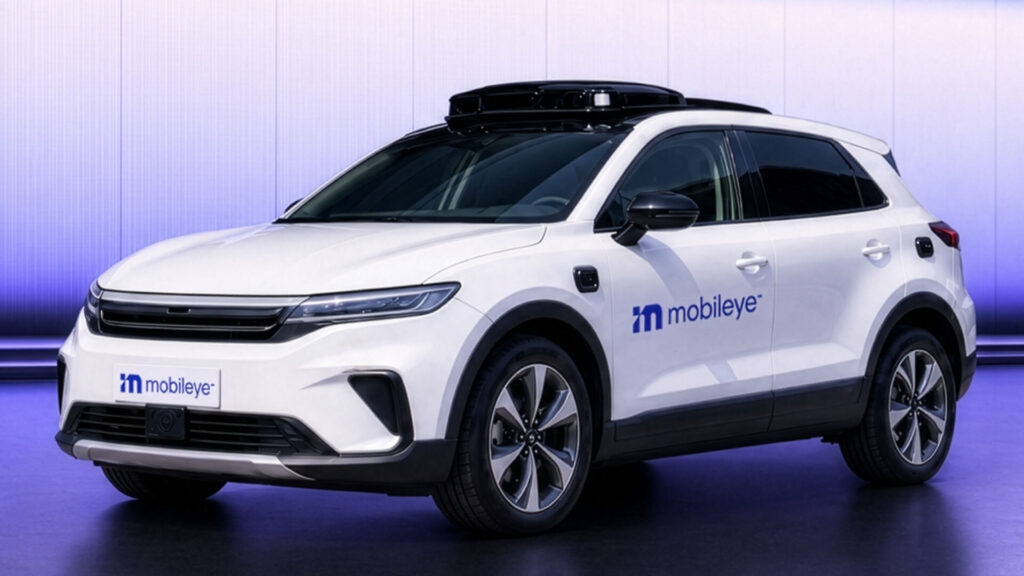
Mobileye reports that it will launch the robotaxi service in ‘one of the major urban markets in the US’ as early as next year. The initial fleet will consist of approximately 100 vehicles. Illustrations show that these will be crossovers equipped with a sensor module on the roof, as well as sensors in the front and rear fenders.
The company plans to proceed cautiously in order to ‘test the operational model in fully driverless conditions.’ If the first stage proves successful, Mobileye intends to deploy around 17,000 robotaxis over the following five years.
Technological Foundation and Partnerships
Although there are currently more questions than answers, it is known that the robotaxis will use the Mobileye Drive platform, as well as the Moovit mobile platform. This will be supplemented by ‘consumer applications, multimodal trip planning, autonomous vehicle mission management, fleet management technologies, and teleoperations infrastructure integration.’
Mobileye CEO Amnon Shashua stated: ‘As interest in autonomous mobility accelerates, the industry is becoming increasingly dependent on a small number of technology suppliers and business models. We believe there is an opportunity for a new approach – one based on deep autonomous driving expertise, strong industry partnerships, and proven capabilities across the entire mobility ecosystem.’
Future Plans and Competition
The company stated that it will continue to supply Mobileye Drive to automakers, mobility operators, and other clients, even while launching its own robotaxi service. They added that these efforts provide ‘an additional path to market that can accelerate deployment, gain operational experience, and demonstrate the capabilities of the Mobileye Drive platform at scale.’
Additional information will be released at the Capital Markets Day event later this year. Mobileye noted that it will work with ‘vehicle platform manufacturers ready for autonomous driving.’ This suggests that their future robotaxi will be based on an existing production vehicle.
Although Ford and GM have abandoned robotaxis, competition remains high from Tesla, Amazon Zoox, and Google Waymo. Uber is also making a big bet on robotaxis and plans to use up to 50,000 models based on the Rivian R2, as well as others built on the Lucid Gravity platform.

This move by Mobileye is a logical extension of their strategy, as the company already has significant experience in developing autonomous driving systems. Launching their own service will allow them not only to test technologies in real-world conditions but also to generate direct revenue from transportation. At the same time, it creates a new challenge for competitors already operating in the robotaxi market. Mobileye’s success will depend on how quickly they can scale the service and ensure safety and reliability, which are key factors for the trust of both passengers and regulators.