 by
by Success of the Xiaomi YU7 in the Chinese Market
The Xiaomi YU7 electric crossover quickly gained popularity in China. Just a few months after the start of sales, the model showed a sharp increase in sales, and in October it even surpassed the Tesla Model Y in sales volume in the country. However, buyers outside China are still waiting for Xiaomi’s electric vehicles to enter international markets.
Last month, Xiaomi sold 48,654 vehicles across China. Of these, 33,662 units were the YU7, indicating a consistently higher sales performance compared to the SU7 sedan. For comparison, Tesla shipped about 61,500 Model Y units in October, but 35,400 of them were destined for foreign markets, while Chinese buyers purchased only approximately 26,100 units.
The delivery wait time reaches up to 60 weeks, making the YU7 crossover attractive to resellers.
Since the start of YU7 deliveries to customers in July, Xiaomi has likely already sold about 70,000 units. This is rapid growth for a new player in the market, indicating the model’s successful reception by Chinese consumers.
New Personalization Options

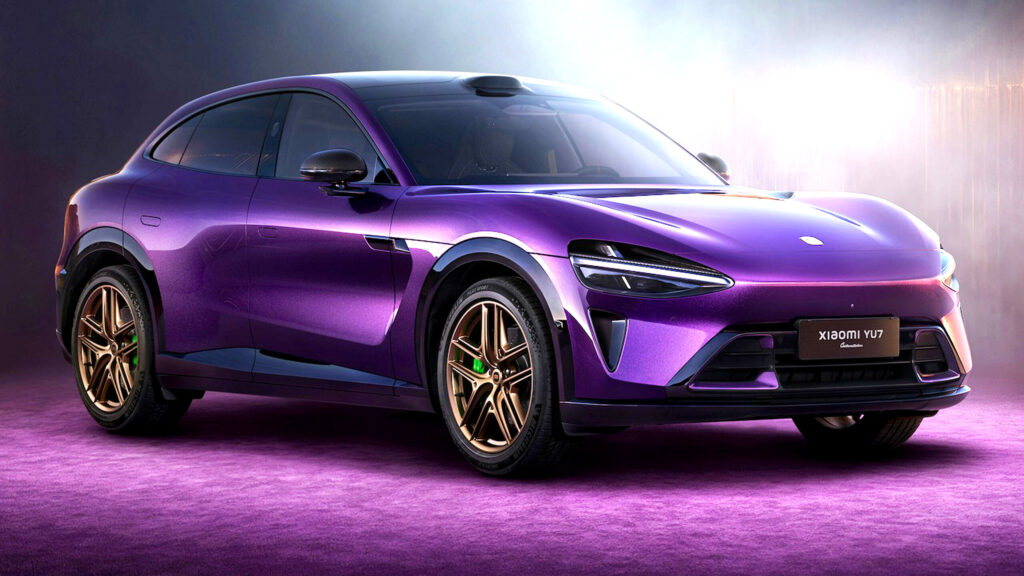
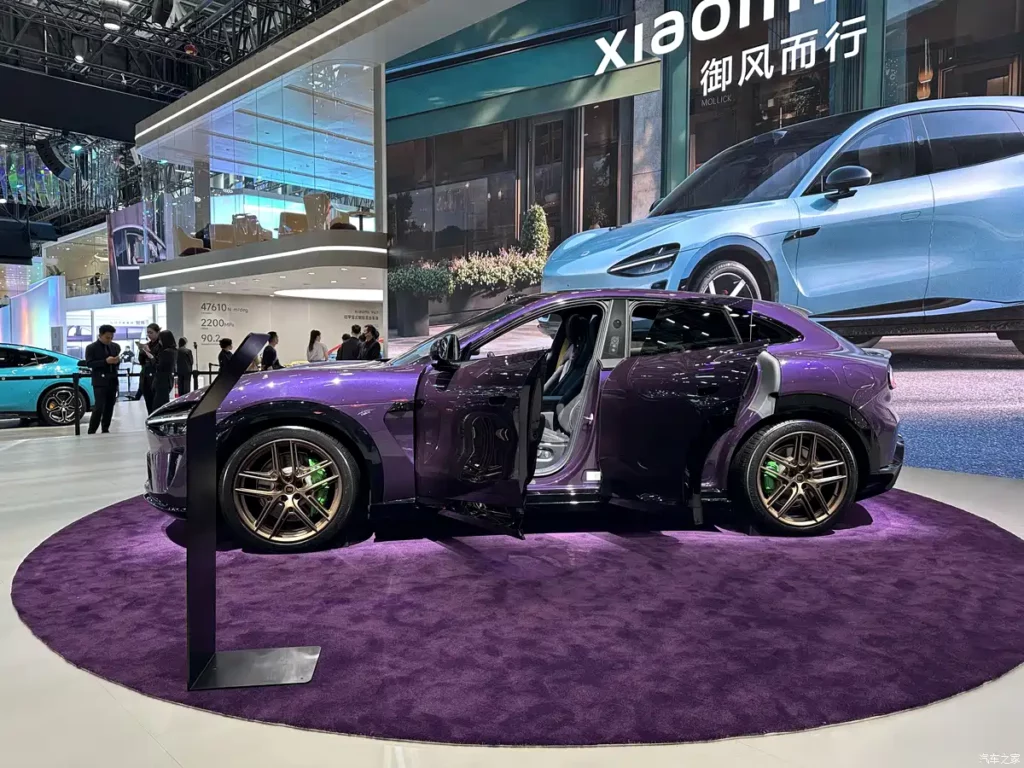
Riding the wave of the crossover’s success, Xiaomi introduced a new customization service at the auto show in Guangzhou, presenting the YU7 Max in Crystal Purple color. This service is analogous to the Porsche Paint to Sample program and involves the introduction of over 100 new paint colors over the next three years. This sharply contrasts with Tesla’s strategy, which limits buyers to a few standard colors and trim levels to increase production efficiency and profit.
The full list of colors has not yet been published, but Xiaomi announced that special paint jobs will cost from 11,000 yuan. Through the customization service, buyers will also be able to choose from a range of alloy wheels and colored Brembo brake calipers.
For those seeking luxury, Xiaomi offers 24-carat gold emblems, black and white badges, or versions made from golden carbon fiber.
Technical Specifications and Future Updates
The single-motor YU7 model is equipped with a rear powertrain producing 315 hp and 389 lb-ft of torque, powered by a 96.3 kWh battery. Dual-motor versions with 489 hp and 681 hp, respectively, are also available. An even more powerful version of the YU7 is planned for release, but it is not yet known if it will reach the level of the SU7 Ultra.
The customization service allows customers to create a unique car that stands out from mass-market offerings. This approach could become a key competitive advantage for Xiaomi, especially against the backdrop of growing demand for personalization in the electric vehicle segment. The growth in YU7 sales also indicates a shift in the priorities of Chinese buyers, who are increasingly valuing local brands with extended customization options.