


Urban Electric Vehicles for America
American drivers don’t have a wide selection when it comes to tiny urban cars. Japanese Kei cars, which Donald Trump recently showed interest in, are not available, and extremely compact European quadricycles are considered too small for roads crowded with pickups and SUVs.
Nevertheless, the Stellantis conglomerate seems ready to test the limits of what American drivers will accept, planning to bring the Fiat Topolino to the USA — a vehicle so small that even the compact Fiat 500 looks like a family car next to it.
For scale: the Topolino is only 2.53 meters (99.6 inches) long, making it seven inches shorter than the already tiny Smart Fortwo.


Stellantis Microcar Platform
Stellantis has been operating in the heavy quadricycle category since 2020, starting with the Citroen Ami, continuing with the Opel Rocks Electric in 2021, and, most recently, the Fiat Topolino in 2023. All three models are built on the same platform and designed for urban mobility, not highway travel.
This raises the question: what if this low-slung electric vehicle got Dodge, Chrysler, or Jeep badges? Would American buyers become more welcoming to it upon seeing a familiar emblem on the grille?
Officially, Stellantis does not plan to expand the lineup of such models in North America. However, considering how freely these micro-EVs swap badges in Europe, it’s not hard to imagine a local version. Perhaps with the right emblem, this pocket-sized car would have a better chance on American streets.
Here are a few ideas of what versions from Dodge, Jeep, and Chrysler could look like.
Jeep TrailBug: An Apocalypse Golf Cart


This version is based on the off-road Citroen Ami Buggy, specifically the Rip Curl concept with its powerful tires, roof-mounted LED light bar, frameless doors, and other accessories. The Jeep version looks like a natural extension of this idea.
The redesigned front end received a five-slat grille (space limitations didn’t allow for the classic seven), round LED headlights in the Wrangler style, and alloy wheels with the Jeep logo. Matte plastic panels and a spartan interior emphasize functionality, and the overall aesthetic is more reminiscent of a pit-stop off-roader than a car for trips to the farmers’ market.
It wouldn’t get an official Trail Rated certificate, but the TrailBug could add a bit of Jeep spirit for neighborhood trips or camping.
Dodge Lil’ Demon: Tiny Muscle Car Ambitions
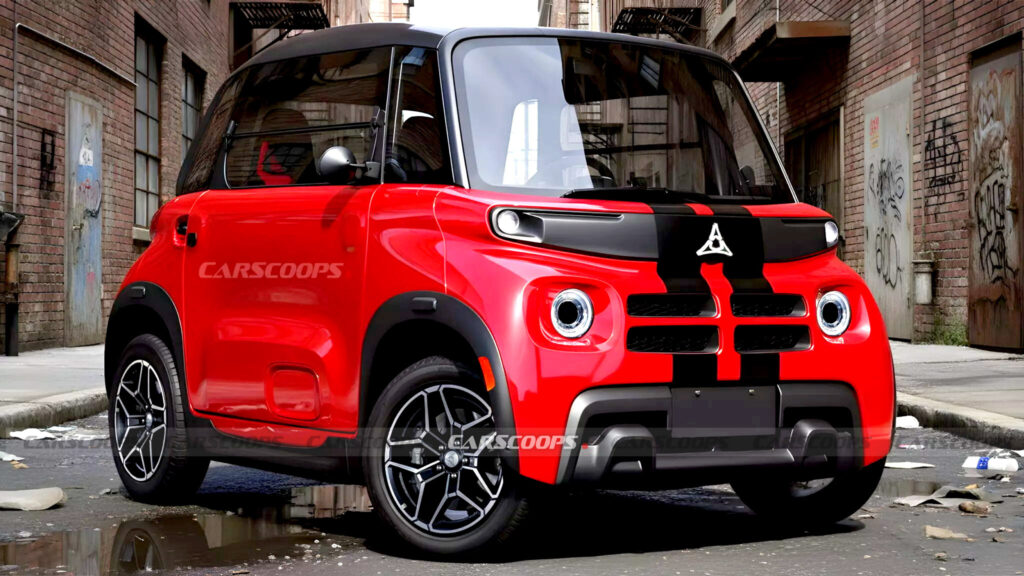
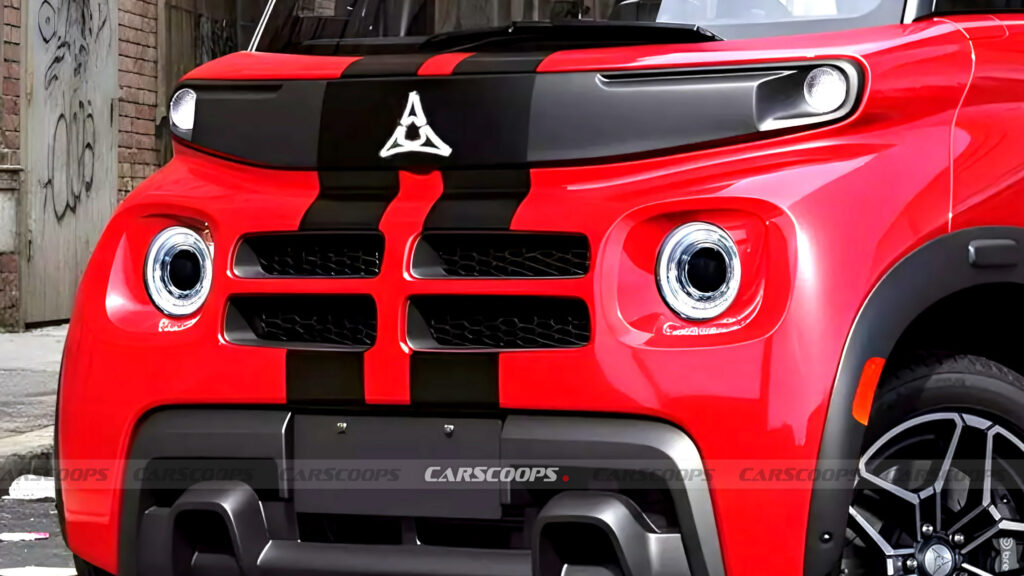
The Dodge concept starts with the Opel Rocks Electric but moves in a more aggressive direction. The front end received a retro Cross Hair grille and a sharper lower bumper design.
Other details are borrowed directly from the muscle car brand’s playbook, including quad-headlights akin to the Challenger, wheels reminiscent of the Charger Daytona, and a red paint job with full-length black stripes.
Chrysler AeroMini: A Retro Armchair on Wheels
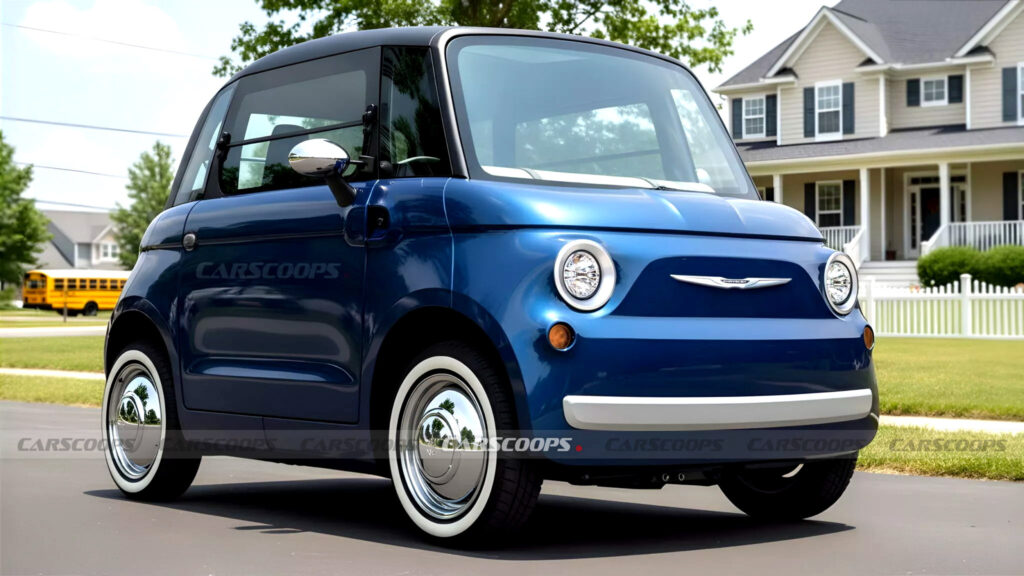
The Chrysler version most closely resembles the Fiat Topolino, as the retro aesthetic works great regardless of the badge. We added the winged Chrysler emblem up front, yellow turn signals per US standards, chrome hubcap-style wheels, whitewall tires, and retro mirrors.
The result is something between a mid-century cruiser and a bubble car. Its glossy dark blue paint combined with matte silver accents is more reminiscent of something from a 1958 airport lounge than a modern electric vehicle.
Specifications and Prospects
Like their European counterparts, all three imagined variants would have the same powertrain and hardware.
A single electric motor producing 8 hp (6 kW), powered by a 5.4 kWh battery, provides a range of up to 46 miles (75 km). These are not figures that would trouble Tesla, but then again, this thing is more like a motorized grocery cart than a full-fledged car, and behaves accordingly.
In the USA, such vehicles would likely fall into the “neighborhood electric vehicle” category. They are legal on certain public roads, but only at low speeds. European regulations follow similar logic: according to the L6e quadricycle class, such models are limited to 45 km/h (28 mph) and must weigh less than 425 kg (937 lbs) without the battery.
While these concepts remain mere fantasy, they clearly demonstrate the potential of the Stellantis platform for creating affordable, specialized electric vehicles for urban environments. The success of similar models in Europe shows there is a niche for alternative means of transportation, especially in conditions of rising housing and parking costs. The question is whether the American market, dominated by large cars, is ready for such a minimalist and specific offering. Success is possible if brands can effectively position them not as primary cars, but as convenient, eco-friendly, and affordable supplementary vehicles for short trips within the city or on closed premises.
Photos: Stellantis, Illustrations: Thanos Pappas for CarScoops