


Millions of Dollars for a Vehicle Fleet Nobody Wants to Use
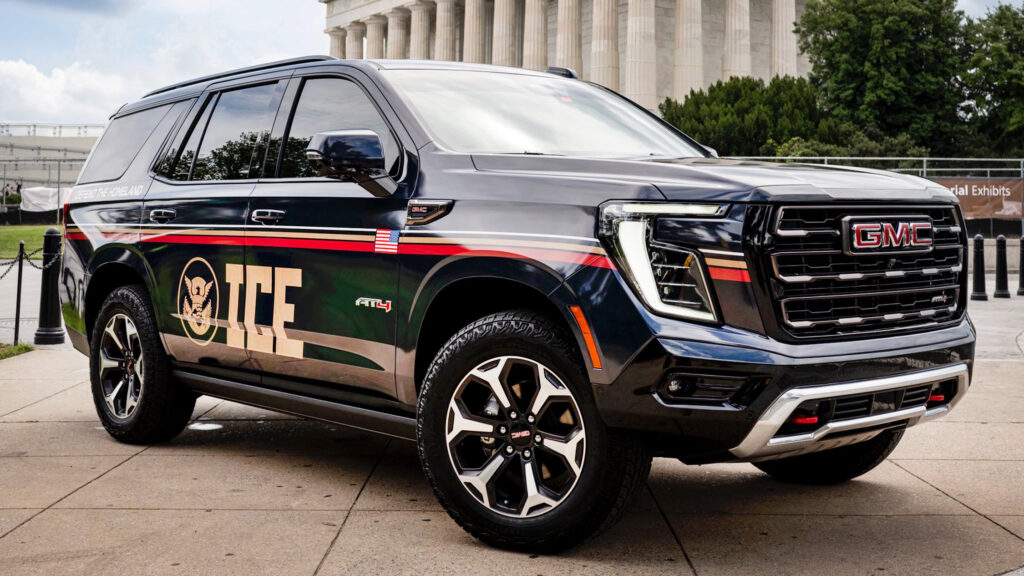
During Donald Trump’s presidency, Immigration and Customs Enforcement (ICE) spent millions of dollars to create a fleet of vehicles that looks as if it were designed by a souvenir sales team with access to a vinyl wrap workshop. The agency now faces a very awkward problem: agents reportedly do not want to drive these vehicles and have hidden them in a parking lot.
New Flashy Design Instead of Discreetness
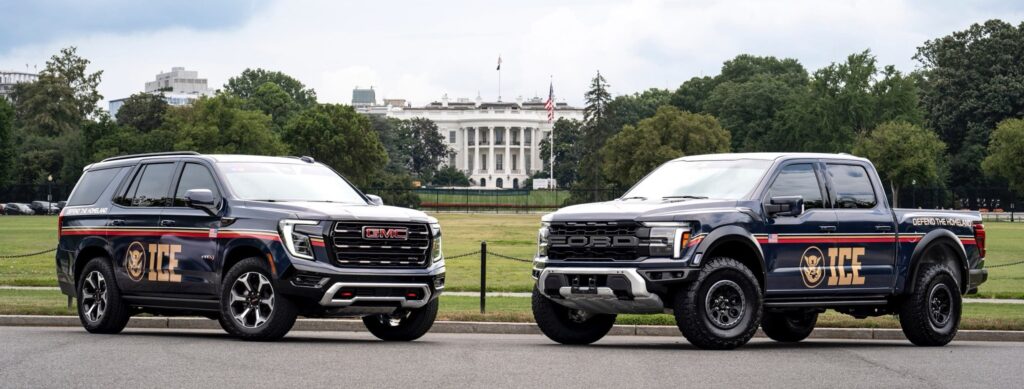
ICE ordered about 2,500 branded vehicles in the second half of 2025, abandoning the long-standing practice of using unmarked cars in favor of something significantly less inconspicuous. The new look included dark blue paint, red and white stripes, gold logos, and the slogan “Protect the Homeland” placed on the sides.
Some cars even had “President Donald J. Trump” written in gold letters on the rear window, with the design itself reportedly inspired by Trump’s private jet.
Contracts and Costs
The order was placed by then 28-year-old ICE Deputy Director Madison Sheehan, who, without a tender, signed a $2.25 million contract with a motorsports company run by a Republican donor for 25 branded Chevrolet Tahoes for recruitment purposes. ICE also spent over $120,000 on a pair of Ford Mustang GT fastbacks and signed three separate contracts worth between $174,000 and $230,000 to wrap vehicles with the new distinctive branding.
Striving for Discreetness vs. Flashy Presentation
The agency proudly showcased the new look of its fleet last August in a series of photographs taken against the backdrop of Washington’s historical landmarks, and even in an awkward video set to a hip-hop soundtrack. The problem is that, unlike police officers, ICE officers do not want to have branded cars for primary law enforcement work, as the garish decals announce who is inside and what they are doing.

“ICE never had branded cars,” a source familiar with the purchase of these vehicles reported.
Another source described the idea as “ridiculous,” arguing that driving clearly branded cars is pointless because “you don’t want to advertise what you’re doing.” A third source stated that the vehicles are effectively sidelined, claiming they are “just being hidden somewhere in a parking lot because we don’t want to drive them.”
ICE’s Official Position
ICE denies this, insisting the claims are false and stating that the branded vehicles complement the existing fleet and support operations across the United States.
“Any claim that these ICE vehicles are not being used is FALSE. ICE is a law enforcement agency, and like all other law enforcement agencies, it has a fleet of vehicles that includes some with ICE branding.”
A representative added that the safety and security of employees has always been a priority, and the suggestion that law enforcement branded vehicles, like police cars, jeopardize it is simply not true.
The Future of Orders
Nevertheless, management is reportedly trying to modify remaining orders so that future deliveries arrive without vinyl wraps, allowing everyone to draw their own conclusions.
This situation points to a deeper problem of alignment between political symbols and the practical operational needs of law enforcement agencies. The use of public funds to create a visually flashy but potentially ineffective vehicle fleet raises questions about priorities and resource management. The story also highlights ICE’s traditional work culture based on discretion and shows how changes initiated by leadership can conflict with the practical experience and opinion of field personnel. The future use of these cars and the reaction to them will be indicative for assessing the effectiveness of such image-building campaigns within law enforcement structures.