


Hidden Surveillance Cameras on California Highways
The U.S. Border Patrol is increasing its use of technology to carry out its duties, but their covert placement in public spaces raises questions. The curiosity of one resident led to an investigation that revealed a network of cameras tracking vehicles on southern California highways.
San Diego County resident James Cordero stopped near what looked like an abandoned trailer. Instead, he discovered a sophisticated setup with an automatic license plate reader (ALPR), a power source, and likely the ability to transmit data to the cloud. Following this discovery, Cordero began noticing other cameras with even better camouflage.
Also read: Cameras Were Recording Everything About Your Car and Doing It Publicly
The equipment itself is not exotic. ALPRs are widely used across the country. Police install them on patrol cars, cities install them at intersections, and private companies manage huge databases of license plates. What distinguishes this situation is who apparently operates these devices, how they are hidden, and how little information about them is available.
Who Controls the Data?
These cameras reportedly appeared after Caltrans (California Department of Transportation) issued permits to the Border Patrol and other federal agencies to place them on state highways during the Biden administration. There are now over 40 such cameras operating near the border, capturing every license plate, regardless of whether the vehicle belongs to a citizen.
Caltrans states that it does not operate the cameras, manage them, or have access to the data they collect.
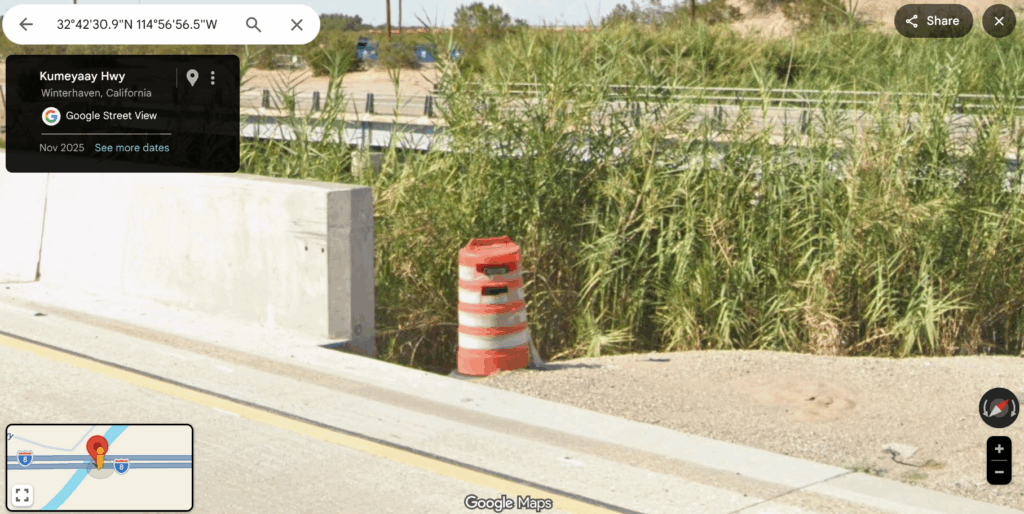
Here is just one example of how well hidden these cameras are.
Privacy advocates argue that the growing network effectively bypasses California’s 2016 ALPR law, which establishes rules for the use and sharing of license plate data by law enforcement. A coalition of 30 organizations recently called on Governor Gavin Newsom and Caltrans to revoke the permits and dismantle what they describe as a covert surveillance infrastructure along border highways.
The Transparency Issue
Supporters see the situation differently. They argue that ALPRs help authorities identify suspects in serious crimes, uncover schemes related to drug and human trafficking, and find missing persons. On busy border corridors, they say, this technology is simply another investigative tool. Meanwhile, citizens have begun independently tracking and mapping these ALPRs.
This grassroots mapping initiative combines both curiosity and a desire for accountability. Groups like the Electronic Frontier Foundation have documented over 40 readers located along Interstate 8, Old Highway 80, and key corridors in Imperial County. Some are in plain sight, others are camouflaged inside utility trailers or road equipment that is typically ignored. And that is the crux of the controversy.
The issue is not that license plate readers exist. They have for years. It’s not even that the Border Patrol uses technology to work more efficiently. It’s about transparency.
Who exactly operates each device? How long is the data stored? Who can access it? And how is it protected from misuse? There are no clear public answers to these questions yet.
The use of surveillance technology always balances on the edge between security and freedom. The situation in California shows how the rapid deployment of such systems without broad public discussion and clear legal frameworks can lead to tension between authorities and citizens. The experience of other countries indicates that trust in such initiatives evaporates when they are implemented secretly. Effective crime fighting should not be accompanied by the creation of a system of total control, the operational details of which remain in the shadows. The future of this camera network will depend on whether the parties can find a compromise between the operational needs of law enforcement and people’s fundamental right to privacy and information about how and why their data is being collected.