


Key Facts
BYD and Sinopec Partnership
In many countries around the world, EV charging infrastructure still lags behind the development of electric cars and their batteries. However, in China the situation is completely different. BYD is rapidly expanding its network of 1500 kW Flash Charging stations. The latest step is a partnership with state-owned oil giant Sinopec, within which ordinary gas stations are being converted into EV charging points.
First Converted Station in Shanghai
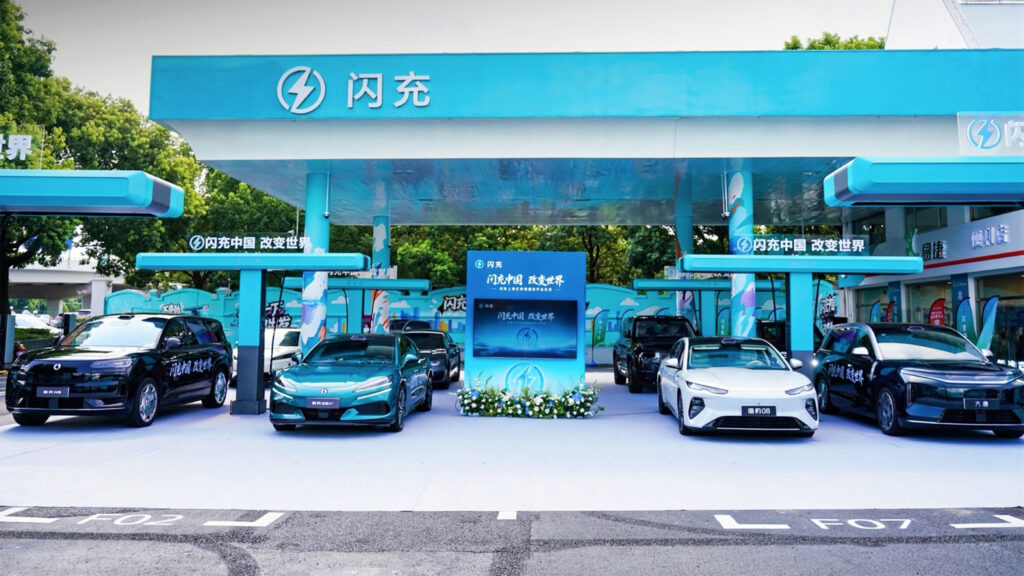
The companies have been working together since mid-2024, and the result of their work can already be seen at a new charging station in Shanghai. Previously, a Sinopec gas station operated here. The oil giant has apparently noticed the trend among Chinese buyers toward switching to electric vehicles and hybrids, so it decided to actively develop the electric mobility direction.
This is the first Sinopec station converted into a BYD Flash Charging hub, but it is far from the last. The company plans to convert many more of its fueling points. Charging units with power up to 1500 kW can replenish energy from 10% to 70% in five minutes, and to 97% in about nine minutes.
A Look into the Future
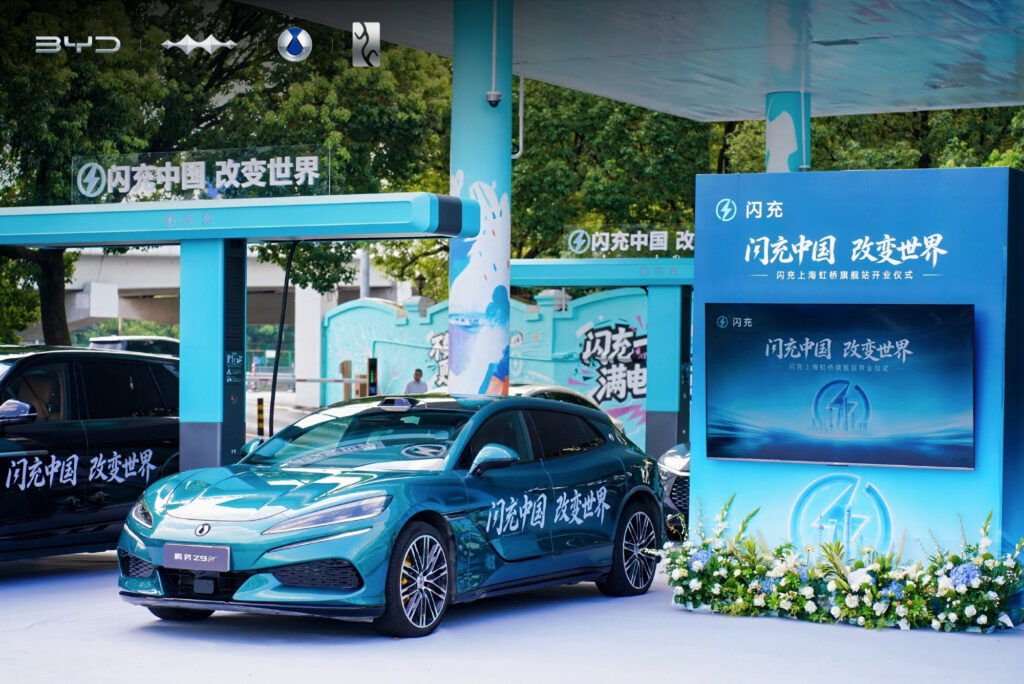

Thanks to the ultra-fast design, such charging stations do not require the traditional layout of conventional DC chargers. They are installed similarly to gas pumps: this site has six large T-shaped chargers, each with two connectors. Since a gas station was previously located here, the site retains a small store and a rest area where owners can wait while their cars are charging.
For years, skeptics claimed that charging an electric vehicle would never be as fast as refueling a car with an internal combustion engine. However, BYD with its Flash Charging technology has not only brought charging speed closer to refueling time, but has also begun literally replacing gas stations. Moreover, in the event of a power outage, each charger has four spare Blade batteries with capacities of 169 kWh or 185 kWh, which can be used to recharge compatible BYD electric vehicles and plug-in hybrids.
What This Means for the Market
This partnership demonstrates how traditional energy infrastructure can transform to meet new market realities. This is especially important for China, because the country has long been the world’s largest EV market, and demand for fast charging will only grow. If similar projects are scaled up, oil companies will be able to preserve their assets by repurposing them to serve electric transport. In addition, the emergence of such stations gradually destroys one of the main arguments against EVs — the lack of convenient and fast infrastructure. All that remains is to wait for a similar approach to begin being applied in other regions of the world.