 by
by Rapid Evolution of a Successful Model
The Wuling Hongguang Mini EV micro electric car appeared on the market in 2020 but has already reached what the manufacturer calls the fifth generation. This may seem excessive, and that feeling is quite understandable. In fact, these are not entirely new developments but rather deep restylings, which says a lot about the pace at which the Chinese automotive industry is moving. However, implementing so many updates in just six years is an impressive achievement.
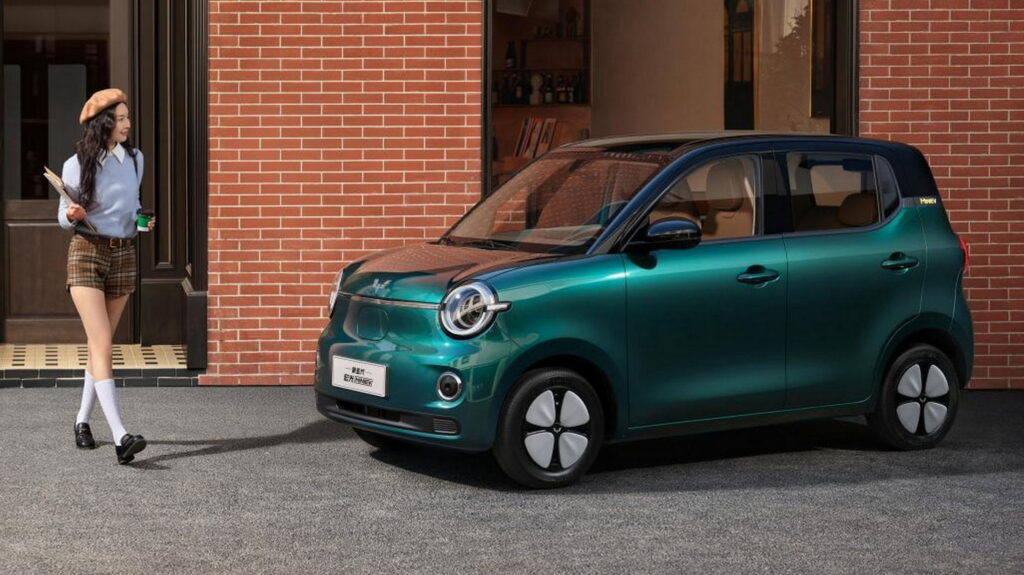
This latest iteration of the model received an updated exterior with soft, almost sugar-cube-like shapes, as well as an improved interior with more modern technology and more refined cabin trim. The range has also increased.
Created by the SAIC-GM-Wuling joint venture, this micro electric car has quietly become extremely successful in China: cumulative sales by the end of 2025 exceeded 1.9 million units. This version continues to expand its appeal with a more practical five-door layout, which first appeared at the end of 2024 on the previous model.
A $9,500 hatchback took Tesla’s bestseller title in China.
Updated Design and Dimensions
Visually, the main focus is the new front end with a more vertical nose, giving the car a friendly, almost toy-like expression. Round LED headlights and taillights are connected by a chrome strip. The overall silhouette remains familiar, but every body panel has been redesigned, and the color palette has become brighter and more playful.
The five-door Hongguang Mini is 3268 mm long, which is only 12 mm more than before, while maintaining the same 2190 mm wheelbase. The two-door version remains a more compact option: its length is 3064 mm, and the wheelbase is 2010 mm.
The new GM SUV is larger than the Equinox and costs less than $8,600.
Updated Dashboard and Practicality
The interior looks familiar, but the dashboard has been redesigned: a larger 10.1-inch touchscreen for the multimedia system and thinner climate control vents have appeared. Additionally, physical climate controls have been completely removed, and the column-mounted gear selector frees up additional space between the front seats.
The trunk volume is 170 liters with the seats up and expands to 838 liters with the rear seats folded. The company also claims 20 separate storage compartments throughout the cabin, which is meant to compensate for the car’s modest dimensions in everyday use.
Technical Specifications and Range
Each version is equipped with a rear electric motor producing 40 hp and 85 Nm of torque, identical to the previous model. Performance remains modest, as expected, with a top speed limited to 101 km/h.
GM sales in China fell by 75%, and the ticking clock is not one they can control.
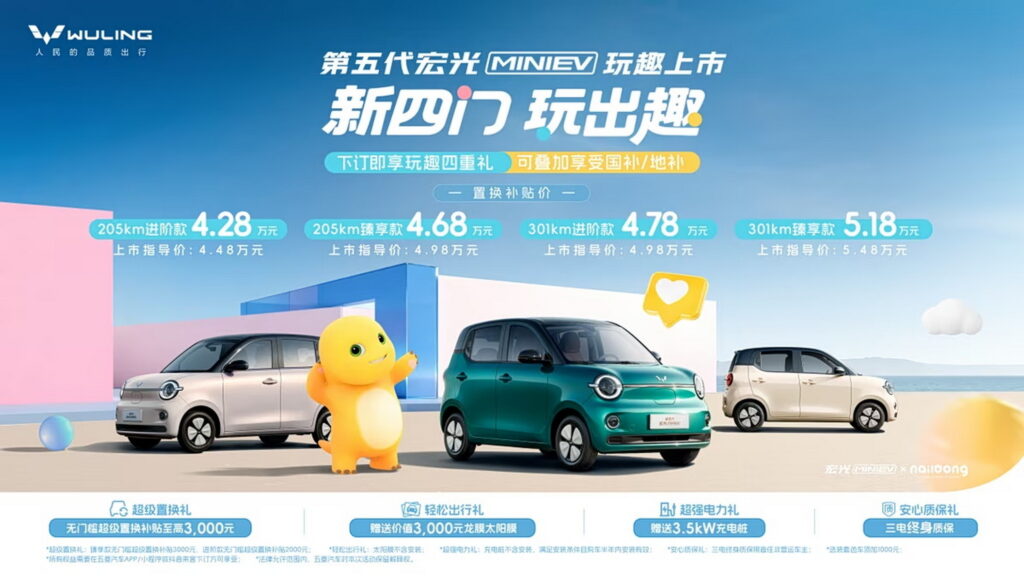
Buyers are offered a choice of two battery packs. The base model gets a 16.2 kWh battery providing a range of 205 km on the CLTC cycle. The variant with a 25.1 kWh battery increases this figure to 301 km. In both cases, charging from 30% to 80% takes about 35 minutes, making stops relatively short for an urban electric vehicle.
Price Accessibility
The five-door 2026 Wuling Hongguang Mini EV is already on sale in China. The starting price is 44,800 yuan, and the cost of the top version with the larger battery reaches 55,800 yuan. Considering current old-car scrappage subsidies, the entry point can drop to approximately 42,800 yuan, further emphasizing its position as one of the most affordable electric cars on the market.
The rapid update cycles of the Wuling Hongguang Mini EV demonstrate not only the intense competition in the Chinese electric vehicle market but also a specific strategy focused on continuously maintaining consumer interest. The model, which started as a simple and cheap means of transport, is gradually acquiring more refined features without losing its main advantage – affordability. Its success indicates that even in the era of high technology, there is a strong demand for basic but functional solutions for urban mobility, especially in developing countries. The further evolution of this platform may become an indicator of the development directions of the global affordable electric vehicle market.