


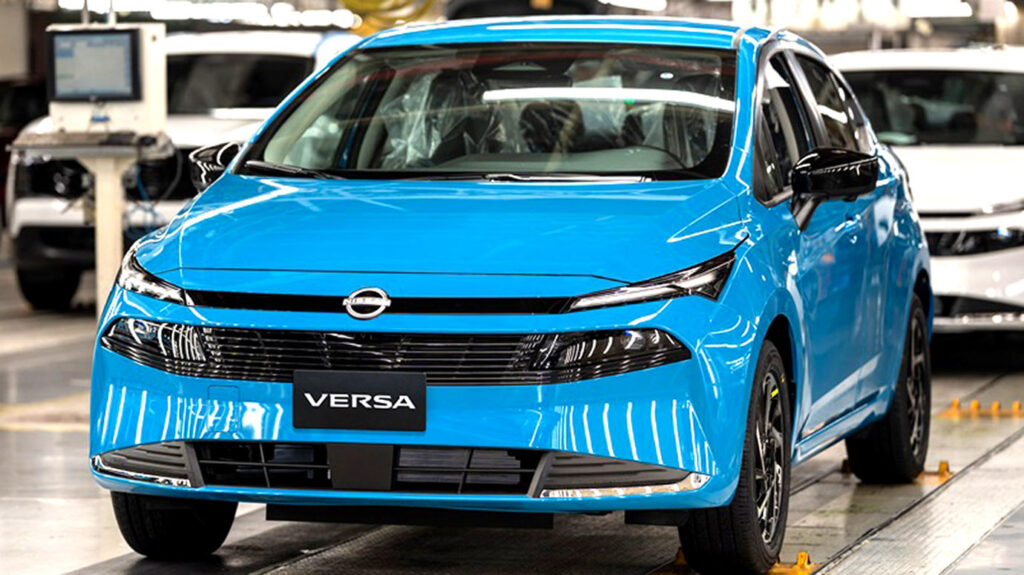
Nissan has officially unveiled the updated Versa sedan for the 2027 model year, production of which has already begun at the Aguascalientes A1 plant in Mexico. Although technical details are not yet disclosed, the company has published the first official images, confirming that the previously spotted uncovered car online is indeed the new model.
Key Design Changes
According to Nissan, the third-generation Versa “evolves in design, technology, and safety package,” continuing to target the market segment that values affordability.
The question of whether this model will appear on the US market remains open. In response to a relevant inquiry, Nissan stated that no details for the American market have been disclosed yet, apart from information about the current 2025 model.
Evolving Style
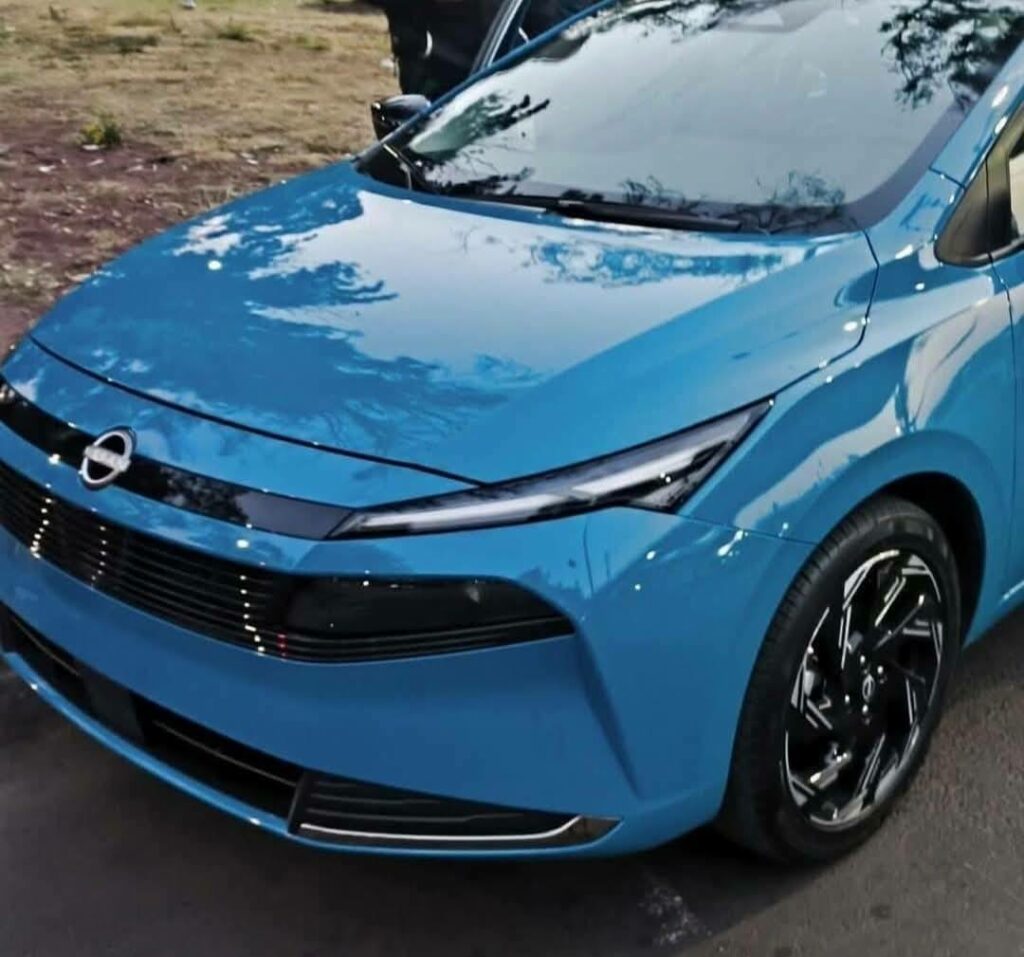
Even before the official premiere, photos of the undisguised prototype appeared online, allowing for an early assessment of the company’s preparations. The shots confirmed that the subcompact sedan is in for not just a minor update, but serious changes.
The new Versa was spotted in Mexico during what appears to be a promotional photoshoot. This suggests that the public premiere will take place in the near future.
Like the larger Sentra model, as well as many other modern Japanese cars, the new Versa appears to be a thorough redesign rather than an all-new development. It retains the basic structure of the previous generation, which debuted in 2019 and received a facelift in 2022. The silhouette, roofline, and window styling have remained virtually unchanged, indicating the continued use of a familiar technical base.


Nevertheless, Nissan has radically redesigned the front end. The styling now borrows features from the Murano model: split LED headlights are connected by a glossy black trim piece. The grille has become significantly narrower than before and is combined with an elongated lower opening in the bumper. Despite these updates, the hood and front fenders appear to have remained unchanged.
Rear End and Interior Updates
The changes at the rear are less dramatic but still noticeable. The new pair of taillights gives the rear a cleaner look, and the trunk lid has been slightly reworked to accommodate the large “Versa” model name lettering. The license plate is now positioned lower, integrated into a somewhat updated rear bumper.
New alloy wheels add more character, and in the photos, the car is painted in a light metallic shade of “Arctic Ice Blue.”

Interior shots have not been released yet, but the 2027 Versa is likely to receive an updated dashboard, potentially with a digital instrument cluster and a modernized multimedia system. More advanced driver assistance systems can also be expected to bring the model in line with growing expectations in this segment.
Technical Specifications and Future in Markets
Technically, the car continues to be based on the Nissan V platform, the same one used for the previous generation Kicks and the recently introduced Kait crossover. Under the hood, the naturally aspirated 1.6-liter four-cylinder engine is expected to remain, most likely paired exclusively with a CVT, as the manual transmission has already been discontinued for the current generation.
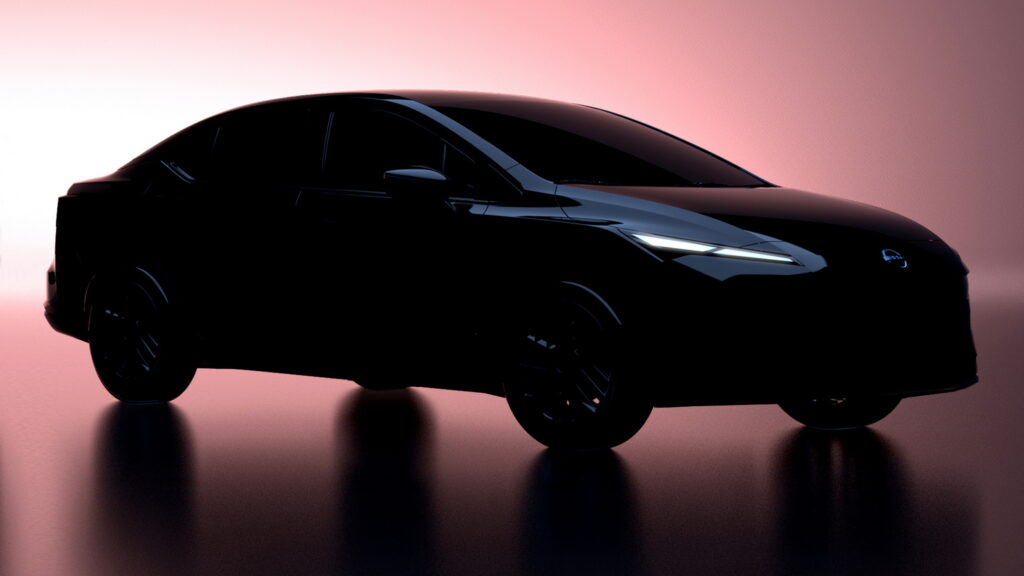

Production of the new model will be established at Nissan’s Mexican plant in Aguascalientes. This is a change compared to the previous model, which was produced at the older CIVAC plant in Cuernavaca. The latter is scheduled to be closed by March 2026.
Reports from local media suggest that the new-generation Versa may be sold exclusively in Latin American markets, such as Mexico and Brazil, where affordable sedans continue to have stable demand. This idea is supported by a recent teaser from Nissan, which shows the new Versa next to the Navara model, another car focused on these markets.

A post shared by AutoDinámico (@autodinamicomx)
However, with growing demand for affordable cars in the US, Nissan may later consider the possibility of returning the updated Versa to the American market. Whether this happens will largely depend on import duties and trade policies, which could complicate competitive pricing for models manufactured in Mexico.
The Versa update is taking place during a period when the global market for small sedans is undergoing significant changes under pressure from crossovers. Nissan’s decision to focus on Latin American markets initially is a logical step, where this class of car remains popular. The model’s success in these regions, as well as economic feasibility, could later become decisive factors for its return to North America. At the same time, the modernization of design and equipment shows that even in the most budget segment, manufacturers are willing to offer modern solutions to remain attractive to buyers.