


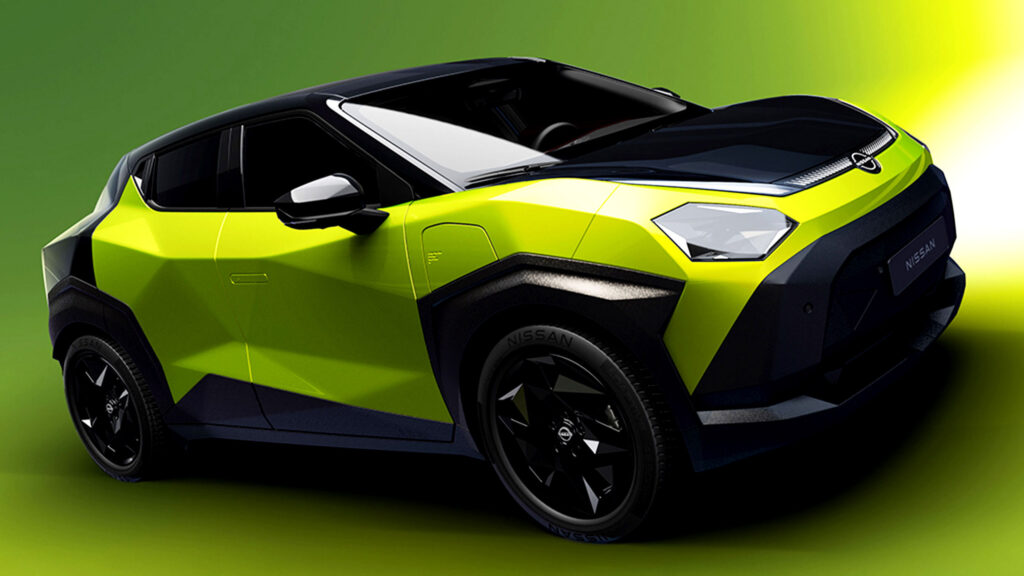
New Nissan Juke: An Electric Crossover with Concept Car Design
Nissan has introduced the third generation of its popular Juke crossover. The car, which has always stood out for its original exterior, is now becoming fully electric and receiving an even bolder and more futuristic look reminiscent of a concept car.
Here are the key facts about the new model:
Production and Technical Features
The new model will be produced at Nissan’s plant in Sunderland, UK, where the Leaf is also assembled. The global launch is scheduled for spring next year. Although the final technical specifications have not yet been disclosed, the car is expected to inherit the vehicle-to-grid technology from the Leaf, and its batteries may be similar – with a capacity of 52 kWh or 75 kWh.
Bold Exterior
The design of the new Juke impresses with sharp and jagged lines. The front is adorned with a large black grille and unusual headlights. The car is showcased with sharp-angled black wheel arches and a bright green body color that emphasizes its profile, especially the complex door panels.
The design is impressive enough to look more like a concept car than a model that will be sold to the public.
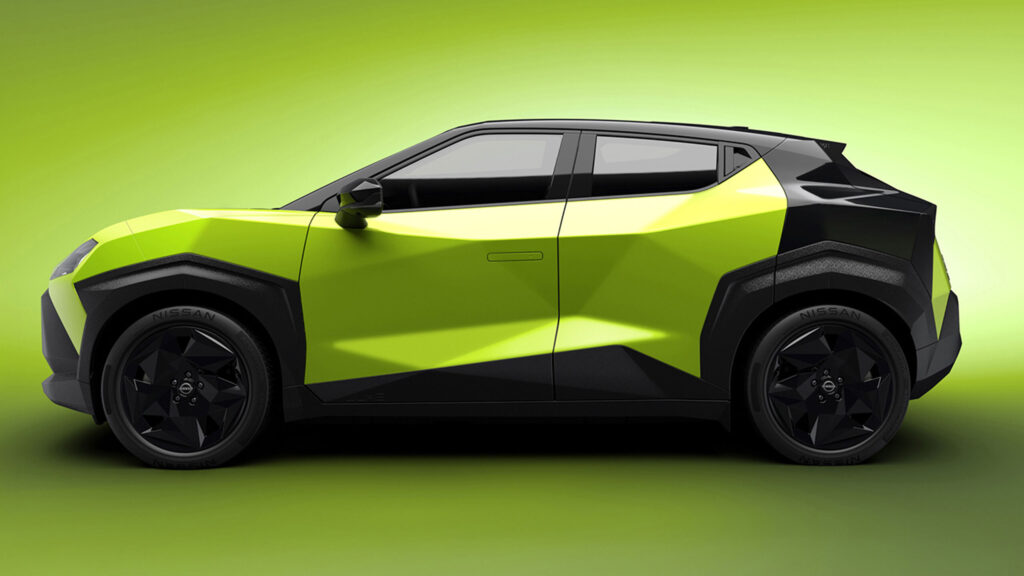

As in the previous model, the rear door handles are located on the C-pillars. The rear also looks bold thanks to complex LED taillights and characteristic tailgate styling.
Parallel Existence of Generations
An interesting decision by the company is the parallel sales of the second and third generations of the Juke. Initially, it was planned that the new model would completely replace the previous one, but now Nissan has decided to update the design of the older hybrid model so that it visually matches the new electric vehicle and offer them on the market simultaneously. This is a rare strategy that allows the brand to reach a wider audience – those who are not yet ready to fully switch to electric vehicles and pioneers of electric transport.
A similar approach may indicate the manufacturer’s caution during a transitional market phase or a desire to maximize the potential of an already established production line. The success of this strategy will depend on how clearly Nissan can position the two models so that they do not compete with each other, but complement one another, offering a choice between traditional and future technologies within one recognizable car family.