


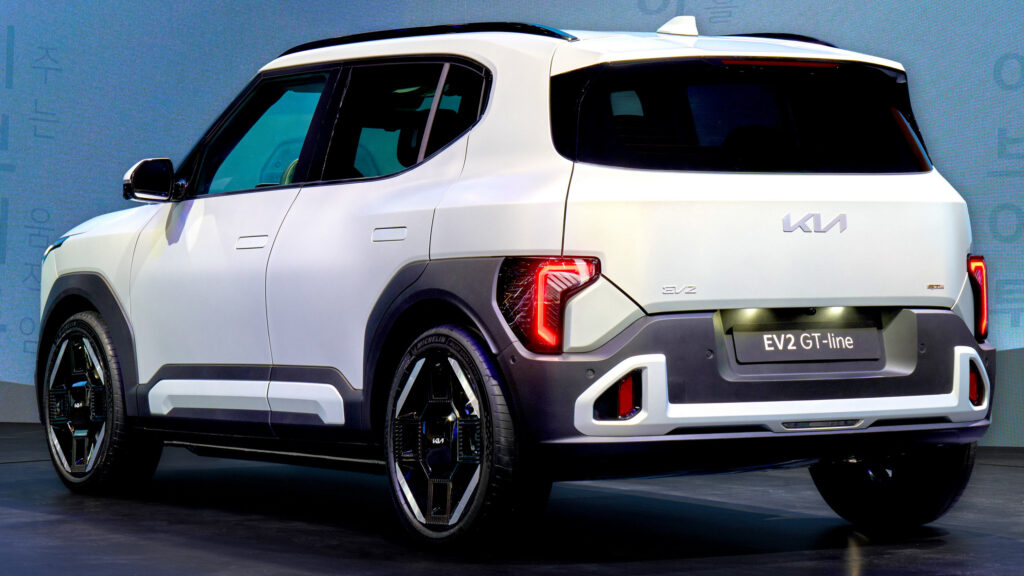
The presentation of the new Kia EV2 electric crossover at the Brussels Motor Show was another step in the rapid expansion of the Korean brand’s electric portfolio. The car, positioned as a competitor to the new Renault 4, could become one of the most popular in the lineup. The model’s design inherited the language of Kia’s larger electric SUVs, and the technical underpinnings are based on proven solutions. Furthermore, the range could be supplemented in the future with a powerful GT version.
Technical Specifications of Base Versions
Kia has already confirmed that the standard EV2 trim will include a compact 42.2 kWh battery and an electric motor with 145 hp, driving the front wheels. The stated range is 317 kilometers, making the car an ideal choice for city dwellers and those who have the ability to charge at home.
Shortly after the start of sales, a GT-Line version will appear. It will receive a larger 61 kWh battery, which is expected to provide a range of up to 448 kilometers. The power output of this modification has not yet been disclosed.
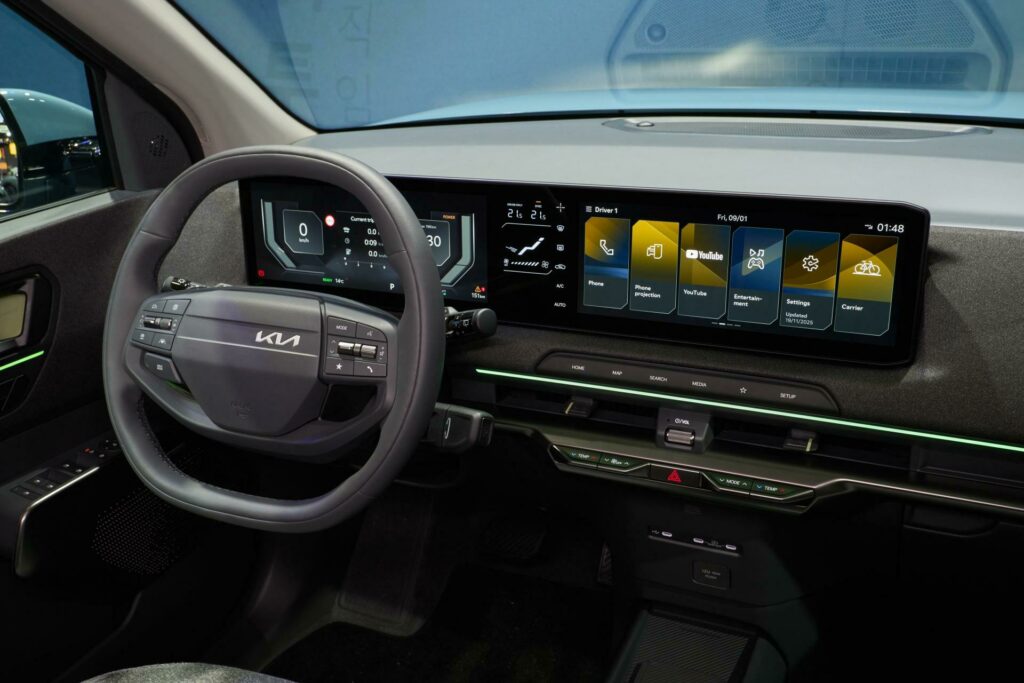

Possibility of a Powerful GT Version
A full-fledged GT version will occupy the top step in the EV2 lineup and could become a competitor for the Volkswagen ID. Polo GTI, despite the Korean model being slightly larger than the German hatchback. When asked by Autocar magazine about the possibility of such a modification, Kia Europe’s head of product planning, Alex Papapetropoulos, did not dismiss the idea.
At the start of sales, we will present the Air and Earth trims, and the GT Line version will appear in June. Of course, we are considering possibilities for updating the EV2 model throughout its life cycle. This segment is very sensitive to such updates, so we are exploring the possibility of adding new trims in the future.
Features of the Future EV2 GT
If the EV2 GT is indeed created, it will differ significantly from other electric GT models from Kia. The car’s architecture does not allow for the installation of all-wheel drive, meaning the powerful version will also remain front-wheel drive. This is not a critical flaw, but such a feature will not allow the model to match the performance of the EV3 GT and EV4 GT, which develop 282 hp. The power of the EV2 GT is expected to be close to the 200 horsepower mark.
Engineers will also have to minimize the torque steer effect. The front-wheel-drive EV5, tested last year, demonstrated significant torque steer with 215 hp and 310 Nm of torque. The EV2 GT will be lighter, which could positively impact this aspect of the car’s behavior.
The emergence of a small electric crossover with sporting ambitions could find its buyer in the European market, where demand for compact and efficient EVs continues to grow. Abandoning all-wheel drive in the GT version could be a conscious step to reduce the car’s cost and complexity, making it more accessible. The success of such a model will depend on a successful balance between dynamics, price, and how effectively the limitations associated with front-wheel drive and the high torque of the electric motor can be circumvented.