


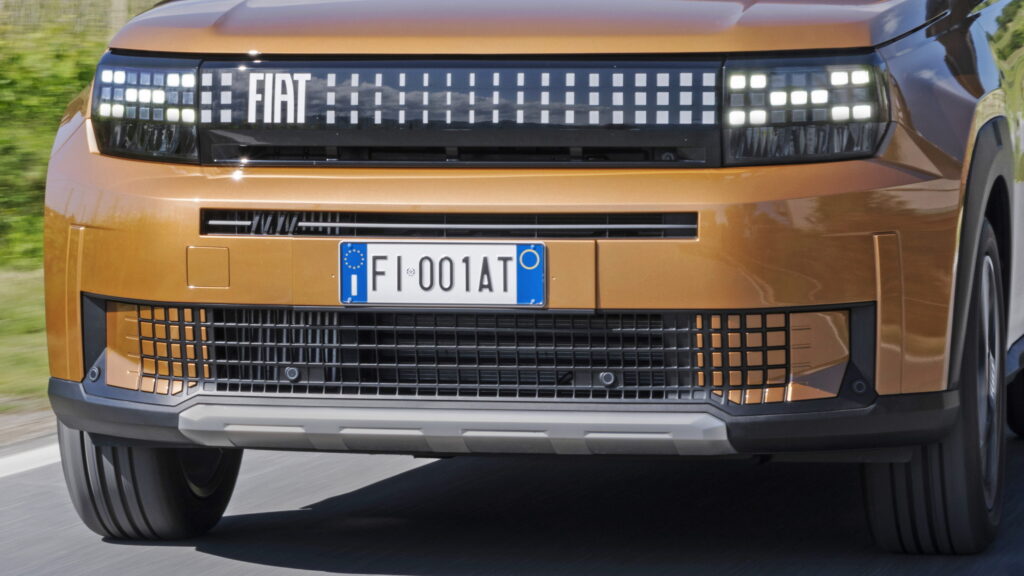
Fiat CEO Proposes Limiting the Speed of City Cars
Fiat models like the 500 and Panda are known for their urban focus, but in the future, they could become even slower by design. According to CEO Olivier Francois, limiting top speed could be a way to meet EU safety requirements without having to equip budget models with expensive ADAS systems.
Francois expressed his position in an interview:
I would happily limit the speed of my city cars, my compact models, to today’s maximum allowed speed. That’s already a limit. There’s something strange about me needing to oversaturate my cars so they can go faster than the speed limit.
He noted that the average maximum allowed speed in Europe is 118 km/h, while most safety equipment “is designed for cars that can travel significantly faster than the limit.”
City Cars and Their Real Operating Conditions
The most popular Fiat models, including the 500, Panda, and Grande Panda, are predominantly used at low speeds within cities. Francois does not believe that limiting their top speed to 118 km/h would have a serious impact, as none of these city cars are particularly fast to begin with.
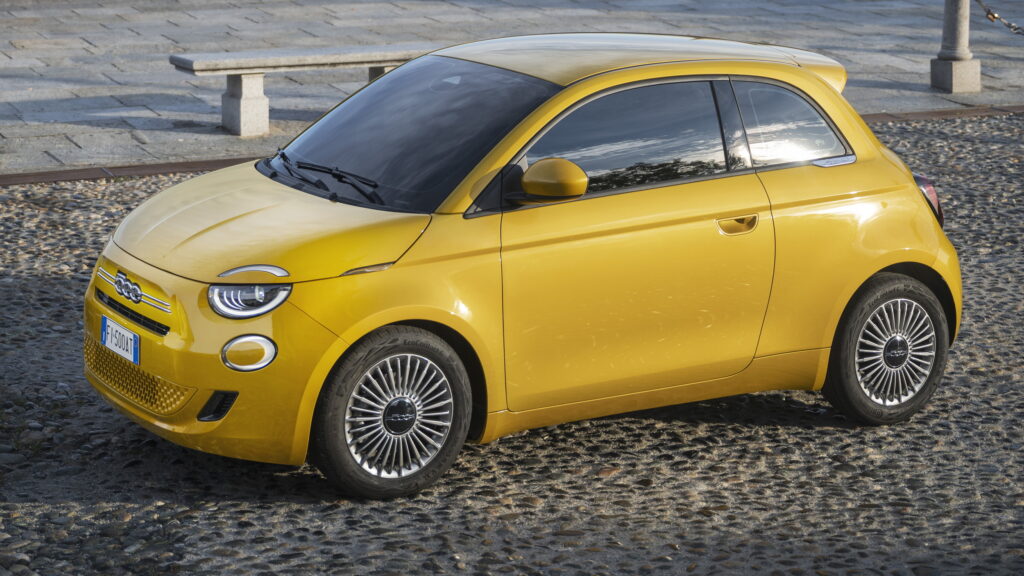

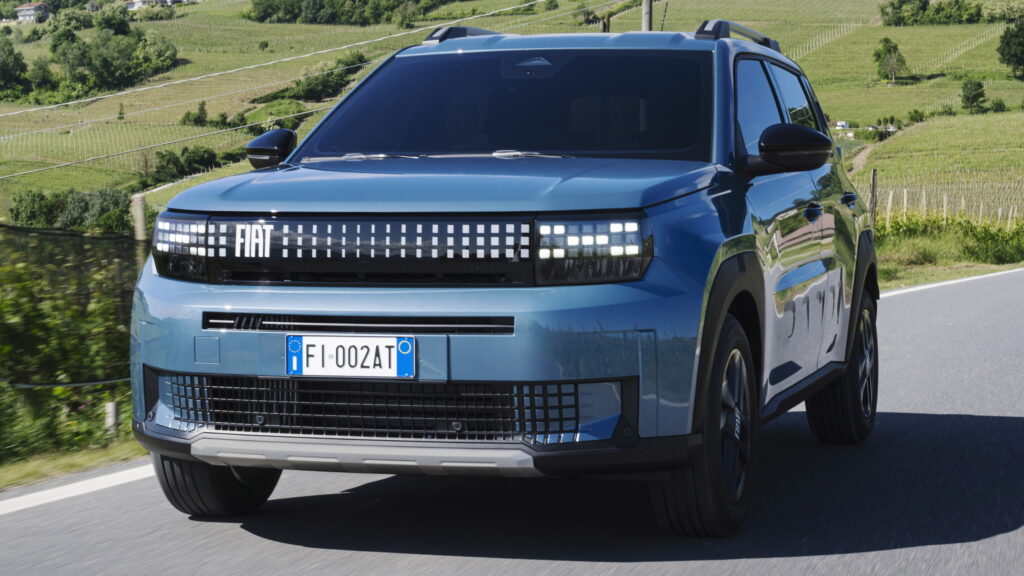
The electric version of the Grande Panda is already limited to 132 km/h to preserve range, while the gasoline and hybrid variants of this compact hatchback can reach speeds up to 160 km/h. The Fiat 500e has a limiter set at 135 km/h or 150 km/h depending on the battery size. The new 500 Hybrid can theoretically reach 150 km/h, but judging by acceleration figures, it would require a lot of patience.
Safety Through Speed Limitation
Francois believes that a new speed limiter could become a cheaper alternative to more complex ADAS systems, which would inevitably raise the price of models with minimal benefit to the customer. He also supported the proposal to create a new category of small cars in Europe that could be exempt from the strict safety rules applied to higher-segment vehicles.
It’s hard for me to understand why we need to install all this extremely expensive equipment: sensors, cameras, traffic sign recognition… It’s all a bit out of place, a bit crazy, and it contributed to a 60% increase in the average price of a city car over the last five or six years. I don’t think city cars in 2018 or 2019 were extremely dangerous. Our proposal was literally to say ‘let’s take a small step back from overloading cars with expensive equipment.’
We fundamentally believe that with all these rules, the most unsustainable part concerns city cars and urban traffic, because all these cars are small, democratic, and inexpensive, they are bought by young people, etc., for daily trips in the city. They are driven at significantly lower speeds. It’s not the same character of use.
If Fiat introduces new speed limits for its entire lineup, it will not be the first automaker to do so. Volvo, Renault, and Dacia models already have a limited top speed of 180 km/h, designed to reduce the likelihood of serious accidents.
This initiative points to a broader trend in the automotive industry, where manufacturers are seeking a balance between safety, affordability, and practicality, especially for urban vehicles. Fiat’s approach emphasizes the real operating conditions of compact cars, offering a solution that could preserve their democratic price without sacrificing a basic level of safety for typical city trips.