 by
by Powerful Porsche Taycan Turbo GT Failed to Meet Expectations at Auction
Typically, high-performance cars from Porsche’s special GT division increase in value immediately after leaving the dealership. This applies, for example, to the current 911 GT3 RS model and other limited series created under the influence of motorsport. However, the electric Taycan Turbo GT does not seem to follow this scenario. Despite impressive specifications, its value is falling along with the rest of the Taycan model range.
Standard Taycan models, like their corporate sibling the Audi e-tron GT, have significantly lost residual value since their launch. Electric vehicles in general depreciate faster than most ICE cars, but the Taycan has shown a particularly steep decline. Earlier this week, a nearly new Taycan Turbo GT was put up for auction, and the bids stopped at an amount that was an impressive $82,000 below its original MSRP.
Auction Became a Tough Test for the Taycan’s Value
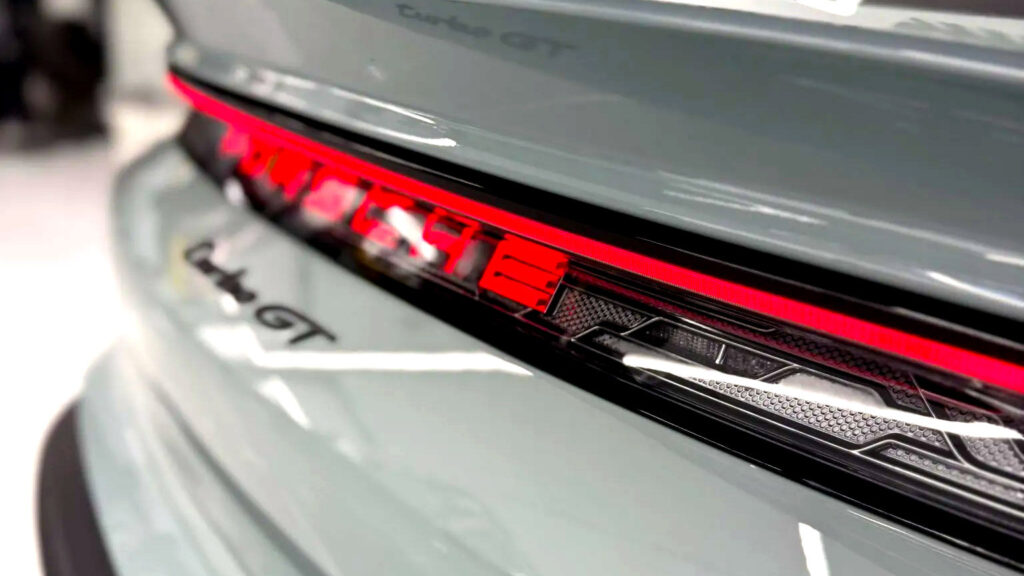
The high-performance sedan was listed on the Bring a Trailer auction by a Porsche dealer from Nevada. The car had never been sold to a private owner and had only 141 miles (227 km) on the odometer. It was also equipped with the Weissach package, which includes a fixed rear wing, no rear seats, and more lightweight carbon fiber components.
The sticker price was $238,300, increased by nearly $10,000 due to additional options. Among them are Shade Green metallic paint for $2,950, satin black wheels for $1,380, and race-tex trimmed door sills for $1,760.
The final bid was only $167,000. The seller noted that the bidding approached the reserve price and plans to negotiate with the highest bidder. Regardless of the outcome, this demonstrates the harsh reality of the market and extremely rapid depreciation for a car that hasn’t even gone through a full charging cycle.
Why is This Electric Car Special?
The specifications of the Taycan Turbo GT are truly impressive. It is equipped with two electric motors that produce 1,019 hp in launch control mode, with a peak value of 1,092 hp in short two-second bursts.
According to tests, the model with the Weissach package accelerates to 60 mph (96 km/h) in 1.89 seconds, accounting for the so-called “one-foot rollout,” making it the fastest car in the entire history of MotorTrend magazine’s testing.
Without accounting for the rollout, the time is 2.1 seconds, allowing it to outpace the Tesla Model S Plaid, Ferrari SF90 Stradale Assetto Fiorano, and even the Lucid Air Sapphire.

However, despite such performance, perhaps not many buyers are willing to spend a large sum on a track-oriented electric sedan that will most likely never see a race track. Furthermore, the Weissach package makes the car even less practical by removing its rear seats.
This case vividly illustrates the complexity of positioning high-budget electric vehicles on the secondary market. Even technological breakthroughs and record-breaking performance cannot always withstand the general trend of rapid depreciation of electric cars, especially in the luxury model segment. Buyers may be questioning the long-term value of such cars in a world where technology is evolving rapidly and the market is saturated with new offerings. The situation with the Taycan Turbo GT may force manufacturers to reconsider their pricing and marketing approaches for their top electric models to ensure greater value retention over time.