 by
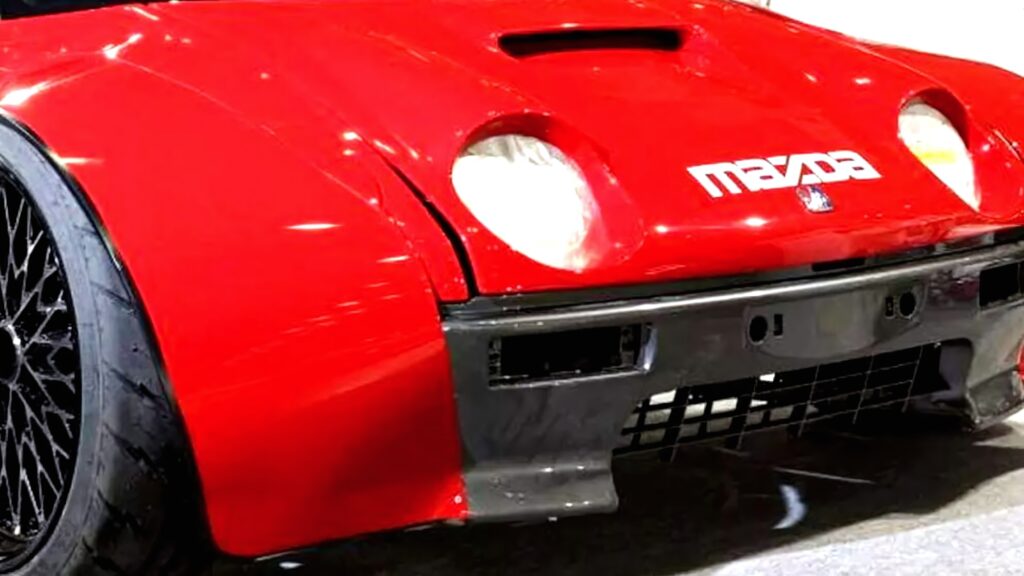
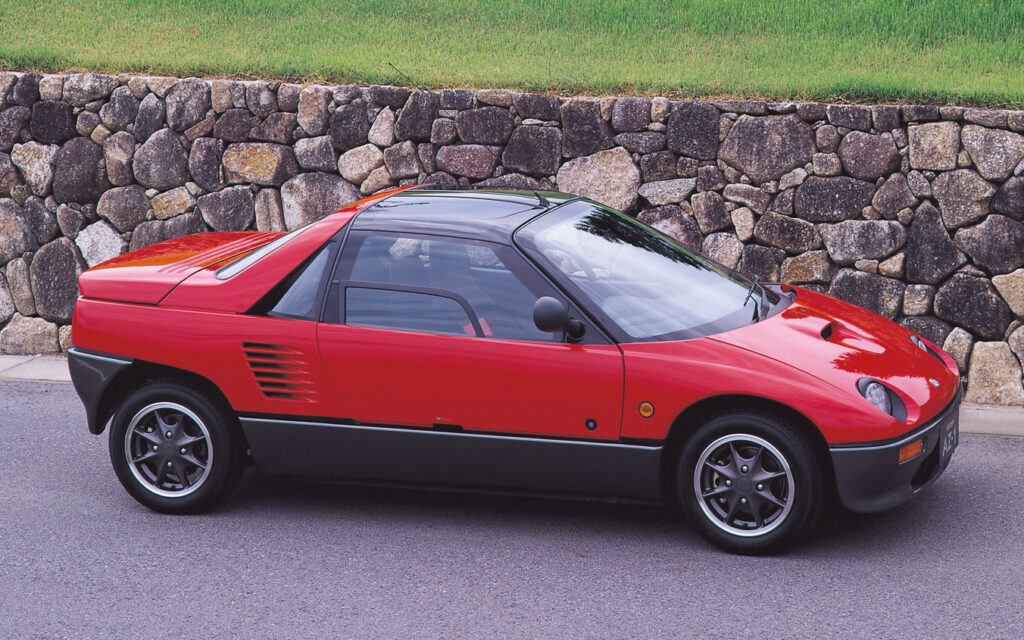
by For fans of rare Japanese cars, the Mazda Autozam AZ-1 has always been special. It’s a tiny mid-engined kei car, created in compliance with strict Japanese regulations regarding dimensions and engine displacement. However, this particular example has no intention of playing by those rules.
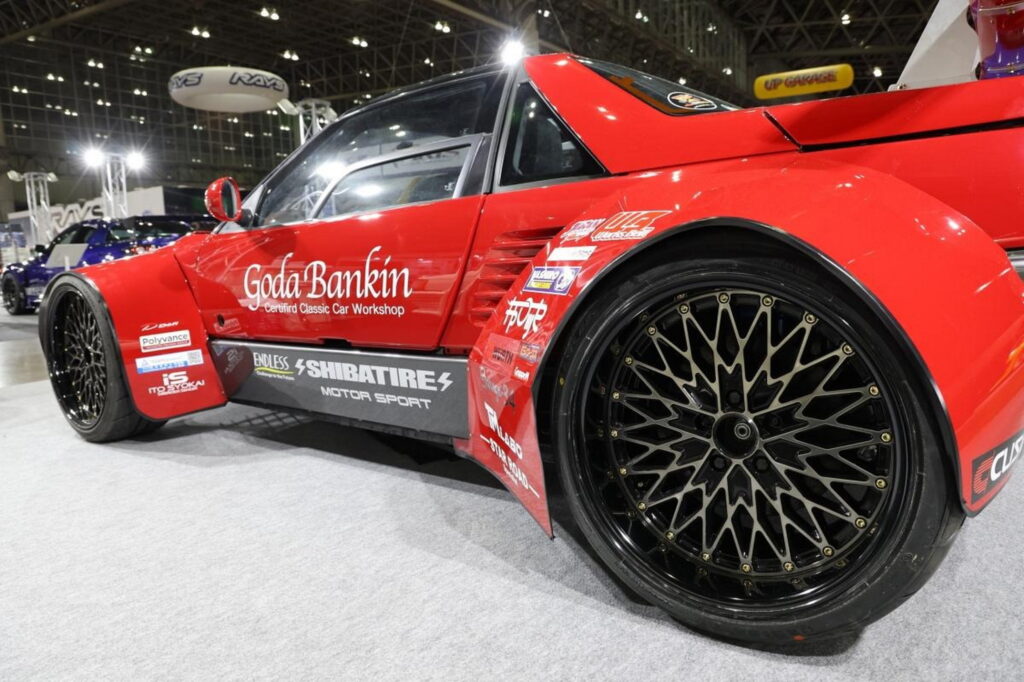
This version of the least powerful gull-winged coupe boldly rejected the factory approach, opting for a radical wide-body kit and a much more aggressive rotary engine.
The build is the result of a collaboration between Goda Bodywork and rotary engine specialist RE Amemiya.
The project, which is still in the prototype stage, was first presented to the public at the Tokyo Auto Salon last week. The car was not fully finished by the start of the show, but nevertheless attracted significant attention.
Beyond the Kei Car
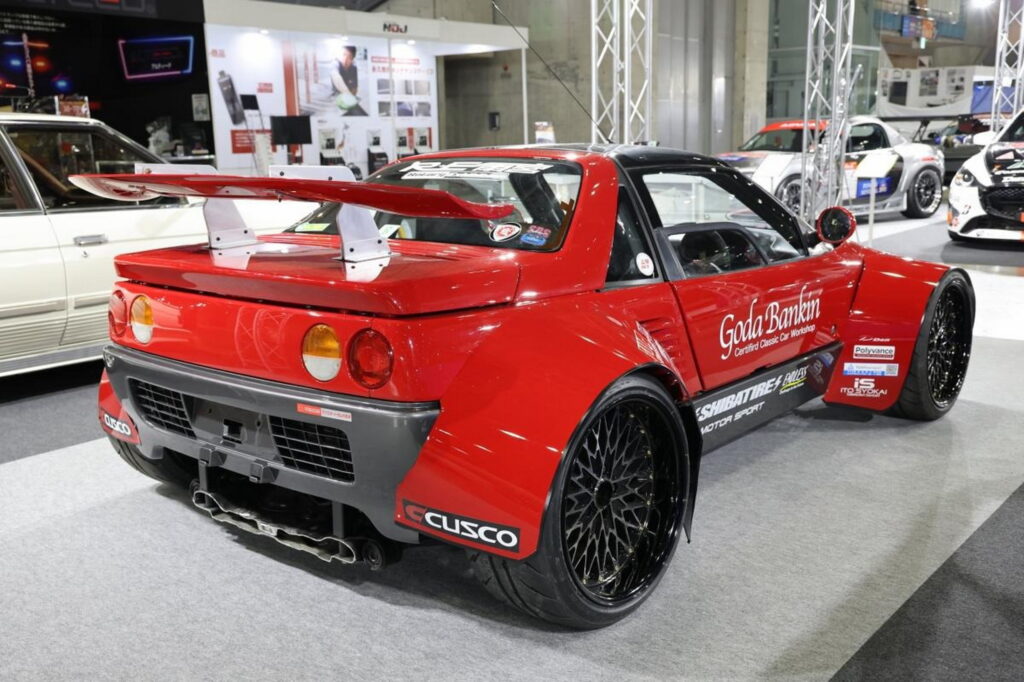
The first thing that strikes in the photos from Makuhari Messe is the car’s stance. The typically narrow AZ-1 body now looks twice as wide thanks to dramatically flared front and rear fenders. The factory 13-inch wheels have been replaced with massive 18-inch rims that completely fill the arches. The rear wheels are shod in sticky 255/35 R18 rubber.
The kei car’s new platform is accompanied by serious changes to the technical side. Suspension components are borrowed from other Mazda models: the front uses parts from the RX-8, and the rear setup is taken from the Axela, also known as the Mazda3.
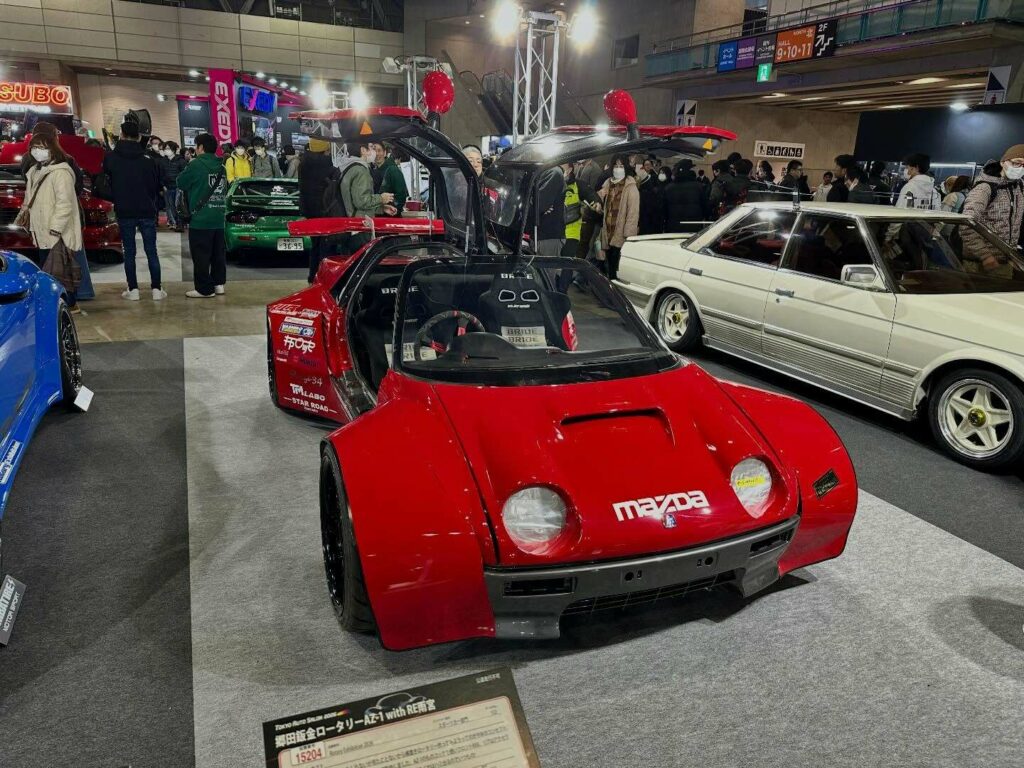
Functional air intakes remain on the hood and sides, but a fixed rear wing is now installed to generate additional downforce.
Inside, behind the characteristic gull-wing doors, a pair of Bride bucket seats, a Nardi steering wheel, and Defi gauges are installed. Multimedia updates are absent, as the tuner intentionally chose a configuration without an audio system, and there were reasons for that.
How to Fit a 13B Engine into Such a Car?
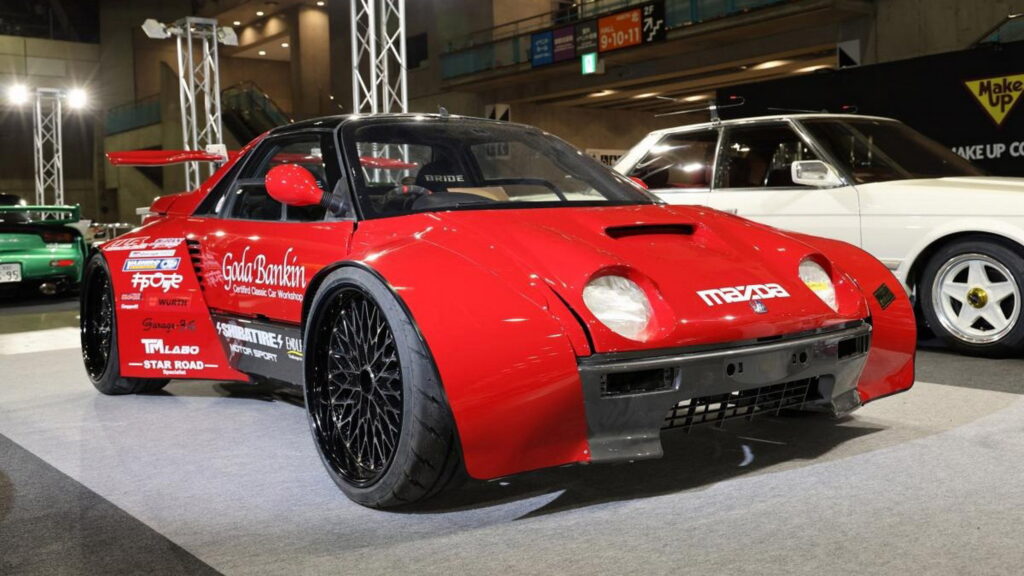
What truly sets this car apart is the engine swap. The original 660cc three-cylinder engine from Suzuki has been replaced with a 1.3-liter rotary engine, specifically the 13B. This is already a huge step in increasing power, but RE Amemiya went even further by installing it in a transverse layout, which is rare for this power unit.
The donor engine comes from a Mazda RX-7 FC, but it now runs on two rotors borrowed from an RX-8, plus EFI throttle bodies and a modified Link ECU.
The result is a claimed output of 402 horsepower. This is a comically large leap of 538 percent compared to the modest 63 horsepower of the original AZ-1.
With such power in such a lightweight chassis, the car’s power-to-weight ratio is extremely high. The rotary engine is paired with a six-speed manual transmission from a Mazdaspeed3, as well as a special clutch and differential from OS Giken. As with the factory AZ-1, power is sent to the rear wheels.
There is hope that the team will continue to refine the project so we can eventually hear it running in full form. However, Goda Bodywork has made it clear that the car will not be offered for sale and is not road-legal.
If you feel sorry for the car that sacrificed its body for the project, don’t. This build actually started with a scrapped chassis found in a junkyard. The AZ-1 was originally sold from 1992 to 1994 under the Autozam and Suzuki Cara brands, positioned as a lively competitor to the Honda Beat and Suzuki Cappuccino.
Tokyo Auto Salon
View this post on Instagram. A post by Rotary13B1.com (@rotary13b1com)
View this post on Instagram. A post by Sho Komaba (@s_h_ooooo)
View this post on Instagram. A post by Rotary13B1.com (@rotary13b1com)
Projects like this, combining legendary Japanese engines with unexpected carriers, continue to fuel tuning culture, showcasing technical mastery and creativity. Although this particular AZ-1 will not become a production product, it serves as inspiration and a demonstration of possibilities when limitations are ignored in favor of pure automotive passion. It is also a reminder of how even “written-off” cars can get a second, much brighter life thanks to the efforts of enthusiasts.