


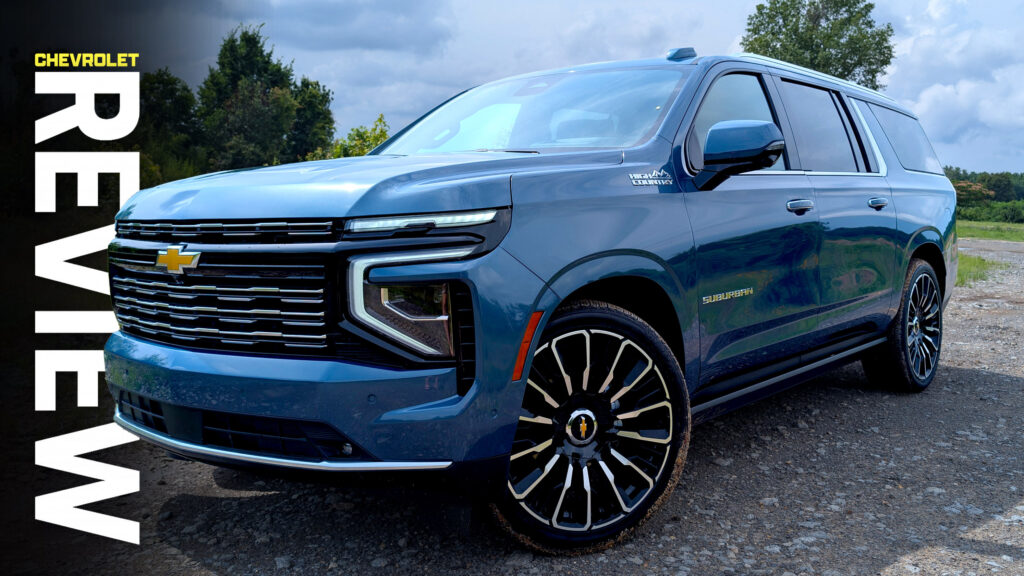
2026 Chevrolet Suburban Review: A Giant Worth Noticing
There comes a moment when discussing an SUV as a regular car becomes absurd due to its size. The 2026 Chevrolet Suburban crossed that line years ago. At 5,748 mm in length, it resembles a small bus more than a family vehicle.
It surpasses crossovers, dwarfs parking spots, and makes full-size pickup trucks look compact. Despite all this, people continue to buy it in vast numbers.
After spending considerable time with Chevrolet’s flagship three-row SUV, I understand why. But I also wondered why some strange decisions made it into production.
The tested High Country version had a price tag of $100,985 before taxes and $2,795 for delivery. Under the hood is the familiar 6.2-liter V8 producing 420 hp (313 kW) and 624 Nm of torque. The simple question is: is this massive six-figure SUV worth its money?
Quick Facts
Model: 2026 Chevrolet Suburban
Price: from $63,700 / $100,985 (as tested) + $2,795 delivery
Dimensions: 5748 x 2057 x 1933 mm, ground clearance 201 mm
Curb Weight: 2729 kg
Powertrain: 6.2L V8 – 10-speed automatic
Power: 420 hp / 671 Nm
Fuel Economy: 14 city / 18 highway / 16 combined (EPA)
On Sale: Now
Design: A Majestic Whale
Let’s start with the obvious. The Suburban is objectively enormous. But it is also surprisingly handsome for its size. The updated front end gives it an authoritative look without being cartoonish. The body sides remain refreshingly simple, without unnecessary creases or fake vents. It’s just a massive box, executed quite well.
The rear is probably the best angle. The taillights look clean, the proportions are good, and the dual exhaust tips add a visual flair fitting for the High Country trim. The 24-inch wheels deserve a special mention.
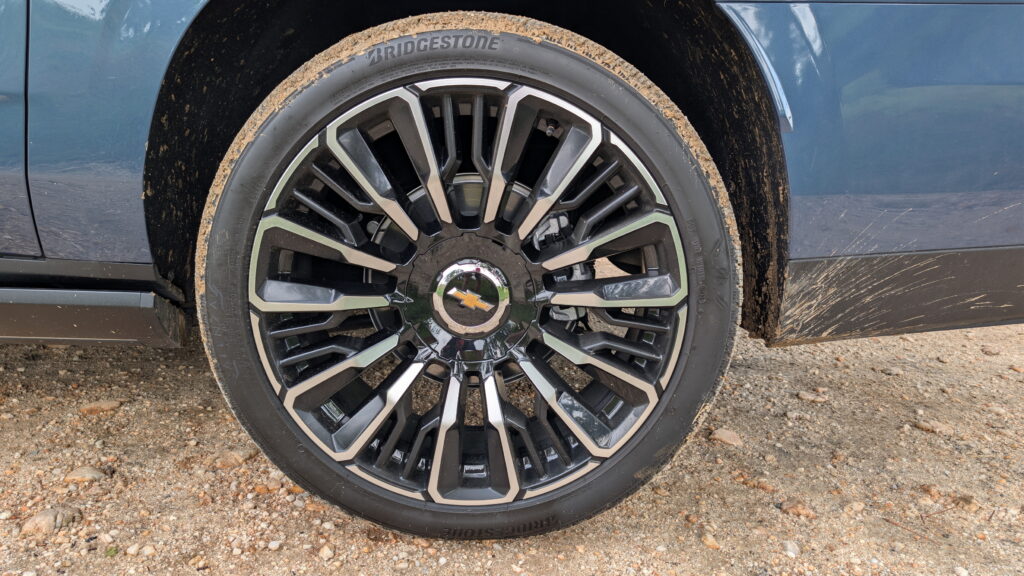

Usually, such large wheels look absurd, but here they seem fitting, emphasizing the Suburban’s scale. However, the thought of replacing them or removing them for suspension repairs is nerve-wracking – they are gigantic.
Overall, Chevrolet did a good job making such a large vehicle look expensive enough to justify the six-figure price tag. It is commanding, premium, and even a bit flashy. That’s exactly what buyers in this segment need.
Interior: Premium Materials and Questionable Decisions
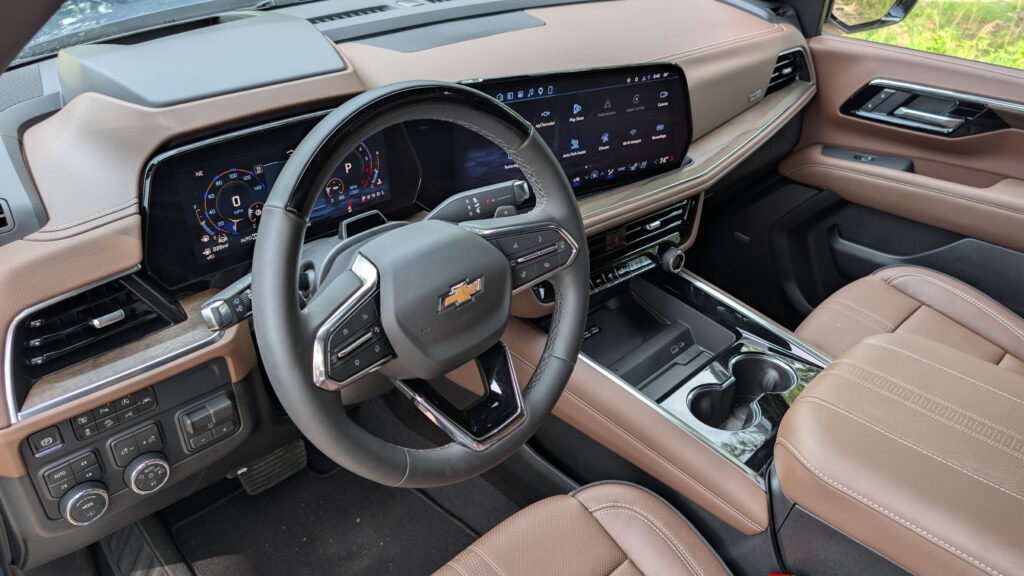
The cabin is where things get complicated. On one hand, there are genuinely premium touches: beautiful real wood trim, rich leather, quality stitching. The materials largely match the price.
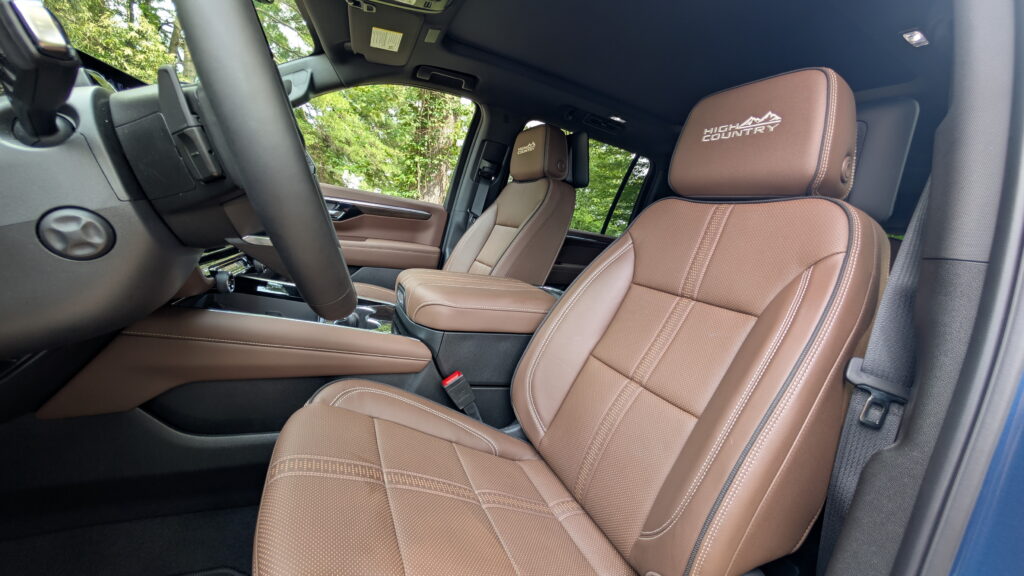
On the other hand, some decisions make no sense. The biggest is the lack of front seat massage. In a vehicle costing around $100,000, this is hard to justify. The seats are heated, ventilated, comfortable, and supportive, but they are not special. Competitors at this price increasingly offer massage functionality, and its absence here is noticeable.
Even the first touch of the vehicle – when you grab the exterior door handle – reveals a flaw: the car does not respond to a touch of the hand to unlock the door. My old 2008 BMW had that feature. How this six-figure “luxury” SUV doesn’t have it almost 20 years later, I will never understand.
The infotainment system is another contentious item. The screen itself is excellent: graphics are sharp, response is quick, interface is intuitive. But the driver orientation goes too far. The display is tilted toward the driver, which is not a problem. The problem is that the only physical volume knob is in the upper left corner of this screen.
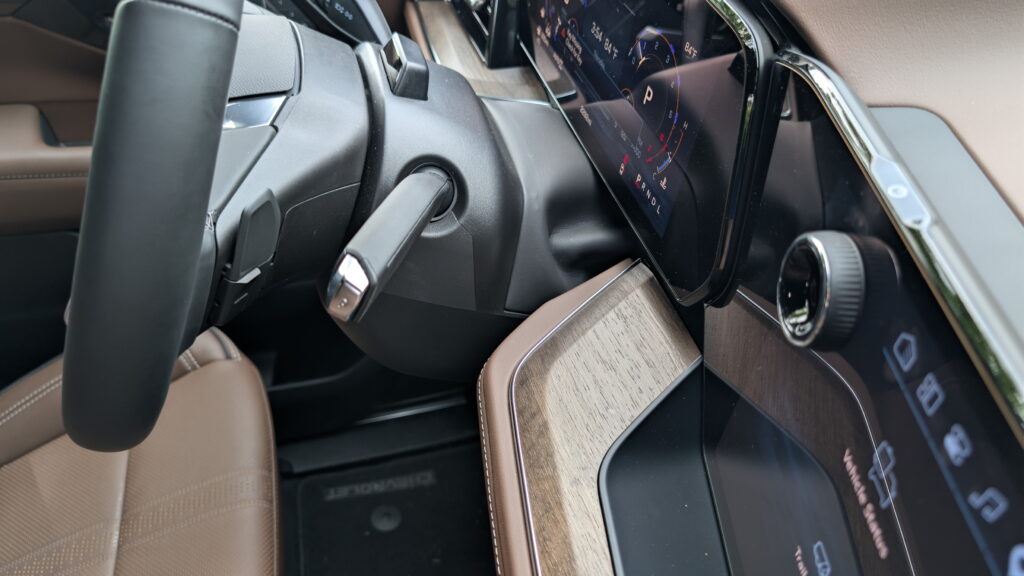
For the driver, it’s fine. For the front passenger, it’s comical. The passenger has to reach across the massive center console. Meanwhile, the driver has a second volume control on the steering wheel just inches from the main one. One person has two volume controls, the other does stretching exercises.
The digital instrument cluster also requires some getting used to. Unlike competitors, Chevrolet limits the driver to a few preset layouts. Certain information, including fuel consumption data, is only displayed in specific modes and only if you go to the central screen to add it to the driver display. It works, but feels limited.
Storage space, on the contrary, is overly abundant. There are pockets on the side of the console, phone trays, cupholders, door bins, and a traditional console bin. But there is also a strange solution: under the main console, a larger compartment is hidden, opened by a button on the ceiling. Inside, there is a pull-out drawer and deeper storage.
It’s clever, but also puzzling. Why does the center console need an electric motor? Why is the switch on the ceiling? Why can’t this just be manual? I spent several days with the vehicle before learning of its existence.
If you are going somewhere in this vehicle, the second row is the best place. Especially on long trips. Heated captain’s chairs are comfortable, passengers have their own climate control, HDMI and USB-C ports, and a pair of bright touchscreens for the entertainment system with wireless headphones.
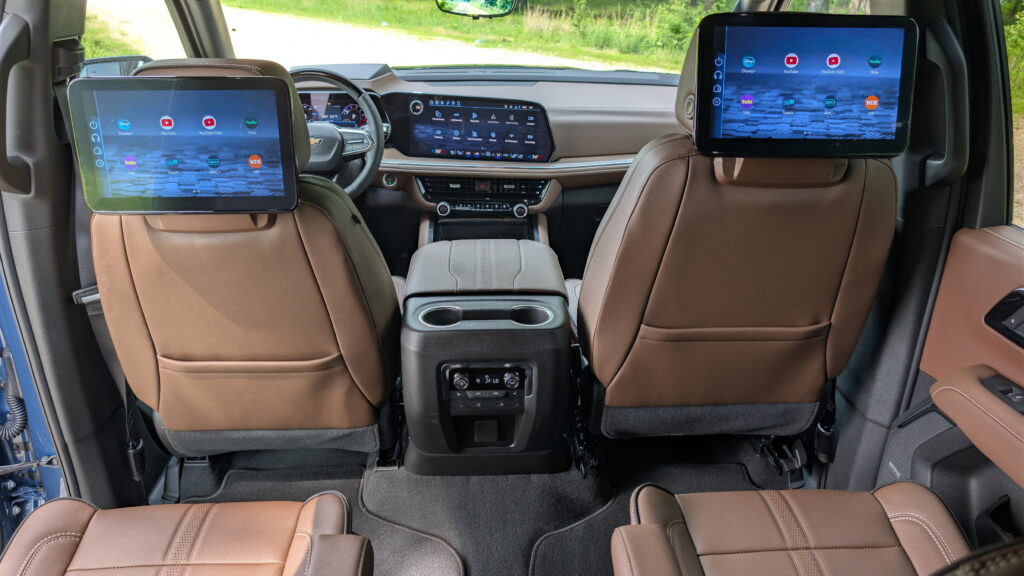
The system allows passengers to watch different content simultaneously without disturbing each other. For families, this is great. The third row is also impressive. My main complaint is the seat folding buttons. Like in the Escalade IQ, they must be held continuously, rather than pressed once. This is likely a safety decision, but it feels outdated.
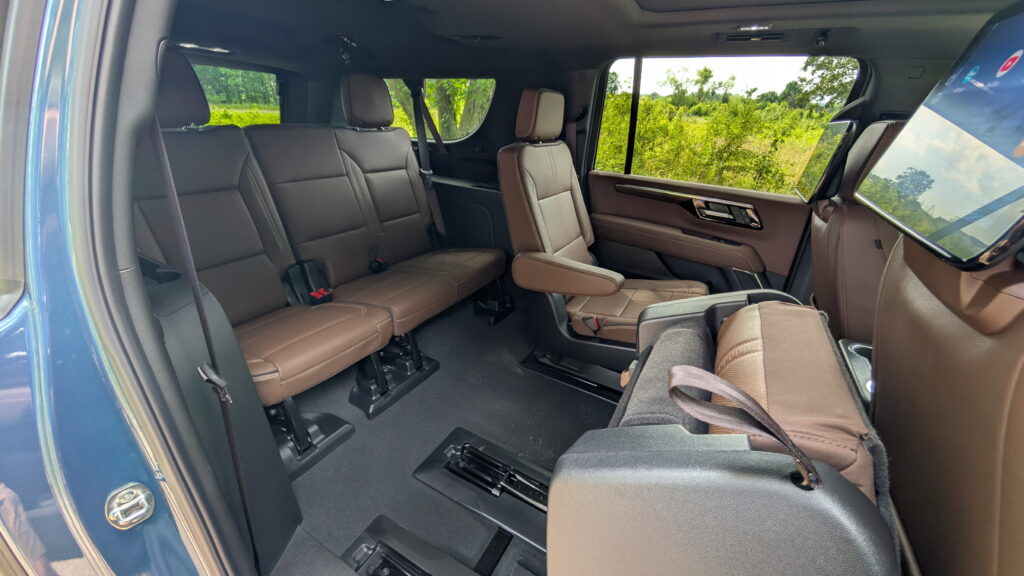
The space is excellent. There is plenty of headroom, and legroom is genuinely adult-sized. Third-row passengers also have cupholders, storage compartments, and USB-C ports. This raises an interesting comparison.
Many buyers dismiss minivans while praising the Suburban’s spaciousness. But vehicles like the Kia Carnival offer very similar conditions for passengers, often being more convenient in daily use. The difference lies in the cargo space behind the third row, towing capacity, and all-wheel drive availability. This is where the Suburban earns its reputation.
Driving Impressions: As Big as It Looks
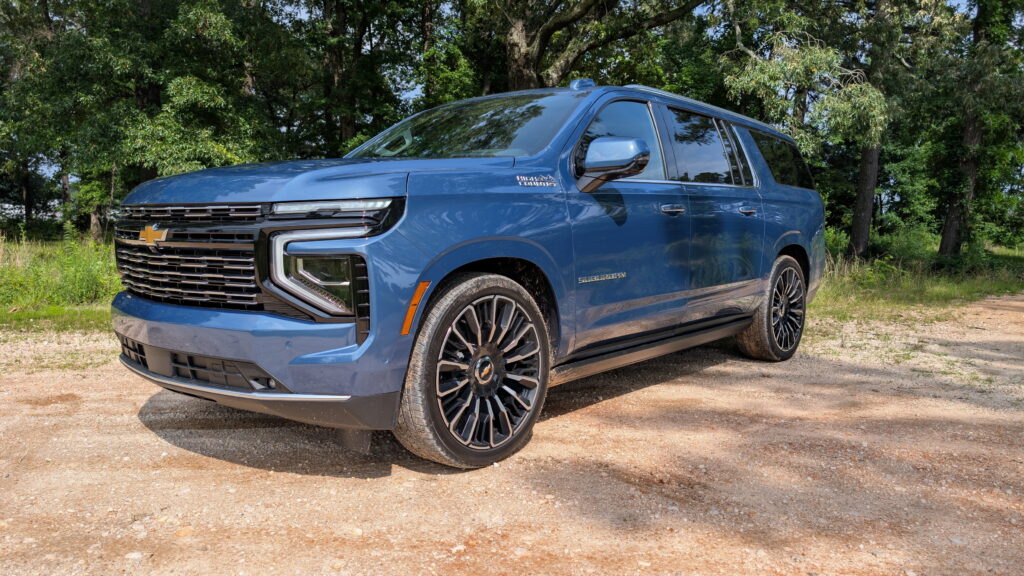
The Suburban feels enormous because it is enormous. No amount of engineering can fully hide this fact. The 6.2-liter V8 sounds great and delivers acceptable performance, but there is too much mass for the SUV to feel truly quick. Acceleration is adequate, but not thrilling. You will never complain, but you won’t brag either.
Personally for me, this became one of the vehicles I least wanted to drive during the test. It requires constant attention to curbs, parking lots, narrow roads, and traffic. You always feel like you are driving something significant. However, my preferences lean toward smaller cars.
Most buyers won’t be bothered. On the contrary, they will like it. The suspension tuning is excellent. The Suburban absorbs bumps with impressive ease, and speed bumps are almost non-existent for it. The steering is competent but not memorable. The brakes require a bit more effort than expected, but this is understandable given the size and weight.
And, of course, Super Cruise. It is fantastic. GM’s hands-free system remains one of the best on the market. Automatic lane changing works smoothly, driver communication is clear, and the system explains well what it sees and when it needs intervention. It is a true road trip machine.
Fuel Economy
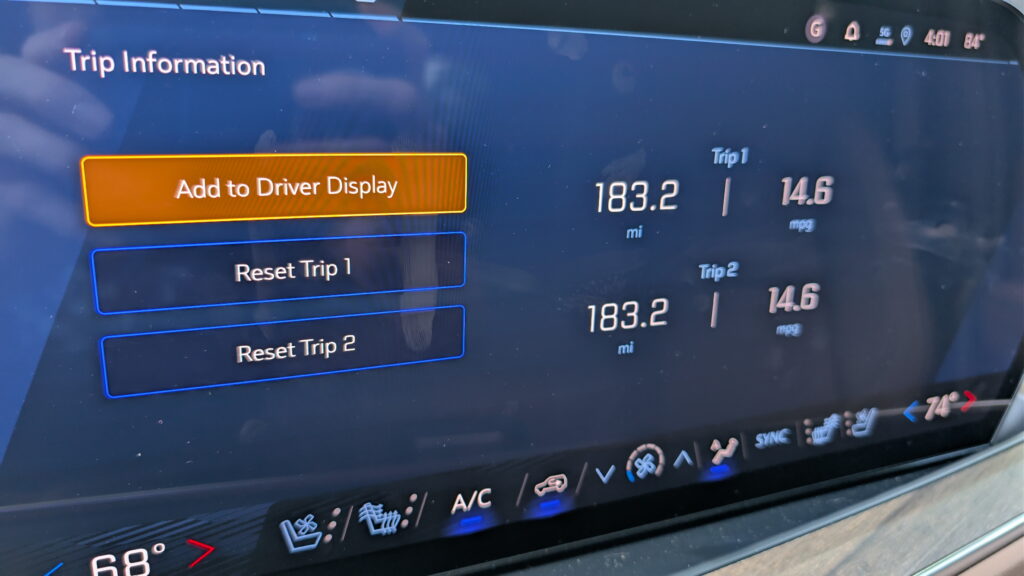
In combined driving, the Suburban achieved 14.6 miles per gallon (about 16 L/100 km). This almost perfectly matches the EPA rating of 16 mpg (14 city / 18 highway). It also hurts. Given current fuel prices, it’s hard to ignore this fact, especially knowing how many kilometers can be covered in competitors.
The Minivan Problem
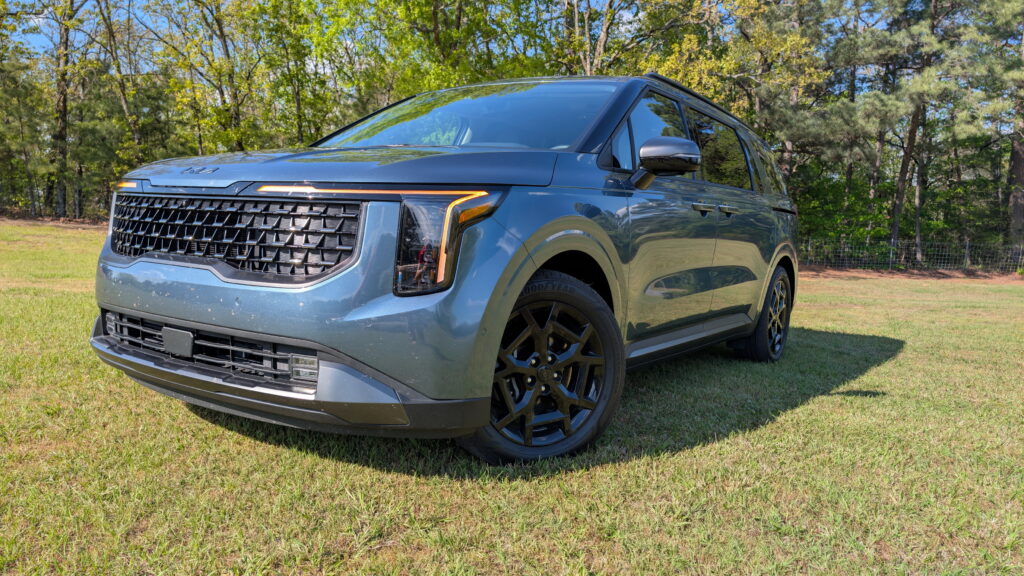
The biggest competitor may not be another SUV, but a minivan.
Vehicles like the Kia Carnival, Toyota Sienna, and Honda Odyssey deserve much more attention from buyers. They offer better fuel efficiency, easier maneuverability, more convenient access, and, in many cases, the same family layout.
If you truly need all-wheel drive, significant towing capacity, or simply don’t want a minivan, the Suburban makes more sense. Among traditional SUV competitors, the closest relative is the GMC Yukon XL, while the Jeep Grand Wagoneer remains a compelling alternative.
The Wagoneer deserves special attention because behind the wheel, it feels noticeably smaller than it actually is, while offering serious off-road equipment in certain trims.
Verdict
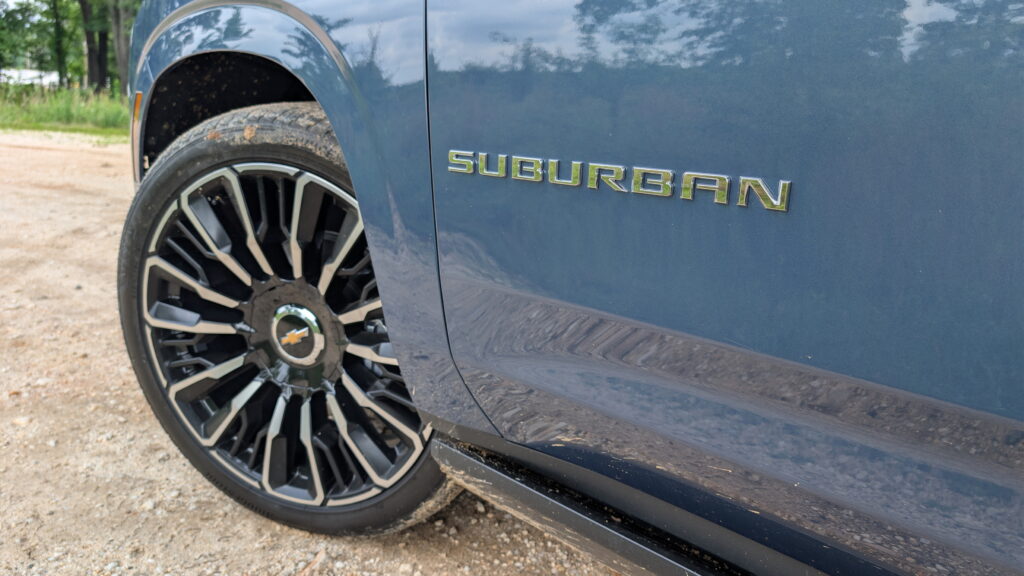
The 2026 Chevrolet Suburban High Country is simultaneously one of the easiest and most difficult vehicles to recommend. It is extremely practical, exceptionally spacious, comfortable on long trips, and packed with technology. Families who regularly transport seven to eight people plus cargo will hardly find anything more capable.
At the same time, it costs over $100,000, consumes fuel at an alarming rate, lacks features that should be standard at this price, and never lets you forget how massive it is. Nevertheless, the Suburban remains successful because it gives buyers exactly what they want: maximum space, maximum presence, and maximum capability.
It is a whale. But, for a whale, it is quite good.
Ultimately, the Suburban is a niche product that perfectly suits its buyer. It does not try to be universal, but instead maximizes meeting the needs of those who require a huge, powerful, and status-oriented vehicle. Its drawbacks – enormous size, high price, significant fuel consumption – are the flip side of its advantages. For families living outside the city, traveling frequently, or needing to tow, this could be the ideal choice. For city dwellers with limited parking space, it is likely too cumbersome an option. The market shows that such buyers still exist in large numbers, and the Suburban continues to be a major player in its segment.