
 by
by A Unique Automotive Hybrid from a Detroit Craftsman
Zak Sutton is the owner of a unique creation of the automotive industry. This 29-year-old Detroit craftsman with a particular taste for absurdity recently combined the front ends of two early ’90s minivans into one wonderfully convoluted car. The result is a half-American, half-Canadian experiment on wheels that looks ready for a comedy film.
Technical Features and Creation Process
One half of the vehicle comes from a 1993 Dodge Caravan assembled in the USA. The other half is a 1991 Plymouth Voyager, originally built in Canada. These two minivans are mechanically and structurally similar, sharing an identical front-end design, despite being sold under different Chrysler brands.
He created his crazy creation, which he calls the Bak2Bak, in just three days at a community workshop in Ferndale. He started by cutting each van right down the middle, then meticulously aligned and welded the front halves together. The Voyager side was stripped of all mechanical components, leaving only the original 3.3-liter V6 engine and automatic transmission from the Dodge to power the entire unit.
I wanted to create something that would simultaneously challenge my fabrication skills and bring joy to everyone, not just car enthusiasts. I often feel that the modern world lacks a sense of lightheartedness. There is no practical reason to do this. The only reason for it is to be absurd and fun.
Functional Paradoxes and Legal Aspects
Functionally, the car is a certain paradox. It has two steering wheels, and both axles can be steered in opposite directions, but only when the vehicle is moving in reverse. When moving forward, the rear wheels remain locked.
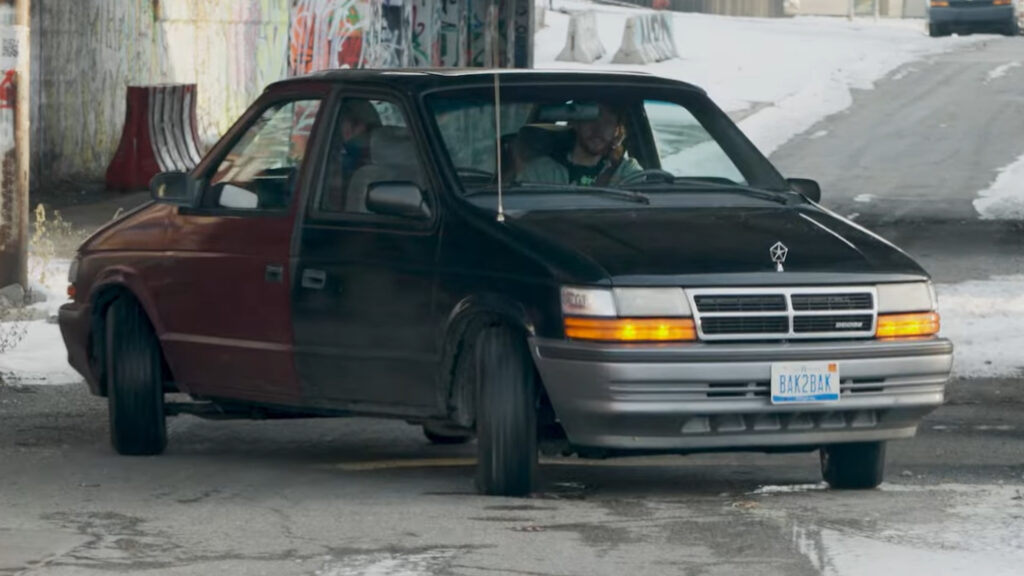
The next question, naturally, is whether Sutton can legally take the Bak2Bak out on the road. He believes he can, as the half with the original 3.3-liter V6 engine and automatic transmission is registered and insured. As far as he understands, he has simply modified the rear of a legal vehicle.
This project is a reminder of how creativity and engineering thought can go beyond the ordinary, transforming mundane objects into art objects and sources of joy. Similar initiatives, devoid of commercial undertones, highlight the importance of experimentation and humor in the technical field, often inspiring others to find unconventional solutions and rethink the possibilities of the things around them.