


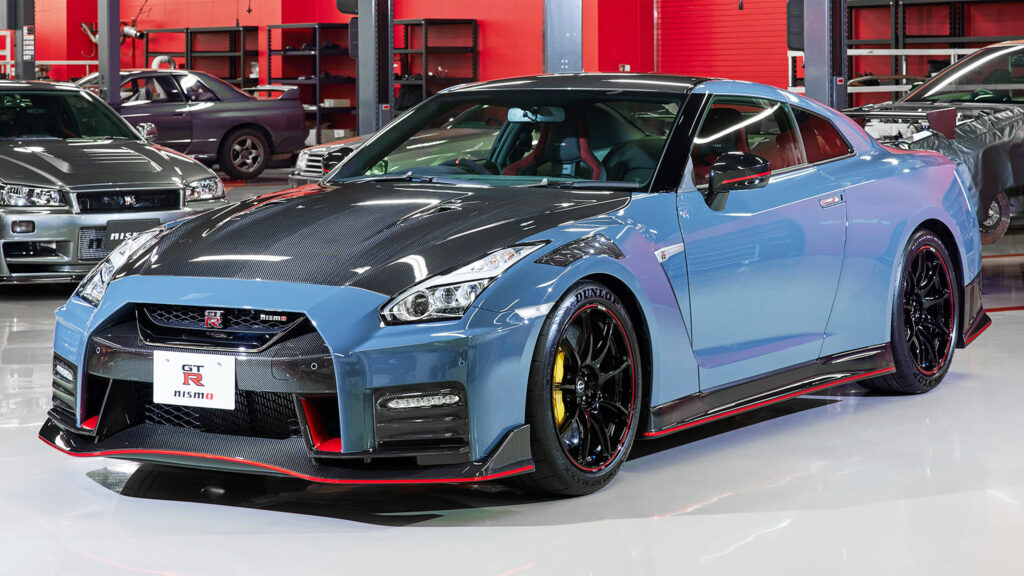
Anticipated premiere of the new Nissan GT-R
The automotive community has long been eagerly awaiting the arrival of the new, R36 generation GT-R. For a long time, while Nissan continued production of the R35 model, its successor seemed almost unreal. However, it has now become known that work on the new model is in full swing, and it may appear sooner than expected.
Key expectations for the new model
New platform and updated powertrain
Senior Vice President and Chief Planning Officer of Nissan North America, Ponz Pandikuthira, reported that the R36 will receive a completely new chassis and will be “an entirely new car.” At the same time, it may retain the base engine from the R35, but in a hybrid configuration.
“If we were to create a hybrid powertrain, the VR38 engine block (which was in the R35 GT-R) is so excellent,” he noted in an interview with The Drive at the New York Auto Show. “Why throw it away? But perhaps the combustion system’s operating principle should be completely different. Maybe there will be different cylinder heads. Maybe different pistons. So, we will likely have to change the top end.”
Hybrid “Godzilla”
Like the RB26 engine that defined the face of the Skyline GT-R before the R35 appeared, the 3.8-liter twin-turbo V6 VR38 from the previous generation has achieved cult status, largely due to its excellent tuning potential.
Pandikuthira noted that in its current form, this engine does not meet the emission standards in some regions. To guarantee the possibility of global sales, it “will need a certain level of electrification.” This is the path most manufacturers are choosing for their high-performance models. Depending on the battery and electric motor Nissan chooses, it’s easy to imagine that the R36 GT-R could produce over 800 horsepower.
Release timeline and prospects
No less exciting than the preservation of the V6 engine is the news that the appearance of the R36 is not far off. Pandikuthira expects “solid and concrete announcements” regarding the car to be made by 2028, with its release to occur by the end of this decade.
The transition to hybrid technologies for an icon like the GT-R reflects the overall transformation of the automotive industry. This is not just a response to environmental challenges, but also a path to a new level of performance. Preserving the iconic engine in combination with an electric component could become a successful compromise that satisfies both fans of traditional powerful cars and the demands of the future. The success of this generation will largely depend on how successfully Nissan’s engineers integrate new technologies while preserving the unique driving feel and character for which the GT-R is so loved.