


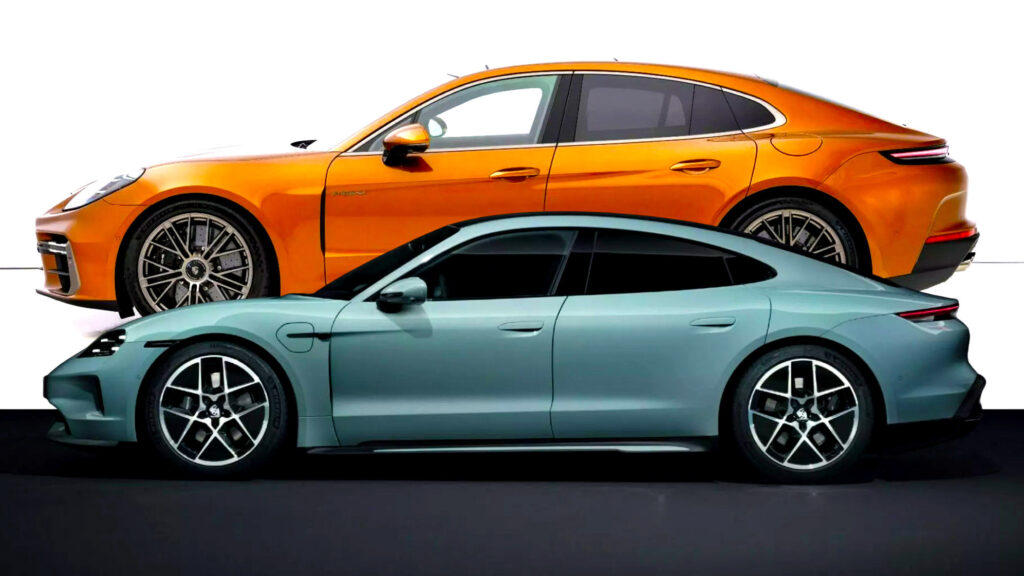
The Question About the Future of Porsche Sedans
Are two separate Porsche sedans excessive? This is a valid question, especially as the world of luxury cars adapts to the slower and more complex reality of electrification. The answer might be yes, as the brand from Zuffenhausen is reportedly considering merging its lineup, resulting in the Panamera and Taycan becoming a single model, without actually turning into the same car.
The idea of “merging without actual fusion” boils down to a platform strategy. Porsche could create a future family of sedans that follows the same dual strategy already used for the Macan and Cayenne, where models with internal combustion engines and hybrids are based on one architecture, while fully electric versions use another.
In 2024, Kevin Giek, Vice President of the Taycan model line, described the Taycan as a “long-lasting” name, putting it on par with the endurance of the 911 model. He also made it clear that the updated model would not be the end of the road, as Porsche plans to continue its development.

Economic Reasons for Reconsideration
According to the report, the strategy reconsideration largely comes down to costs. Porsche recently wrote off 1.8 billion euros due to platform development delays, forcing a quicker sharpening of pencils in Stuttgart. Merging strategies could help the company avoid the less attractive option of completely canceling one of the engineering programs just to balance the books.
The Question of Brand Survival
It is still unknown which name—Panamera or Taycan—Porsche might send to the archive. However, it is known which model buyers currently prefer. Last year, 27,701 units of the ICE-powered Panamera were sold, nearly 70 percent more than the 16,339 units of the Taycan delivered in the same period. Taycan sales have sharply declined over the past two years, and this slide is significant enough for Porsche to seriously reconsider its electrification plans.


Update Timeline and Future Replacements
The third-generation Panamera debuted in late 2023 on the Porsche MSB architecture, with a facelift already planned for around 2027. The Taycan, in turn, first appeared in 2019 on the J1 platform designed for electric vehicles and received an update in 2024. Full replacements for both sedans are unlikely to appear before the end of this decade.
Future Powertrains
What seems much more certain is the set of powertrains. What replaces today’s cars will almost certainly be offered with internal combustion engines, hybrid, and fully electric options, giving buyers a wide choice. ICE versions may be based on the Porsche PPC architecture, while electric variants will likely transition to the newer SSP Sport platform. One sedan shape, several very different ways to make it fast. That’s very Porsche.
Design Differences
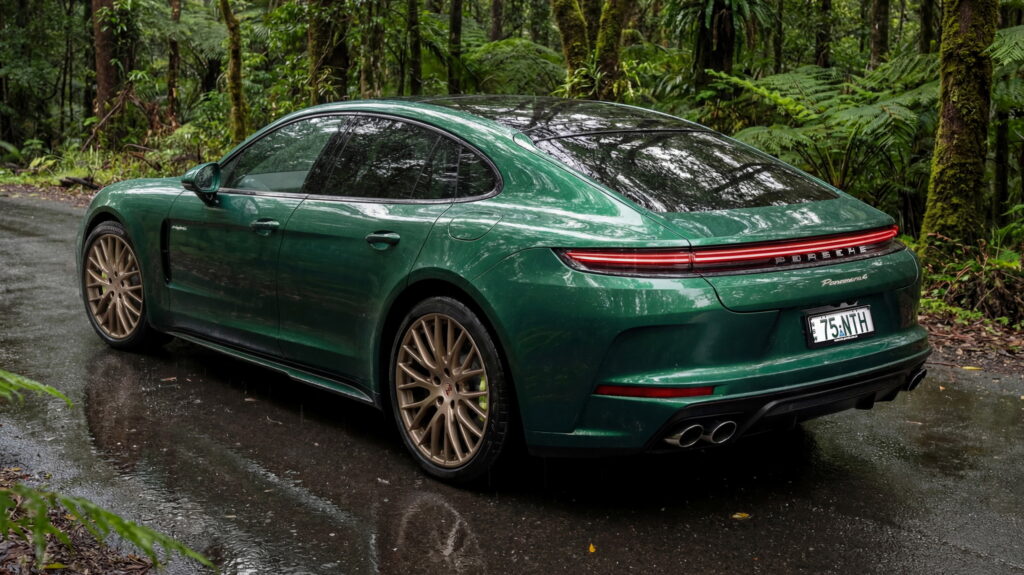

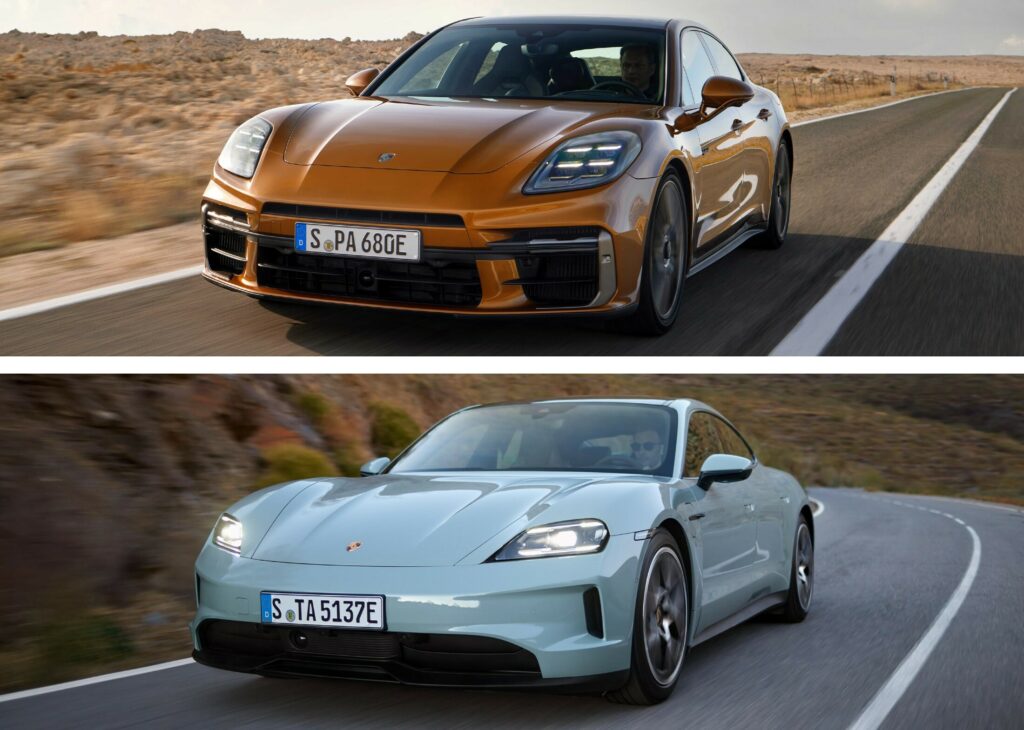
The two models occupy roughly the same space and have generally similar shapes, but they implement this quite differently. The Taycan looks sportier, lower, more compact, and designed with aerodynamics in mind. The Panamera, being an ICE car, is slightly more elongated. It is 89 mm longer, 44 mm taller, and has a wheelbase 50 mm longer.
There are also differences in body types. The Panamera can be had in an extended wheelbase version for those who prefer a Porsche with a bit more rear legroom. The Taycan, in turn, branches out into Cross Turismo and Sport Turismo variants.
If Porsche does move towards a single sedan line, some of these differences will likely have to be reduced. Even so, the electric version could retain its own visual identity, similar to the new Cayenne Electric.
Strategic Shift in Porsche’s Approach
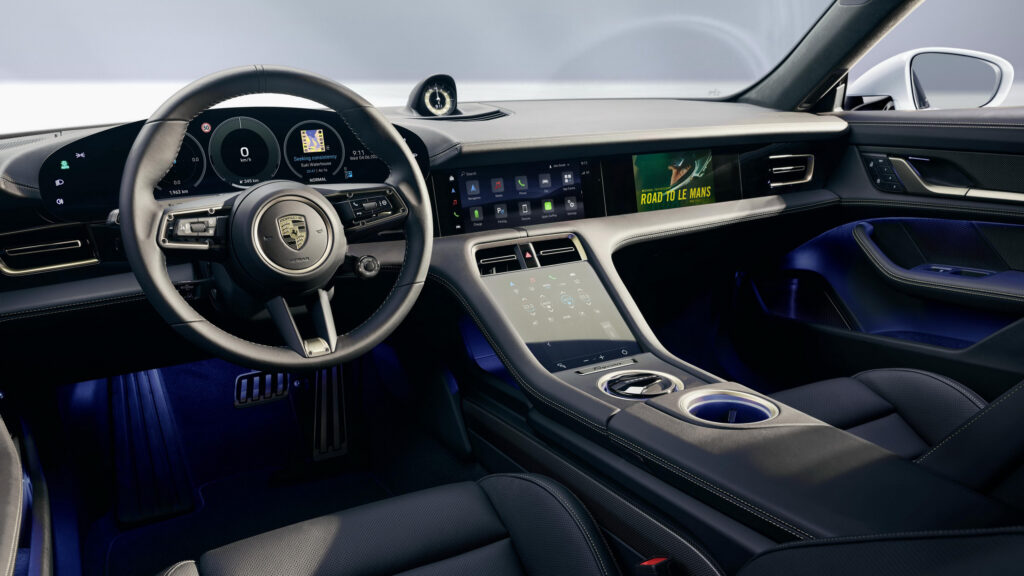
Whether the Taycan name becomes a trim level or the Panamera simply absorbs its electric sibling—the real conclusion is higher up the strategy ladder. Porsche’s focus is no longer on pushing electrification at any cost, but on building a proper multi-energy lineup that gives buyers a choice. This step reflects a more flexible and market-oriented approach where different technologies coexist, meeting diverse customer needs during the transition period. The success of the Panamera compared to the Taycan clearly demonstrates that demand for high-performance cars with traditional engines is still very strong, and manufacturers must find a balance between innovation and what actually works in the market. The future “universal” Porsche sedan could become a model of this approach, combining heritage, performance, and technological neutrality.