


Japanese automaker Suzuki has introduced updated versions of its mini-trucks, the Carry and Super Carry, which belong to the kei-car segment. Both models have received a number of updates aimed at extending the life of these practical vehicles on the market.
Updated Design and Special Edition
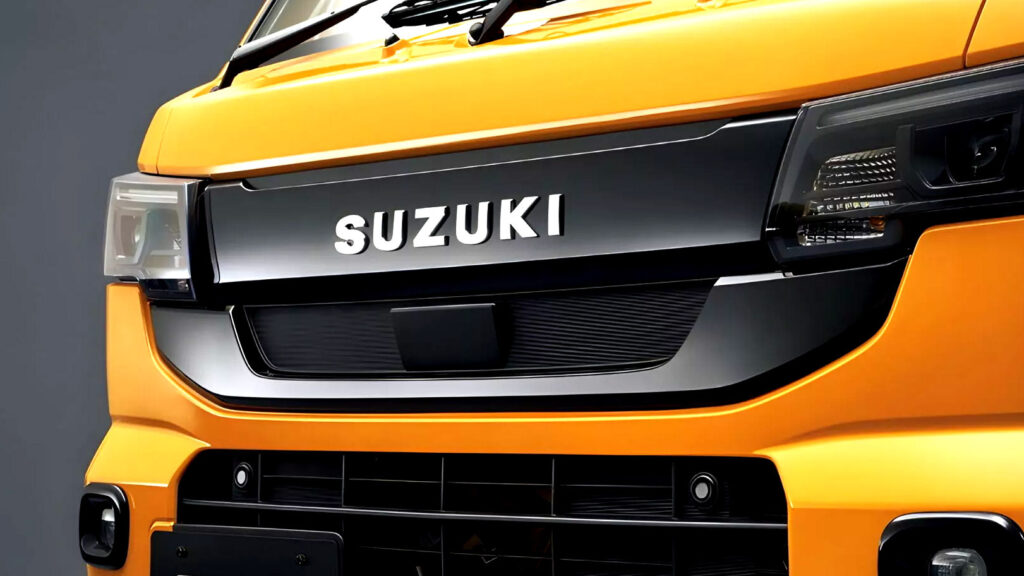
The most noticeable changes affected the front of the vehicle. The designers installed new horizontal main headlights with dark clusters and standard LED lamps, giving the exterior a more modern and decisive look. They are combined with a narrower radiator grille and a slightly enlarged air intake in the bumper. The rear of the body with its practical metal cargo bed and fold-down sides remained unchanged.
A special addition to the lineup is the Super Carry X Limited special edition. It differs from regular models by having large Suzuki lettering instead of the traditional logo, glossy black inserts on the grille, bumper air intake, and around the fog lights. The vehicle also received black graphics on the body, and the steel wheels and door handles are painted in the body color.
Interior and Equipment Updates
Despite the interior revealing the platform’s age, Suzuki has improved the base equipment. Now all models come with a digital instrument panel behind the two-spoke steering wheel. A standard multimedia system is not included, but the center console has a niche for installing an 8-inch touchscreen. For increased practicality, new cup holders under the air vents have appeared, and the passenger gets an assist handle. Furthermore, the passenger seat can be converted into a table, and a storage compartment for small items has appeared above the windshield.
Significant updates have been made to the safety systems. Standard equipment now includes the Dual Sensor Brake Support II automatic braking system, lane departure warning, road sign recognition, start-off alert, emergency stop signal, and front and rear parking sensors.
The manufacturer also announced a wide range of exterior and interior accessories, including black steel wheels, a roof rack, side decals, chrome elements, decorative interior inserts, leather seat covers, as well as various cargo securing solutions and body covers.
Technical Specifications and Prices
The heart of the updated Carry and Super Carry remains a three-cylinder engine with a displacement of 658 cc, producing 50 hp and 59 Nm of torque. The unit can be paired with a five-speed manual or a four-speed automatic transmission.
Buyers are offered a choice between rear-wheel drive or an on-demand all-wheel drive system. The latter is also available with a differential lock and a new “mud extraction assist” function, allowing the vehicle with its short wheelbase and 273 mm ground clearance to feel more confident off paved roads.
The updated Carry and Super Carry lineup will arrive at Japanese dealerships on January 23, 2026. The main competitor remains the long-lived Daihatsu Hijet. Suzuki has already announced prices, which are somewhat higher than the predecessor’s, despite the improved equipment.
The most affordable version, the rear-wheel drive Carry KC with a manual transmission, will start from 1,172,600 yen (approximately $7,500). The flagship Super Carry Special Edition X Limited with all-wheel drive and an automatic transmission is priced at 1,800,700 yen (about $11,500).
In addition to standard models, the company also announced prices for special versions created for specific tasks. The cheapest among them is the Kintaro dump truck starting from 1,618,100 yen (about $10,300), and the most expensive is the low-temperature refrigerated van at 2,658,700 yen (approximately $17,000).
The update of these mini-trucks shows that Suzuki continues to consider the kei-car segment important for the Japanese market, where compactness and practicality often win over power and size. Preserving the proven technical foundation together with modern updates in design and safety equipment is a strategy aimed at extending the model’s lifecycle and meeting the needs of small businesses and private users looking for reliable and economical transport for daily tasks.