


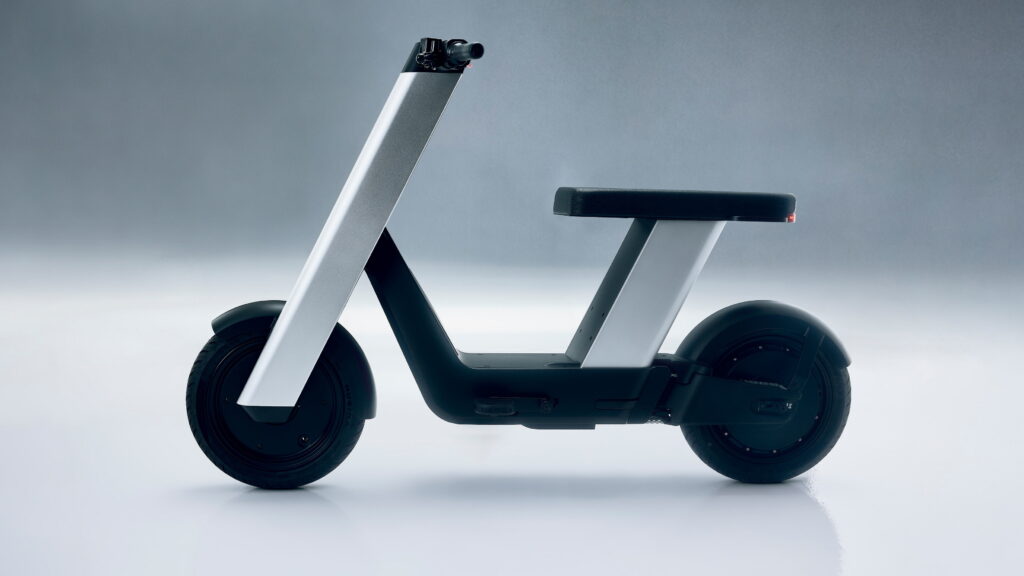
The New Olto E-Bike Combines the Legitimacy of a Bicycle with the Power of a Scooter
The market for bicycle-like electric vehicles is seeing more and more new products. One of the latest is the Infinite Machine Olto. This vehicle may not impress with a lightweight design or conventional looks, but it compensates with high utility and practicality. After a detailed review of its specifications, it becomes clear why the manufacturer positions it as an alternative to a car.
Key features of the Olto:
Legal Status and Technical Specifications
By classification in most regions, the Olto is considered a Class 2 e-bike. This causes some controversy, as by weight (175 lbs or about 79 kg) and speed (up to 33 mph or 53 km/h) it more closely resembles an electric moped or even an electric motorcycle. It is precisely this legal “loophole” that allows its production and sale without the rider needing to obtain a special license or insurance, which would be mandatory for more powerful vehicles.
The base price of the Olto is $3,495. For this money, the buyer gets a vehicle with a 48-volt architecture, a removable 25 Ah battery, a 2 kW rear hub motor, a water-resistant aluminum body, NFC unlocking, a GPS tracker, an anti-theft alarm, automatic steering lock, a USB-C charging port, and over-the-air software update capability. In terms of technology, it can surpass some cars.
Usage Flexibility and Practicality
The main feature of the Olto is the ability to change operating modes. In Class 2 mode, it operates as a legal e-bike with a speed limit of 20 mph (32 km/h) and the ability to use throttle. In Class 3 mode, the speed increases to 28 mph (45 km/h), but this requires using pedal assist (the bike has small pedals, allowing it to fall into the bicycle category). In off-road mode, the full speed of 33 mph is unlocked. The manufacturer claims that the proprietary app can automatically adjust restrictions according to local legislation. According to one review, the Olto managed to reach 36 mph (58 km/h).
A review by The Verge notes that the Olto managed to reach a speed of 36 mph.
It is these technologies that explain why the Olto is considered an alternative to a car. With a 40-mile range, it will suffice for most commutes, errands, or short trips around the city. However, if the battery runs out, pedaling it will be extremely difficult. A typical mountain bike weighs about 30 lbs (13.6 kg) and is designed for muscle-powered movement, whereas the Olto is not. Instead, the removable battery can be charged indoors, and the bike itself, thanks to its protected body and built-in security, can be left outside.
Modularity and Market Prospects
Most e-bikes cannot boast the same modularity as the Olto. A whole range of accessories is available for it: child carrier mounts, cargo boxes, baskets, racks, etc. This is an excellent combination of functionality and flexibility. The question remains regulation: it is important that rules allow the use of vehicles like the Olto without forcing owners of regular e-bikes to wear motorcycle helmets and obtain insurance while riding on bike paths.
The question of whether the Olto is worth its $3,495 price tag remains open. Probably, for those who genuinely plan to use it instead of a car for regular city trips, this investment could be justified. It offers a unique balance between power, technology, and legal status, making it a notable phenomenon in the urban transport market. The success of such developments will also depend on how well legislation keeps pace with technological innovations, ensuring the safety of all road users.