


Nissan Abandons Electric Vehicle Production Plans in Mississippi
Nissan has decided to abandon large-scale plans for electric vehicle production in the state of Mississippi. The planned launch of electric models at the Canton plant has been canceled because the US market is cooling faster than expected.
This decision is part of a broader review of the company’s strategy, which is currently going through difficult times. Demand for electric vehicles is declining, and government incentives for their purchase are disappearing. Previously, Nissan positioned the Mississippi plant as a key element of its electric future, planning to produce several models there by the end of the decade.
Related: The new Nissan Skyline will come to America as the Q50 and may bring back the manual transmission
Production launch timelines had already been postponed — last year they were delayed by nine months. Now, the entire program has been completely shut down. A Nissan spokesperson explained this reversal as a necessity to
“better align with market conditions, customer demand, and the company’s updated strategic direction.”
New Focus: Pickups and SUVs
Instead of electric vehicles, the company is refocusing on more traditional vehicles. The main emphasis will be on pickups and SUVs built on a robust body-on-frame construction. It is expected that by the end of the decade, a revived Nissan Xterra will appear, followed by other models that will use a common architecture to reduce costs and increase efficiency.
Five New Models with Internal Combustion Engines
According to Auto News, the new body-on-frame platform will underpin at least five trucks and SUVs. Sources claim that these vehicles will share 70% of common parts and will be identical from the front seats forward.
This change reflects a shift in consumer preferences. Vehicles with internal combustion engines and hybrids are proving more resilient to market fluctuations. Meanwhile, fully electric models face challenges: underdeveloped charging infrastructure, range anxiety, and high initial costs, especially after the cancellation of federal tax credits. Last year, EV sales in the US even declined, although they continued to grow rapidly in Europe.
Electric Vehicle Investments Canceled
The Canton plant, which five years ago was supposed to receive $500 million in investments to produce thousands of EVs annually, will remain important for Nissan’s North American plans, but with a different focus. It already produces the Frontier pickup and the Altima sedan. The new strategy aims to develop this base, creating larger and more profitable vehicles tailored to American tastes.
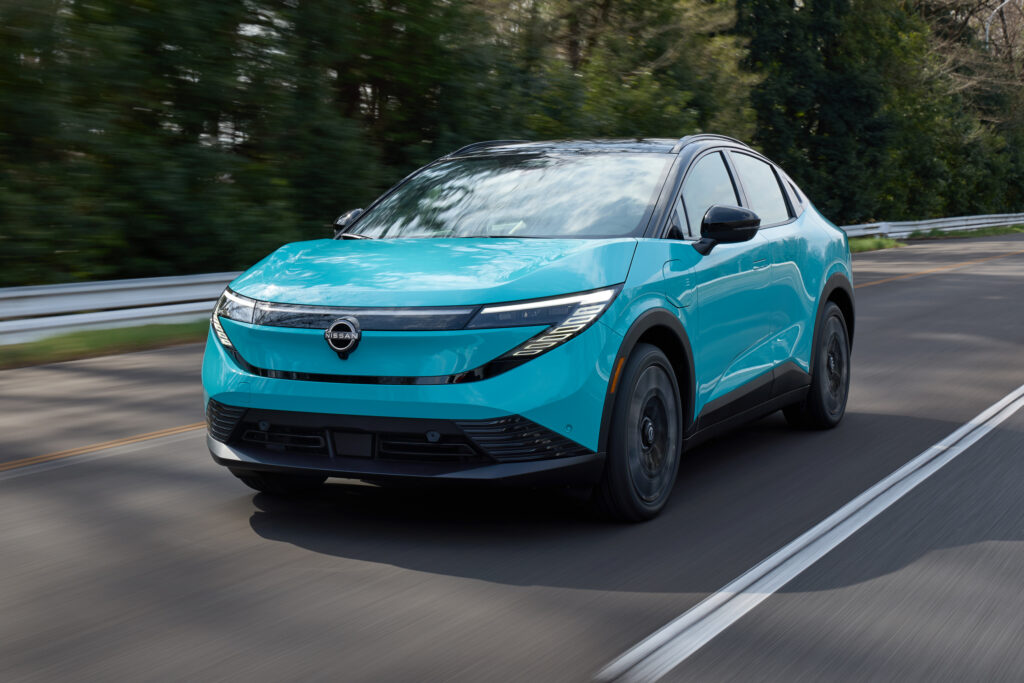
Nissan is not abandoning electric vehicles entirely. The company will continue to sell existing models in the US, such as the Nissan Leaf (pictured below). However, in the future, its lineup will be more focused on hybrid technologies as an intermediate step.
Nissan
This move by Nissan is further evidence that the automotive industry is in a state of uncertainty regarding the pace of the transition to electric power. Although long-term electrification goals remain, manufacturers are forced to adjust their plans in response to real demand and economic realities. Abandoning ambitious but risky projects in favor of proven technologies, such as hybrids and modern internal combustion engines, allows companies to maintain financial stability and continue offering customers what they are willing to buy today. Focusing on body-on-frame SUVs and pickups, which traditionally enjoy high demand in North America, appears to be a pragmatic step to strengthen the brand’s position in this key market.