


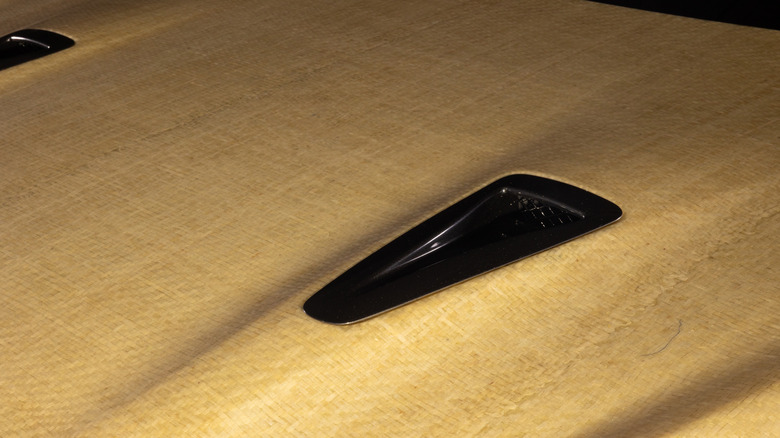
Pineapple leaves are usually considered agricultural waste that is hardly used. But Nissan argues that this material is strong enough even for racing cars. This refers to body panels, in particular the hood, in which plant fiber is used.
No one wants to waste resources, but to do so you need to understand how to extract value from what is usually thrown away. This is exactly the task Nissan and Food Reborn are working on. Their joint project looks unusual: automotive body parts, such as a hood, are made from plant fibers.
Waste that they seek to turn into a valuable material
According to Nissan representatives, the idea is not only to reduce the amount of waste. It is also important to prove that plant raw materials can meet the requirements for materials in motorsport. To this end, the companies have developed a composite with fibers from pineapple leaves that combines a more environmentally friendly approach with the necessary strength characteristics.
Tatsuzo Tomita, Nissan’s corporate executive officer for technology development, explained:
We have developed a new fiber-reinforced composite material that uses pineapple leaves—a by-product that is typically unused and discarded. This sustainable composite material also delivers the high level of performance required for demanding conditions, including in motorsport.
He also emphasized that for Nissan it is important not only to develop technologies and materials, but also to bring them to real application in cars. According to him, the company strives to create new value and support the sustainable development of society through technological innovation.
This demonstrates the strength of Nissan as an automaker, especially the ability to go beyond simply developing technologies and materials. We can bring them to life in our cars and ultimately deliver value to customers. We will continue to contribute to the creation of new value and the realization of a sustainable society through technological innovation.
Etsuko Uda, representative and CEO of Food Reborn Co., Ltd., added that converting agricultural by-products into high-performance materials for cars and sporting goods is of great importance. According to her, the company will continue to strive to open new possibilities for such raw materials.
Converting agricultural by-products such as pineapple leaves into high-performance materials for cars and sporting goods is of great importance. Guided by a deep conviction, we will continue to dedicate ourselves to discovering new possibilities.
Although the statements sound quite corporate, behind them lies a very concrete technology. This is not about decorative use of plant raw materials, but about an attempt to create a composite suitable for body parts.
How pineapple leaves are turned into body panels
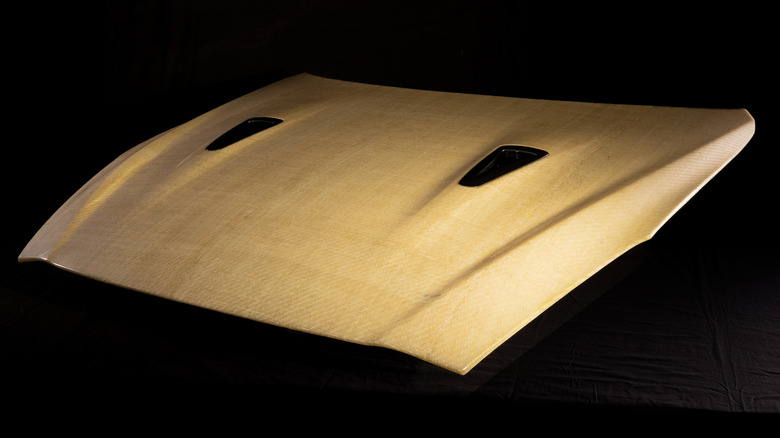
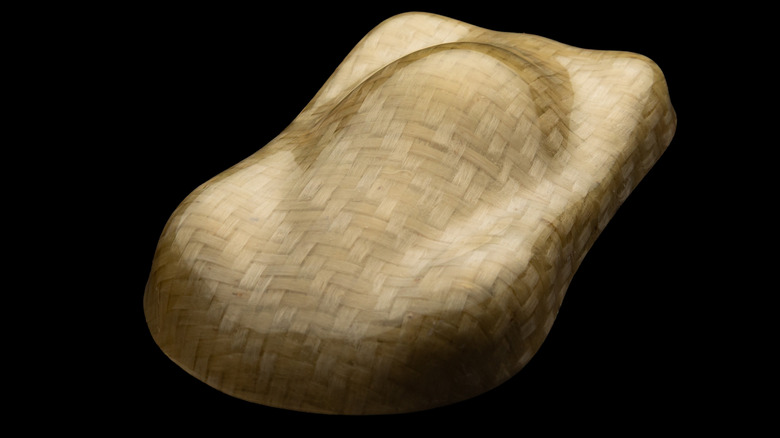
The process begins with extracting fibers from pineapple leaves. These are then made into flat yarn, which is subsequently turned into fabric. This fabric is combined with resin, resulting in a composite material. In general, the logic is similar to carbon fiber production, although the raw material here is different and more accessible.
The main advantage of this approach is that pineapple leaves are easy to obtain and also relatively easy to process into the required shapes. Nissan says the resulting material has a lower environmental impact. In addition, the Japanese automaker licenses part of its production knowledge to Food Reborn so that the partner can take on certain production stages.
So far, it has not been reported whether such panels will appear in a production model. However, some of them may well make it onto racing tracks. Motorsport is often used as a testing ground for new solutions before their possible introduction into production cars.
Cars have already worn stranger materials
Nissan and Food Reborn are not the first to try using unusual materials for body panels. Many car enthusiasts know the term woody—that was the name for cars whose bodies were largely made of wood or which had real wooden exterior panels. Today such cars are already history, but even they were not the strangest example.
In the 1920s, the Weymann company used coated fabric for exterior body panels. Yes, fabric. Interestingly, this coating was actually artificial leather. If panels made from pineapple leaves seem unusual, imagine a car driving down the road with a body finished in artificial leather.
In the 1940s, Ford experimented with plastic derived from soybeans for body parts. Later, Saturn used molded thermoplastic panels on production cars. Toyota also worked with plastic bodies. So the idea of using unusual materials for cars never completely disappeared. Nissan has simply found a new and potentially sustainable way to do it.
What this could mean for future applications
For now, the Nissan and Food Reborn project looks more like a technology demonstration than a ready-made solution for mass auto manufacturing. Using pineapple leaves can reduce waste and offer an alternative to traditional composites, but for production cars not only strength and environmental friendliness matter. It is necessary to take into account the durability of panels, resistance to moisture, temperature changes, ultraviolet light, minor damage, and repair.
In addition, the question of scale remains. A laboratory or racing sample can show good results, but serial production requires stable raw material quality, predictable costs, and established supply chains. If Food Reborn together with Nissan can bring the technology to an industrial level, plant composites will have a chance to occupy a niche not only in motorsport but also in broader automotive manufacturing.
The story of body panels made from pineapple leaves shows that the search for new materials often begins with what seems unnecessary. For Nissan, this is also a way to demonstrate engineering expertise and emphasize a course toward more sustainable technologies. Whether such a hood will become production is currently unknown, but the direction itself is already attracting attention and shows how broad the raw material base for the automotive industry can be.