


A New Element in the Ford Pro Lineup
The Ford Pro commercial vehicle lineup is already quite broad, including the fully electric E-Transit Custom and E-Transit models. However, the company has decided to expand the range by adding the brand-new Transit City model. This vehicle is built on a dedicated electric platform developed jointly with Jiangling Motors Corporation (JMC) and will be assembled in China. Sales will be established in mainland Europe and the United Kingdom.
Simplified Concept and Design
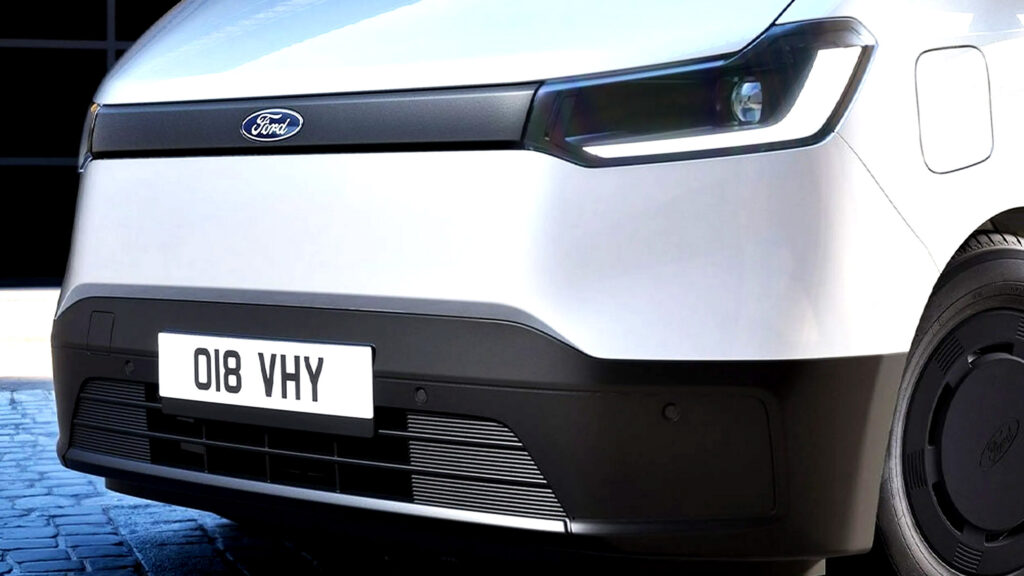
To minimize costs, Ford has chosen a strategy of maximum simplification. For the Transit City, only one trim level will be available, with no list of additional options and minimal personalization possibilities. The design aligns with this concept: a laconic exterior with modern LED lighting integrated into a single grille, smooth body surfaces, black wheels, and unpainted plastic bumpers that emphasize the model’s budget orientation.
More: The first commercial Volvo van looks familiar because it is
Body Variants and Payload Capacity
The Transit City is offered in three body types: a standard van, a long-wheelbase version with a high roof, and a chassis cab. The latter variant is intended for further conversions by specialized coachbuilders. Payload capacity ranges from 1085 kg to 1530 kg. The largest van version can accommodate up to 8.5 cubic meters of cargo, and the cargo compartment length reaches 3070 mm.
More: VW ID. Buzz gets a feature that is not typical for minivans at all
Standard Equipment
Despite its budget nature and lack of options, the standard equipment is quite generous for this segment. The interior features a 12.3-inch touchscreen for the Ford SYNC 4 multimedia system, a digital instrument cluster, and numerous storage compartments. Standard equipment also includes adaptive cruise control, lane-keeping assist, front and rear parking sensors, a rearview camera, and even a heated driver’s seat.
Fully Electric Platform
Unlike other Ford Pro models, the Transit City is a fully electric vehicle, and no internal combustion engine or hybrid powertrain options are planned. The company states that the electric drivetrain will reduce maintenance costs by up to 40% compared to diesel vans.
More: These Chinese trucks look like rejected Ford models
The vehicle is built on a ladder-frame chassis developed by the JMC joint venture and is equipped with a front electric motor producing 150 hp. Energy is stored in a 56 kWh lithium-iron-phosphate (LFP) battery, providing a range of up to 254 km according to the WLTP international cycle. Ford notes that for typical users in this segment, the average daily mileage is less than 110 km, so this range is fully sufficient.
Charging Speed
DC fast charging of up to 87 kW is supported, allowing for a 50 km range recovery in 10 minutes or a charge from 10% to 80% in approximately 33 minutes. When using standard AC charging at 11 kW, a full charge takes about five hours.
Focus on Affordability
The final price for the model has not yet been announced, but Ford has confirmed that the Transit City will be positioned between the smaller E-Transit Custom and the full-size E-Transit. Currently, these models start at £43,630 and £49,545 respectively, outlining a fairly narrow price range for the newcomer.
The arrival of the Transit City clearly demonstrates the growing competition in the electric commercial vehicle market, especially in the segment of affordable solutions for urban logistics. The use of a Chinese platform and manufacturing allows for significant cost optimization, making electric technology more accessible to small and medium-sized businesses. The success of this model could significantly impact the pace of electrification of commercial transport in European cities, where emission restrictions and requirements for “green” zones are becoming increasingly stringent. For buyers, besides price, the key factors will remain the real-world reliability and durability of the battery under conditions of intensive daily use.