


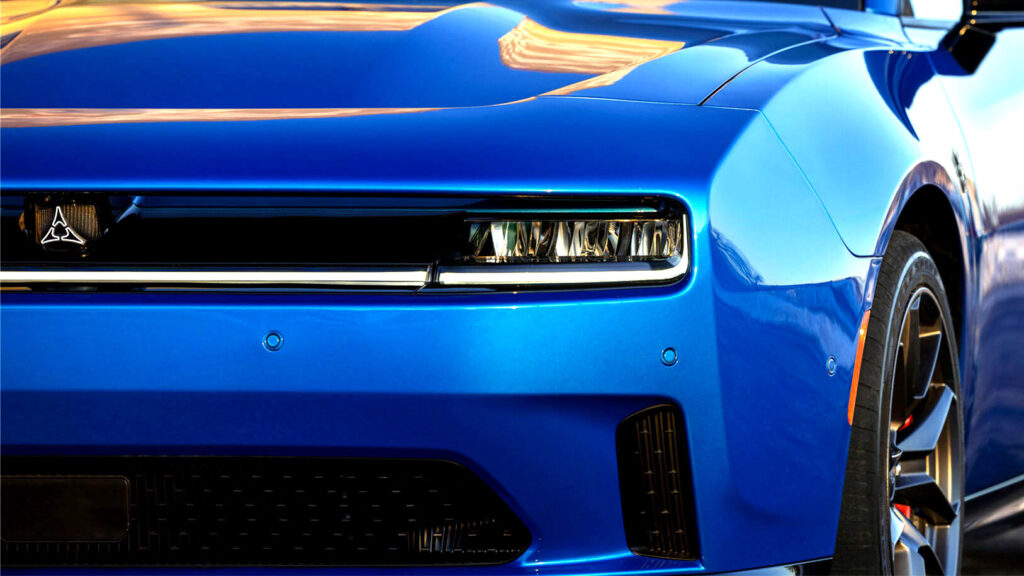
Dodge Already Opens Orders for the 2027 Model Year Charger Daytona
Automaker Dodge has already begun accepting orders for the electric Charger Daytona in the Scat Pack version for the 2027 model year, despite the fact that 2026 has not yet arrived. The starting price of the new model is $72,495, which is a very significant change compared to previous years.
Sharp Price Increase and Structural Changes
The official Dodge website can be confusing, but for comparison: the 2026 model year Charger Daytona Scat Pack Coupe started at $59,995, and the sedan was $2,000 more expensive. Thus, the base price has increased by $12,500. Interestingly, the price difference between the coupe and sedan is now only $500 in favor of the latter.
This increase looks particularly strange against the backdrop of the market situation. Demand for the electric Charger remains low, and dealers across the country are trying to sell off 2025 models, offering them for under $40,000.
Technical Updates and Capabilities
Despite the sharp price increase, the 2027 Charger Daytona received an important technical update — a native port for the NACS (North American Charging System) standard. This allows the car to use the Tesla Supercharger fast-charging network. An adapter from J1772 to NACS for regular charging is also included.
Power and Specifications
The manufacturer remains stingy with detailed information about other changes, promising to reveal more next year. However, Dodge continues to position the Charger Daytona as “the world’s most powerful muscle car.” The car is equipped with an all-wheel-drive system with two electric motors, producing 630 hp and 849 Nm of torque. The PowerShot function allows temporarily increasing power to 670 hp for up to ten seconds. The stated range is up to 430 kilometers, which for an electric car of this class may mean a need for regular charging stops.
This move by Dodge — announcing and opening orders for a model two years before the start of its production — is quite unusual for the automotive industry. This, along with the significant price increase, may indicate the company’s attempt to reposition the model in the market, making it more exclusive, or a reaction to rising production costs. The conditions under which buyers would agree to such a price for an electric muscle car remain in question, especially given the availability of significantly cheaper new cars from previous years at dealerships.