


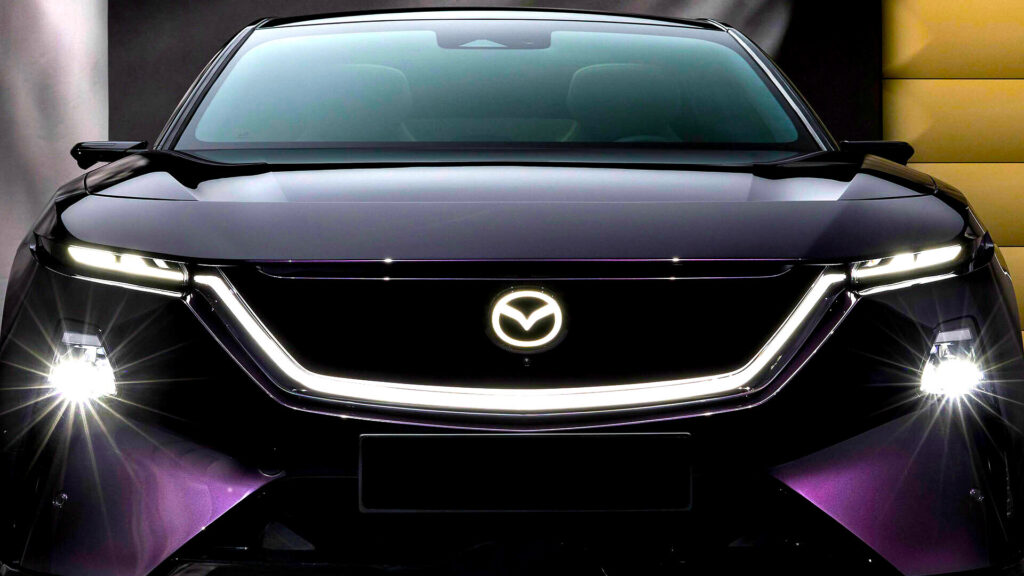
The Japanese automaker Mazda appears to be joining a number of companies revising their electrification plans. According to reports from Japanese media, the launch of its first proprietary electric vehicle platform has been delayed.
Unofficial Confirmation of the Delay
Details remain unclear, but according to information, production of Mazda’s first dedicated electric vehicle has been postponed by at least two years. A company representative neither confirmed nor denied this data. Instead, a general statement was made that the company continues the technological development of its electric vehicles as part of its multi-solution strategy, determining their market launch timing by considering regulatory trends and customer needs.
We continue to promote the technological development of our own electric vehicles based on our multi-solution strategy and will determine the timing of their introduction by carefully assessing regulatory trends in each country and changes in customer needs.
This indicates that the launch plans remain undefined and could shift beyond 2027.
Mysterious Test Spyshots
This information looks particularly interesting against the backdrop of a camouflaged prototype spotted in California at the end of last year. This vehicle, which wore a heavily modified CX-70 or CX-90 body, had a completely closed-off radiator grille and blocked air intakes. It was reported that the model was approximately the same size as the CX-50 but narrower than the body might suggest.
Little is known about this electric vehicle so far, but it was supposed to be based on the scalable Skyactiv EV architecture. This platform was announced back in 2021, and its debut was planned for last year, which did not happen. Now, plans to release several models on this architecture between 2025 and 2030 are also in question.


Changing Market Conditions
However, the market situation has changed significantly over the past few years. In the United States alone, new customs tariffs have been introduced and tax incentives for electric vehicles have been canceled. The latter has led to a noticeable drop in electric car sales and forced many automakers to revise their strategies.
Nevertheless, Mazda is not abandoning the electric direction altogether. Recently, the company introduced the CX-6e model for the European market, developed jointly with its Chinese partner Changan. This model has much in common with the Deepal S07.
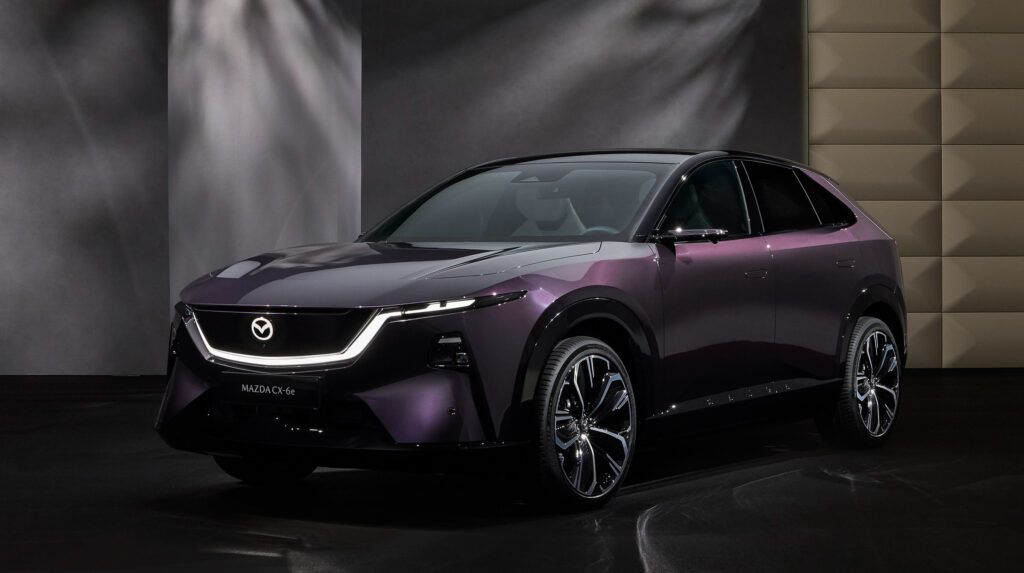

Thus, Mazda’s current strategy demonstrates a flexible approach. On one hand, the company is responding to the slowdown in demand for purely electric vehicles in key regions by focusing on more popular hybrids. On the other hand, it continues to experiment with electrification through joint projects, allowing it to maintain a presence in this segment without significant own investment in a completely new platform. This step can be seen as an attempt to reduce risks during an unstable period for electric vehicles, while not dropping out of the technology race. The success of the joint CX-6e project with Changan in Europe could become an important indicator for the company’s future decisions regarding its own developments.